
Why Environmental Storytelling Still Captivates Me in 2026
There is a special kind of wonder that washes over me when I stumble upon a skeleton clutching a farewell note, or when I enter a room where the furniture alone tells a tragedy. As a gamer in 2026, I’ve played through countless narrative-heavy titles, but I keep returning to those that trust me to read meaning between the pixels. How much more powerful is a story when it isn’t just told to you, but when you unearth it yourself? I believe that games which embrace environmental storytelling craft some of the most memorable and emotional experiences our medium can offer.
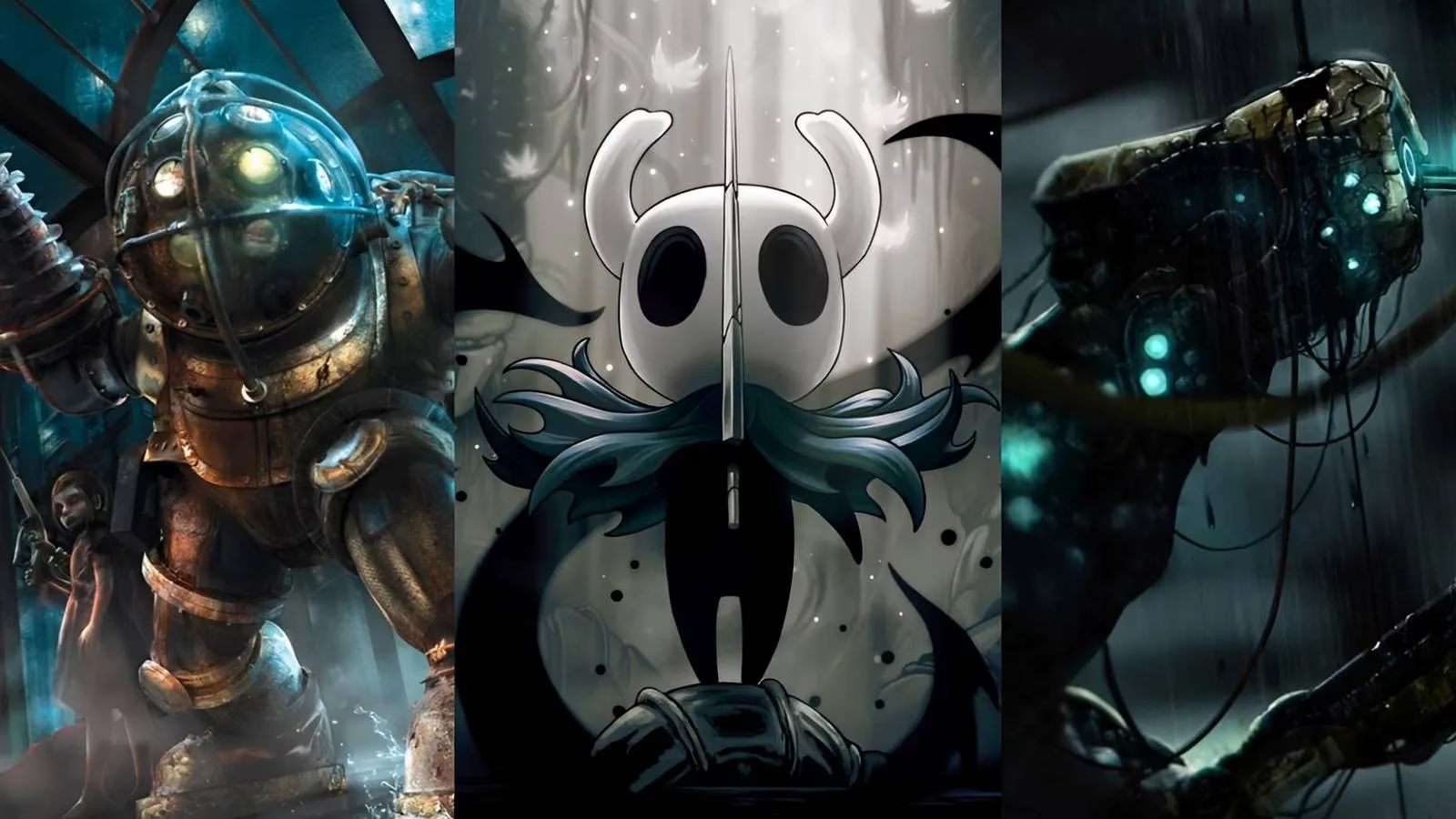
Take Fallout 76, for instance. On the surface, it’s a post-apocalyptic adventure full of mutants and scavenging. But step into one of its many vaults – those supposed shelters that doubled as social experiments – and the real narrative begins to form in your mind. I’ll never forget exploring Vault 94, where the arrangement of skeletons, the scattered journals, and the eerie silence collectively whispered a story of betrayal and desperation. No cutscene spelled it out for me. I pieced it together like an archaeologist, and that investment made the discovery feel personal. Why should a game preach its story when it can let me live inside it?
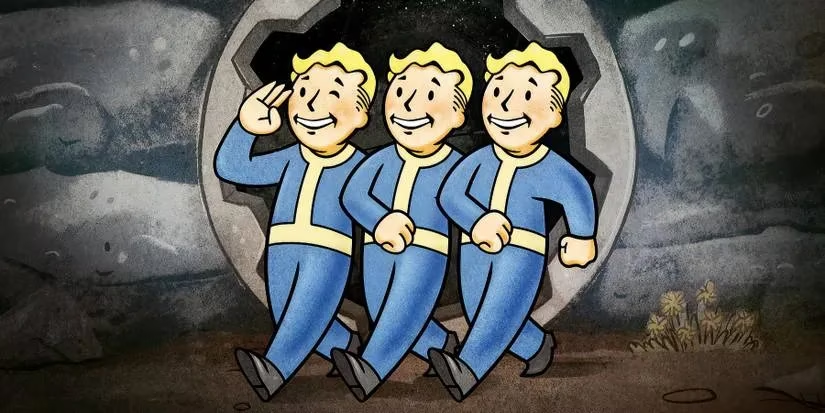
One of my most haunting memories comes from Gone Home. I entered the empty house expecting a simple exploration game, but within minutes the environment had me completely captivated. The notes on the fridge, the cassette tapes scattered on the floor, the hurried packing in Sam’s room – they didn’t just flesh out a character, they constructed a whole family drama right before my eyes. I began to ask myself: What would I do if I came home to a house this silent, this heavy with unspoken pain? The game never forced an answer, but the atmosphere made the question echo in my mind long after the credits rolled.
Of course, environmental storytelling isn’t restricted to quiet, realistic homes. Metroid Prime places you in an abandoned space pirate vessel, and your scanner becomes a tool for environmental literacy. The bodies, the shattered containment tanks, the frantic log entries – they each add a layer to a terrifying mystery. I felt like a bounty hunter truly observing a crime scene, and that thrilling sense of deduction kept my finger on the trigger. Is it more satisfying to beat a boss because a cutscene said it was evil, or because the rooms leading up to it showed me the carnage it caused? I know which one I prefer.

Then there is the subtle horror of Inside. That game rarely uses words, yet it tells a profoundly disturbing story through its grim factories and mind-controlled crowds. I recall the moment I realized the huddled figures in the background weren’t just decoration – they were a message about conformity and control. The environment whispered a warning that stayed with me for weeks. Can a single, well-placed visual do more for a narrative than pages of dialogue? I’m convinced it can.
I can’t discuss this topic without mentioning FromSoftware’s masterpieces. In Bloodborne, every cobblestone in Yharnam seems diseased. The way the architecture shifts from Gothic spires to twisted, alien landscapes mirrors the descent into madness. I wandered through that city not as a player following a quest marker, but as a detective. I learned the lore through the placement of coffins, the statues praying to the cosmos, and the very bloodstains on the walls. It’s a world that demands curiosity, and it rewards that curiosity with a tale so profound it feels like my own discovery. 🕵️
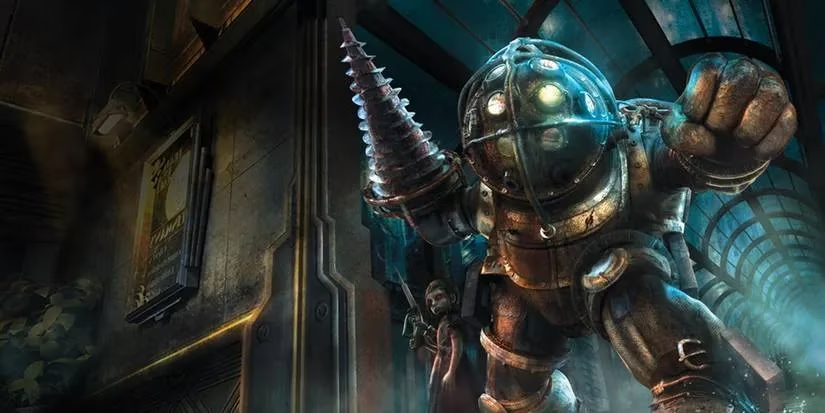
The cherished BioShock also demonstrated this mastery earlier on. Walking into Rapture for the first time, I was immediately immersed not just in a city but in an ideology. The art deco halls, the wrecked shops, and the propaganda posters all spoke of a society obsessed with individual potential that crumbled under its own hubris. Even without the audio logs, the environment painted a vivid picture. However, those small details added beautiful texture. 💎
Meanwhile, Journey proved that environmental storytelling can be wordless and yet deeply emotional. The shifting sands, the buried ruins, the murals showing a lost civilization – they all guided me toward the mountain. I climbed with a stranger who couldn’t speak, but we communicated through the landscape itself. When we huddled together against the cold, the environment told us we were small and fragile, heightening our bond. Are there any words that could have enhanced that moment? I doubt it. 🏜️
Finally, I have to praise the hand-drawn sorrow of Hollow Knight. Hallownest is a kingdom of insects, but its decaying architecture and solemn music convey a tragedy on a godly scale. I remember standing in the City of Tears, watching the rain fall on the statue of the Hollow Knight, and feeling a profound sadness that no explicit exposition could have manufactured. The environment there is the story, and it is one of the most beautiful stories I have ever experienced.

In 2026, with photorealistic graphics and advanced AI-generated quests, it’s easy to be overwhelmed by direct, hand-holding narratives. Yet, I keep returning to these older gems because they treat me like a partner in storytelling. Environmental storytelling respects my intelligence, invites me to ask questions, and grants me ownership over the tales I uncover. And honestly, isn’t that what gaming is all about? 🎮