
Ultros: The Psychedelic Metroidvania That Redefined the Genre After Silksong's Silence
Back in 2024, when the PlayStation Showcase revealed a burst of color and chaos called Ultros, few could have predicted how this indie title would evolve into a genre cornerstone. By 2026, the game has not only lived up to the psychedelic promises of its first trailer but has also carved a distinct niche that still glows brightly, even in the shadow of Hollow Knight: Silksong's long-awaited arrival. For those who plunged into its lush, alien ecosystem right after launch, the memory of that first descent into the Sarcophagus feels like waking from a fever dream where every petal was a blade and every heartbeat a drumroll.
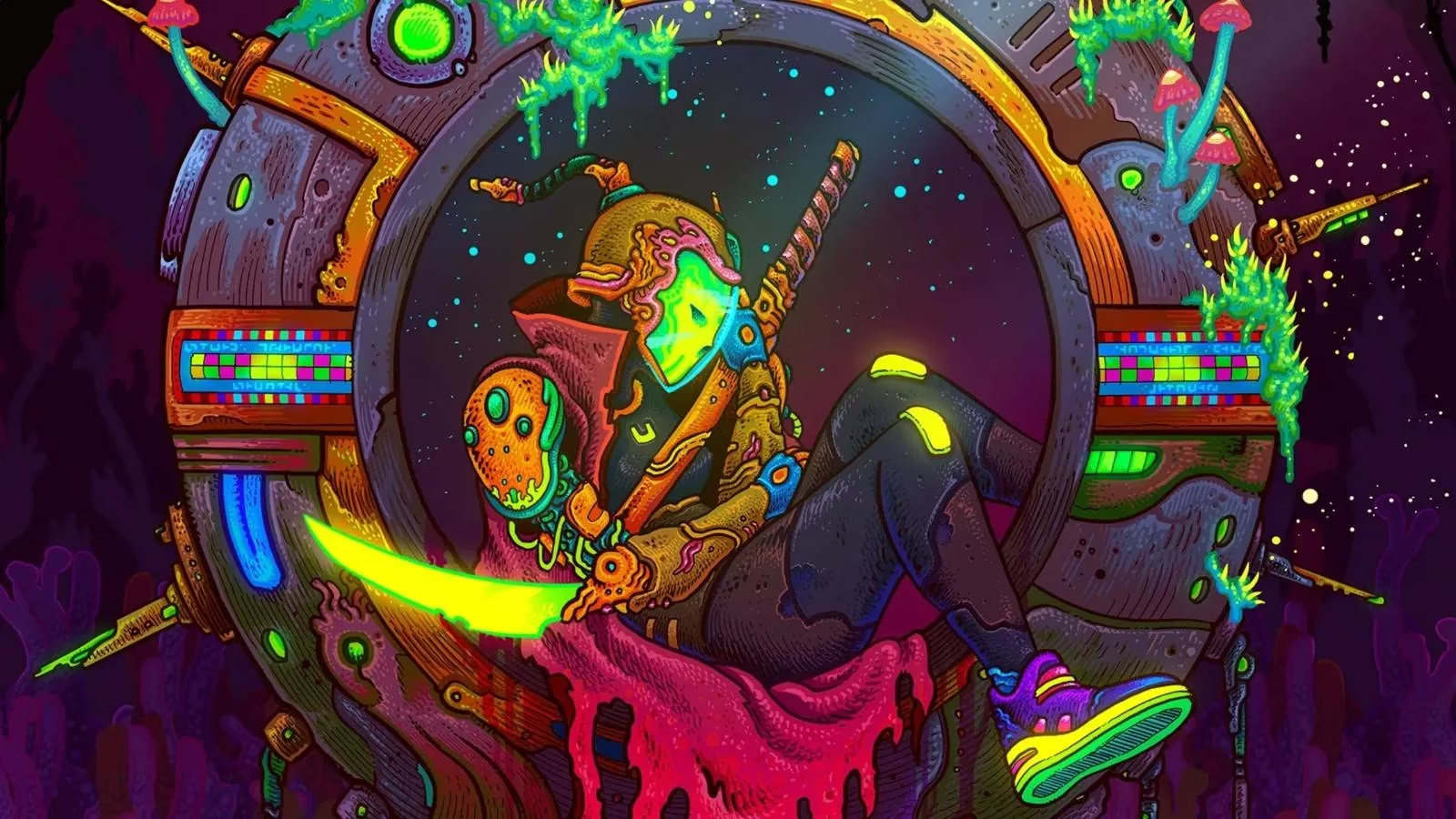
Developed by Hadoque, a studio whose name now resonates with the same reverence once reserved for Team Cherry, Ultros arrived at a moment when the Metroidvania community was starving. The indefinite delay of Silksong had left a void the size of a cosmic sarcophagus, and Ultros filled it with a kaleidoscopic explosion of color, sound, and movement. The game's visual identity, crafted by the legendary El Huervo (the Swedish artist whose neon-drenched covers for Hotline Miami defined an era), became an immediate sensory anchor. Environments are not just backdrops; they are sentient gardens pulsating with life, where vines twist into pathways and enormous fungal blooms serve as both sanctuary and threat. Exploring these biomes feels less like navigating a map and more like flipping through a living pop-up book where each page mutates under your fingers, a comparison that barely captures the organic fluidity of the experience.
At its core, Ultros remains an intimate close-combat system, as Game Design Director Mårten Brüggemann described years ago, but today's players know it has aged into something far richer. The combat has been refined through post-launch updates into a ballet of risk and reward where every slash, dodge, and parry blooms into combos that chain like a fungal network. To call the fighting merely "tight" would be an understatement; it is a surgical dance inside a spinning kaleidoscope, where enemy attacks are projected in visual ripples that demand both pattern recognition and improvisation. This hybrid of precision and psychedelic feedback turned boss encounters into unforgettable set-pieces—one moment you are deciphering the attack telegraphs of a six-limbed crystalline guardian, the next you are riding a geyser of spores upward through its shattered carapace.
Beyond combat, the loop of exploration and gardening became the game's true soul. The sarcophagus is a giant, living vessel, and the player's ability to cultivate flora changes traversable routes, unlocks secrets, and even alters enemy behavior. This mechanic transformed a standard backtracking Metroidvania into a metabolic ecosystem masquerading as a game map, where patience yields corridors that bloom with shortcuts and fruit that permanently enhance abilities. It is a system that rewards not just reflexes but a tenderness toward the world—a rare tone in a genre often obsessed with despair and ruin.
The soundtrack, composed by Ratvader, deserves special mention, as it weaves abrasive synths with organic chimes into a soundscape that feels like the hum of the sarcophagus itself. Coupled with El Huervo's artwork, the audiovisual package remains one of the most cohesive in recent memory, and it is no surprise that speedrunning communities still gather around Ultros in 2026, dissecting every hidden alcove and plant-based ability shortcut.
When Hollow Knight: Silksong finally dropped in late 2025, many expected Ultros to fade. Instead, the two titles now exist as complementary pillars of modern Metroidvania design. Silksong offers melancholy, scale, and fluid acrobatics; Ultros offers introspection, organic growth, and a psychedelic intensity that lingers like an afterimage. Fans often argue which is superior, but the truth is simpler: Ultros didn't just fill the silence—it sang in a register no one knew existed.
Looking back from 2026, the trajectory of Hadoque's debut is a study in how to grow a cult classic into a lasting phenomenon. The game is available on PC, PS4, and PS5, and a recent free expansion added an entire new wing to the sarcophagus, complete with time-bending flora and a boss rush mode that flips the gardening system on its head. As the indie scene continues to push boundaries, Ultros stands as proof that a game can be both a technical triumph and a work of art that rewires the player's perception, one glowing seed at a time.