
The Soul of Exploration: My Journey Through Metroidvania's Greatest Power-Ups
I remember the first time I truly understood what it meant to explore. It wasn't in a vast, open field or on a mountain peak—it was in the cramped, dark corridors of an alien world, with a new ability humming in my hands. In 2026, as I look back on decades of navigating interconnected maps and unlocking hidden pathways, I realize that Metroidvania games aren't just about where you go, but how you grow to get there. The power-ups are the language these worlds speak, and learning them is like learning to hear music in silence.
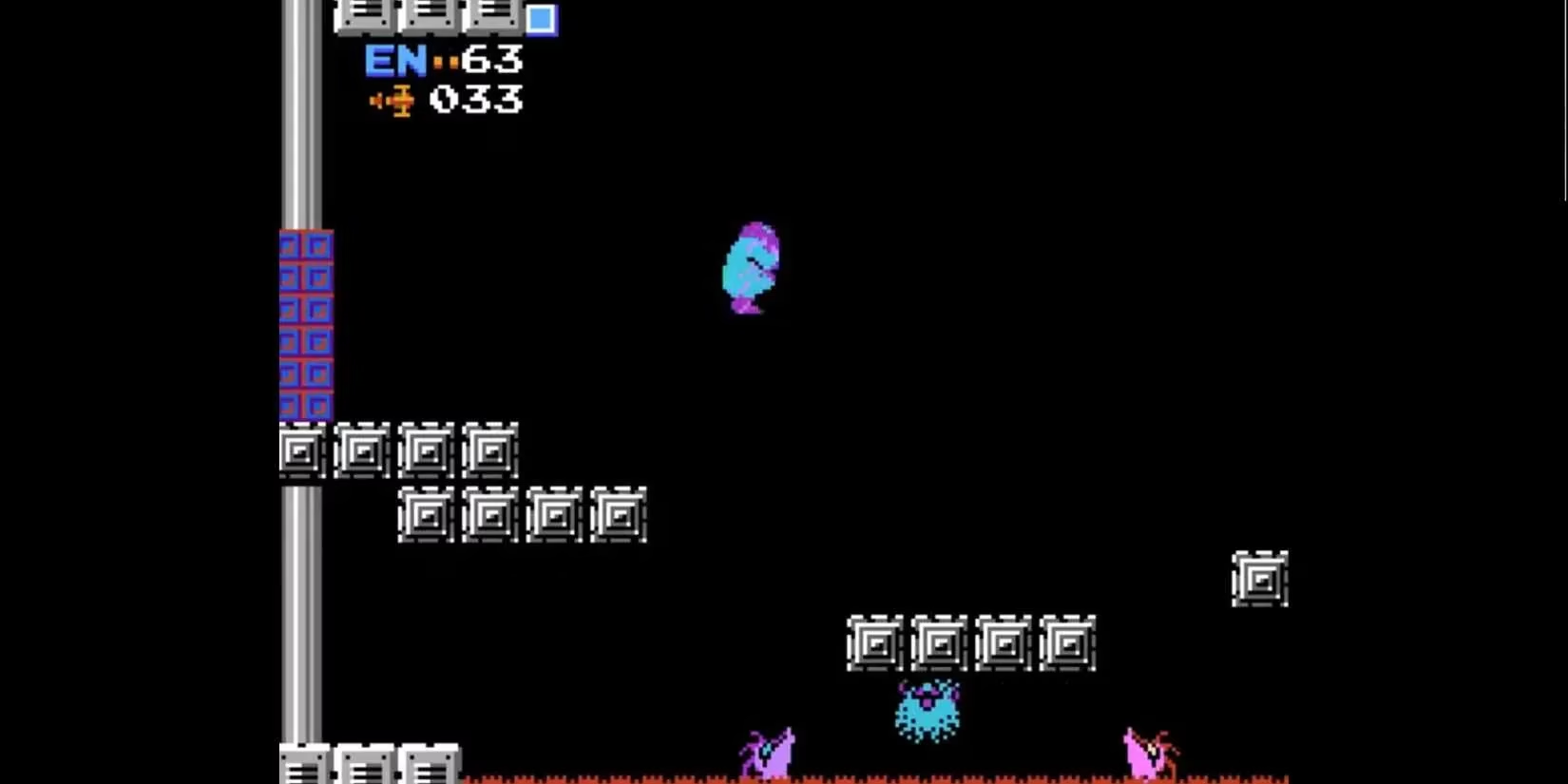
There is a poetry to motion, a rhythm found in the air. For years, Samus Aran taught me this with her Screw Attack. That familiar lightning bolt sphere became more than an icon; it was a promise. A promise that the air, once a space of vulnerability, could become a weapon. The transformation is beautiful—her spin becomes a helix of destruction, a dance that turns jumping into an act of defiance. In some worlds, this dance evolves, combining with wall jumps to create an aerial ballet, a self-aware yo-yo spinning through alien architectures. It’s the first lesson every explorer learns: your movement is your voice.
Then came the need for speed. 🏃♀️💨
Running through Zebes or Hallownest, I learned that patience has its limits. The Speed Booster & Shinespark from Super Metroid answered a deeper craving—not just to move, but to break through. The buildup is a tangible tension, a gathering of kinetic potential in my boots until the world blurs into a streak of color. And the moment you stop, crystallizing that momentum into a vertical rocket… that’s the Shinespark. It’s not just a tool; it’s a statement. It tells the world, "Your barriers are suggestions." I’ve spent hours, even now in 2026, finding new angles, using that stored energy to bypass the game’s own logic. It’s the cornerstone of mastery, turning progression into personal expression.
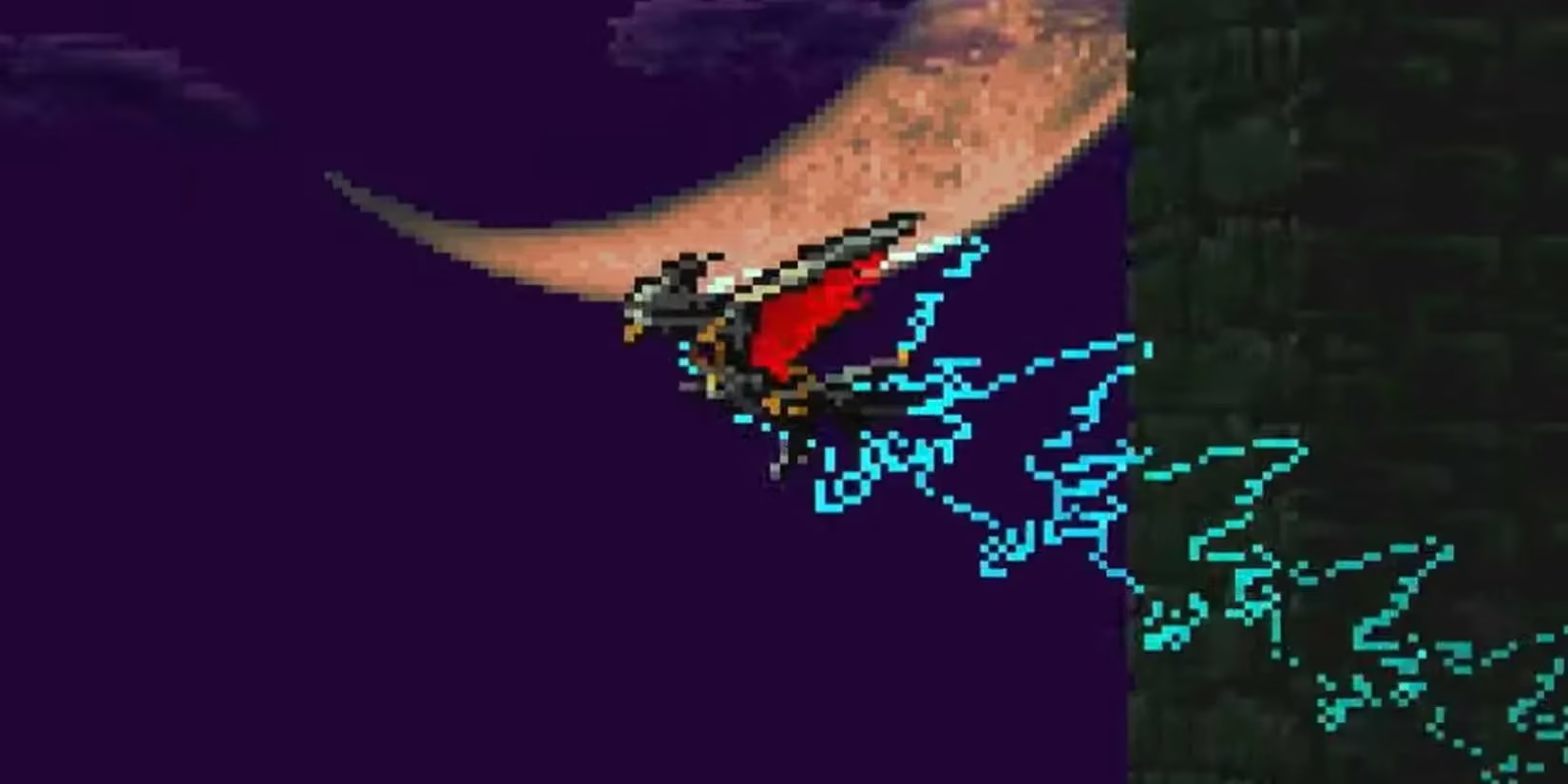
But exploration isn't always about force. Sometimes, it's about changing your nature. In the gothic halls of Dracula's castle, I found a different kind of freedom. The Soul of Bat for Alucard in Symphony of the Night is a whisper of legacy. A vampire’s son, embracing his birthright not to drink blood, but to take flight. The shift from warrior to bat is seamless—a puff of smoke, a flutter of wings. My perspective literally changes. High perches, once distant dreams, become perches. With upgrades, this form sings, launching fireballs and navigating darkness with clicks and echoes. It’s a power-up that doesn’t just add an action; it adds an identity.
Modern classics have refined this language. Hollow Knight’s world is stitched together by chasms that say "not yet" in the politest, deadliest way. The Crystal Heart is the eloquent reply. It asks for a moment of stillness—pressing against a wall, charging—before unleashing a horizontal comet’s flight. The feeling is pure, unadulterated velocity. You become a bullet train through caverns, a silent dart across gaps. The danger is ever-present (spikes don’t negotiate), but the reward is a map that folds in on itself, distances collapsing under the certainty of your dash.
And then, there are the transformations that make you smile.
Who would have thought the key to the tightest crevices would be… poultry? Guacamelee!’s Pollo Power is genius in its absurdity. One moment, Juan is a hulking luchador; the next, he’s a tiny, defenseless chicken, scampering through ducts. 🐔 It’s a joyful subversion of the classic "Morph Ball" trope. The sheer contrast is the comedy. And in true Metroidvania spirit, even this joke has layers—unlock the bomb eggs, and your weakness becomes a new kind of strength, blowing open paths with explosive poultry.
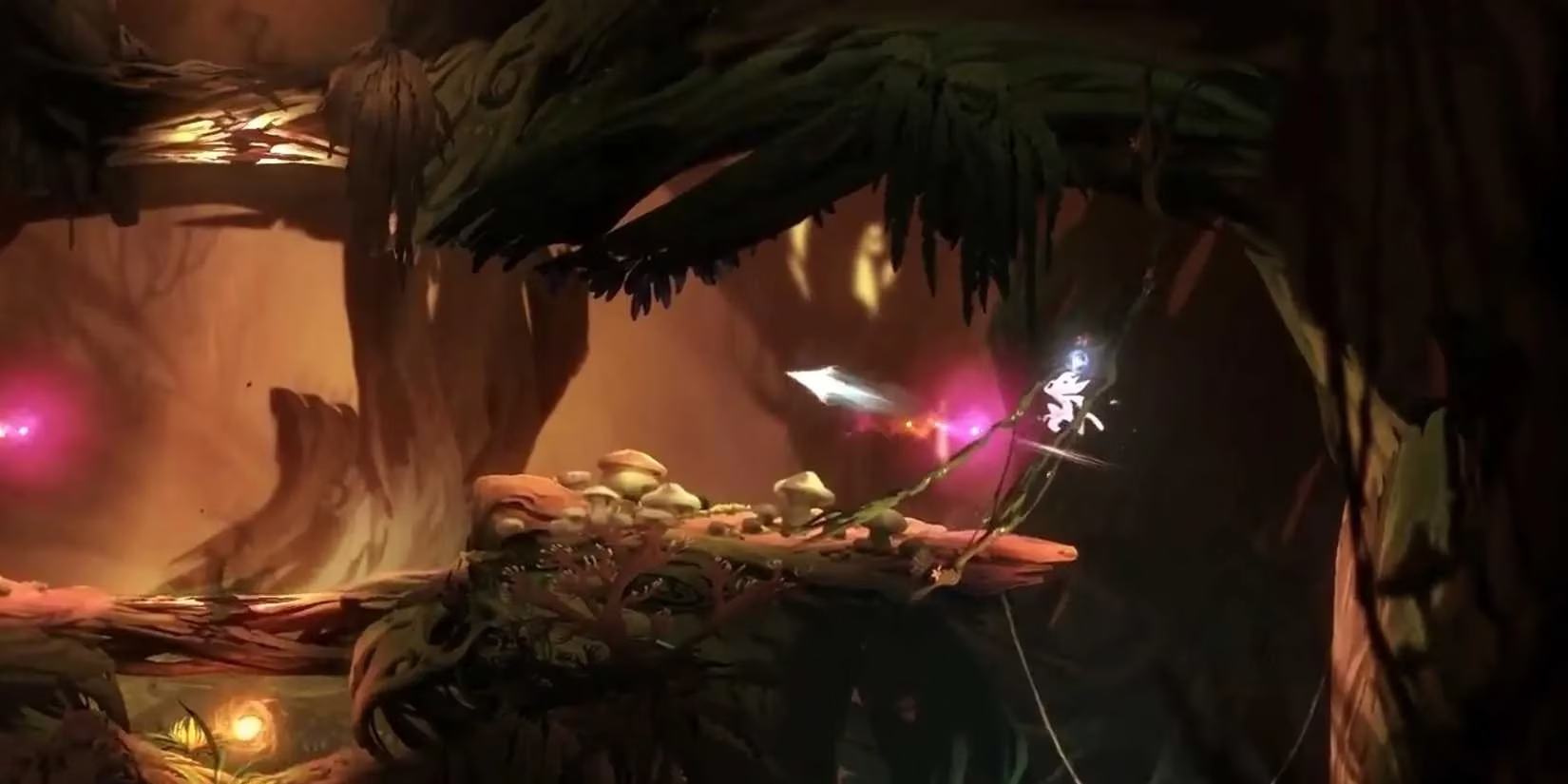
Some abilities change not just your path, but your relationship with the environment itself. Ori and the Blind Forest’s Bash is a revelation. It turns the world into a partner. Lanterns, enemies, even their own attacks—all become launch pads. The skill isn't in possessing power, but in seeing potential. A projectile isn't a threat; it's a ticket upwards. You redirect energy, bending trajectories to solve puzzles and attack. It creates a beautiful dialogue between Ori and the forest, where every object holds a secret conversation about momentum and angle.
The genre also delights in the novel and the bizarre. Take the Cannon Jump from Shantae and the Pirate’s Curse. Why have a boring double jump when you can sit on a cannon and fire it at the ground? The sheer, joyful impracticality of it! The triple blast gives a uniquely bouncy traversal, and the fact it damages foes below is the perfect cheeky bonus. It doesn’t take itself seriously, and that’s its strength.
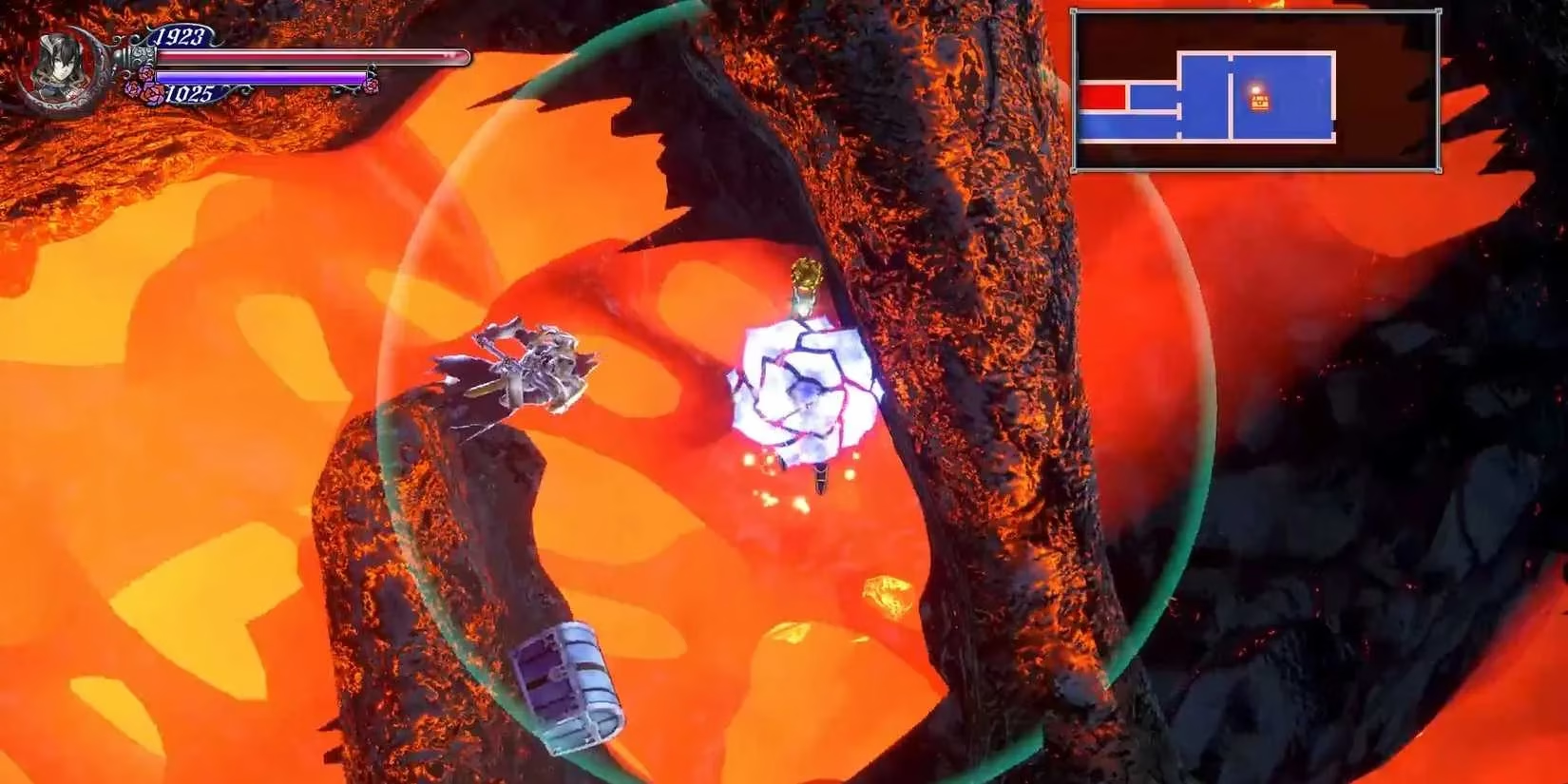
Other abilities play with the very fabric of the game world. Bloodstained: Ritual of the Night’s Invert is a loving, clever nod to Symphony of the Night’s inverted castle. But instead of a secret map, you get a personal gravity flip. The screen rotates 180 degrees, and suddenly, the ceiling is your floor. It’s an elegant solution to verticality—why fly when you can just redefine "up"? The moment of disorientation gives way to a giddy freedom, revealing every nook and cranny from a literally new perspective.
And then, there are powers that break the fourth wall of the game's own code. Axiom Verge’s Address Disruptor is pure, beautiful meta-fiction. It feels like having a developer’s toolkit in your hands. You don’t just fight enemies or open doors; you glitch them. You rewrite their fundamental properties. An impassable block shimmers and becomes passable. An enemy writhes in corrupted, digital agony. It makes you feel like a reality hacker, and the achievement for using it on every enemy type is the game winking at you, acknowledging the joy of systematic, playful destruction.
Finally, the simple, physical joy of climbing. Ender Lilies grants the Bloody Knight’s Claws, a power that turns every flat surface into a ladder. With Ulv’s spiked spirit aiding her, Lily can scale sheer walls, turning verticality into a playground. It creates a new rhythm: grab, jump, grab again. It opens avenues and crafts puzzles that are less about reaction and more about thoughtful, measured ascent. It’s a grounding power in a genre full of flight and dash, reminding you that sometimes, progress is a slow, steady climb.
| Power-Up | Game | Core Feeling It Evokes |
|---|---|---|
| Screw Attack | Metroid | Aerial Dominance - Turning jump into weapon. |
| Speed Booster | Super Metroid | Unstoppable Momentum - Breaking barriers with pure speed. |
| Soul of Bat | Symphony of the Night | Ethereal Freedom - Changing form to reach new heights. |
| Crystal Heart | Hollow Knight | Focused Velocity - Crossing vast distances in a single breath. |
| Pollo Power | Guacamelee! | Joyful Subversion - Strength in silly, unexpected forms. |
| Bash | Ori and the Blind Forest | Environmental Symphony - Using the world itself to move. |
| Cannon Jump | Shantae and the Pirate's Curse | Inventive Bounce - Traversal with explosive personality. |
| Invert | Bloodstained: Ritual of the Night | Perspective Shift - Redefining gravity and space. |
| Address Disruptor | Axiom Verge | Reality Hack - Glitching the game's own rules. |
| Bloody Knight’s Claws | Ender Lilies | Determined Ascent - The slow, satisfying climb. |
In 2026, these abilities are more than mechanics; they are memories. They are the sensations etched into my muscle memory—the charge of a Shinespark, the flip of a gravity field, the click of a well-aimed Bash. Each one is a key that didn't just open a door; it opened a new way of seeing the world. The map fills in, yes, but so does the understanding. You learn that a gap isn't an end, but a question. A high ledge isn't a barrier, but an invitation. And the power-up is the whispered answer, the sudden ability to speak the world's hidden language. This is the soul of the Metroidvania: a conversation between player and world, conducted not with words, but with movement, transformation, and the silent, glorious unlocking of potential.