
The Evolving Landscape of Metroidvania Games on Nintendo Switch in 2026
The Nintendo Switch, now approaching a decade since its launch, continues to serve as a fertile ecosystem for the Metroidvania genre, a style of gameplay as intricate and interconnected as the root system of an ancient tree. Born from the foundational principles of Metroid and Castlevania, this genre demands exploration, ability-gated progression, and meticulous map navigation. The console's unique hybrid nature and unwavering support for independent developers have made it the premier destination for fans seeking expansive worlds to conquer. In 2026, the genre's library on the platform is not just vast but represents a spectrum of innovation, from hand-drawn artistic marvels to genre-bending hybrids that challenge traditional conventions.
🎨 A Canvas of Exploration: Afterimage and Artistic Ambition
Among the visually arresting titles, Afterimage remains a landmark release. Its world, painted with the care of a Renaissance fresco, is staggering in scale and beauty. However, this grandeur can sometimes feel like navigating a labyrinthine museum without a floor plan; the pacing stumbles under the weight of its own ambition. The narrative complexity and non-linear structure can induce a sense of disorientation, making progression feel less like a curated journey and more like an aimless wander. Yet, for those willing to persevere, the game rewards with challenging combat and an artistic vision so distinct it etches itself into memory, proving that in the world of Metroidvanias, beauty and bewilderment can be two sides of the same coin.
⚔️ The Classics Refined: From GBA to Mount Qaf
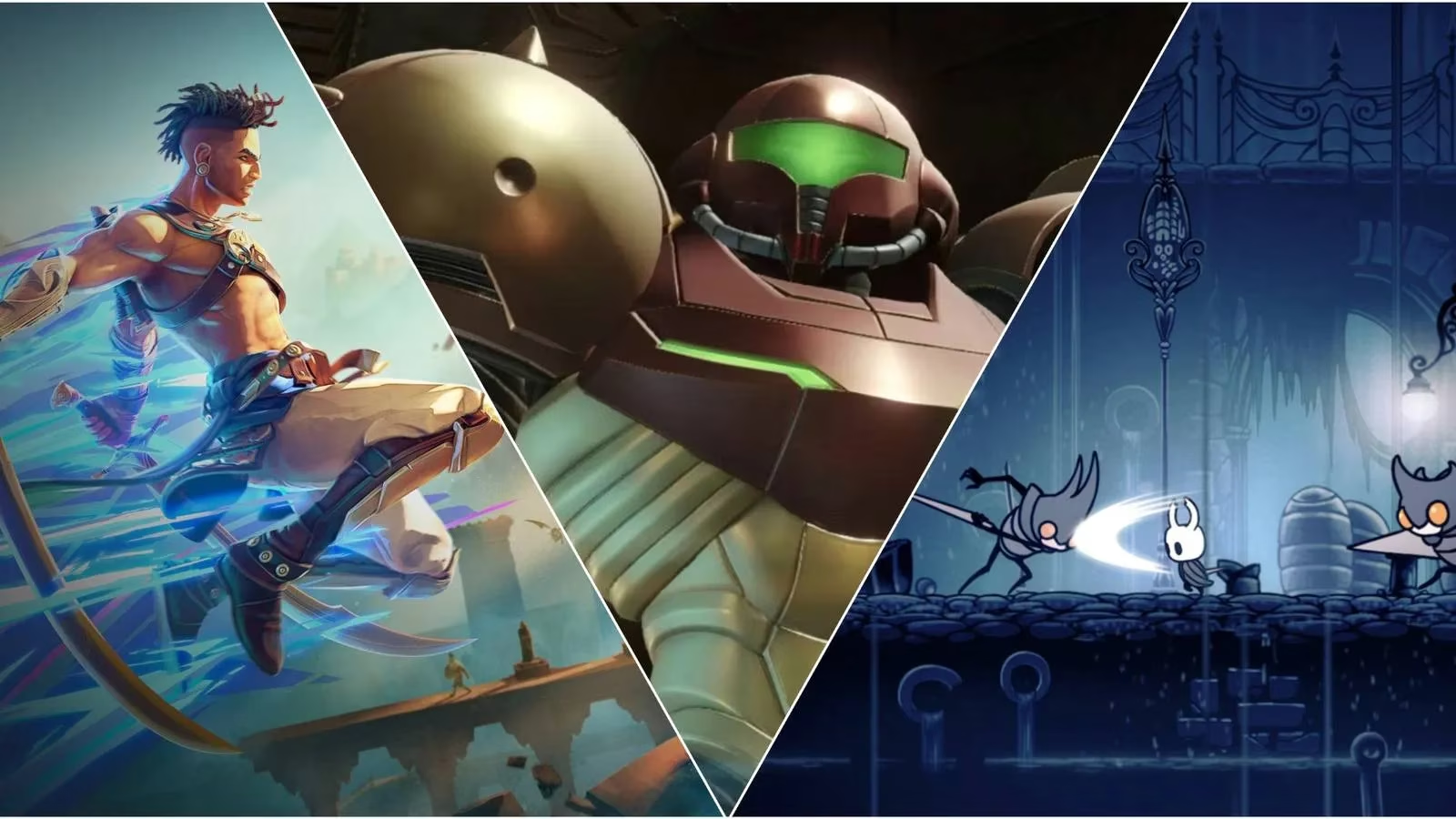
The genre's roots are kept vibrantly alive through timeless entries. Castlevania: Aria of Sorrow, accessible via the Castlevania Advance Collection, is a masterclass in refinement. Its ingenious Soul Capture system—where players harvest abilities from fallen foes—adds a strategic layer as deep and rewarding as a master sommelier's wine cellar. Meanwhile, Prince of Persia: The Lost Crown successfully reinvented a classic franchise, delivering a journey across Mount Qaf that is as precise in its platforming as a master watchmaker's craft. Sargon's fluid movement and the intricately designed, multi-layered map create a synergy where exploration and combat feel perfectly balanced, a testament to modern design honoring a legendary legacy.
| Game | Key Innovation | Core Experience |
|---|---|---|
| Aria of Sorrow | Soul Capture System | Strategic ability collection & Gothic exploration |
| The Lost Crown | Time-bending platforming | High-octane, precision-based action & exploration |
| Axiom Verge | Glitch-based weaponry | Nostalgic sci-fi exploration with surreal twists |
🔄 Genre Evolution and Hybrid Vigor
The boundaries of Metroidvania have been aggressively pushed by titles that blend its DNA with other genres. Dead Cells remains a powerhouse, marrying the exploration loop with roguelite randomness. Its ever-shifting castle is a crucible of combat, where each failed run is not a defeat but a lesson etched into the player's muscle memory, sharpening skills like a whetstone on a blade. On a different front, Metroid Prime stands as the monolithic proof that the genre's principles can thrive in three dimensions. Its remastered release on Switch polished the classic to a mirror sheen, with updated controls making the isolation and discovery of Tallon IV more immersive than ever. It is the genre's foundational pillar translated into a breathtaking, fully-realized 3D space.
🏆 The Pinnacle of the Form: Hollow Knight and Beyond
If the Metroidvania genre were a cathedral, Hollow Knight would be its most ornate and awe-inspiring spire. Team Cherry's masterpiece is more than a game; it is a meticulously crafted ecosystem, a clockwork kingdom of insects and sorrow where every new ability feels like receiving a master key to a previously inaccessible wing of a vast, decaying palace. Its combat is punishingly precise, its lore is buried deep like fossilized amber, and its world, Hallownest, invites a profound sense of melancholy and wonder. It didn't just raise the bar—it became the bar, a benchmark against which all subsequent entries are measured.
Following in these hallowed footsteps, Metroid Dread proved that a legendary franchise could return with triumphant force. It refined Samus Aran's movement to a razor's edge, introduced the relentless E.M.M.I. robots to create palpable tension, and wrapped it all in a level of polish as flawless as a gemstone. It was a statement that the genre's future is as bright as a power beam blast. Similarly, Blasphemous 2 carved its own niche with a grotesque, pious aesthetic and gameplay as fluid as spilled sacramental wine. Its interconnected world of Cvstodia is a challenging pilgrimage, rewarding the faithful with profound combat and a haunting narrative.
🌟 A Genre in Full Bloom
The Nintendo Switch's Metroidvania library in 2026 is a testament to the genre's vibrant health and endless potential. From the emotional resonance and visual splendor of Ori and the Will of the Wisps to the innovative, convention-challenging tools of Axiom Verge, there is a world for every type of explorer. These games are not mere homages; they are evolving conversations with the genre's past, each adding new vocabulary to its language of locks, keys, and maps. They prove that the core thrill of gaining a new power and revisiting a forgotten corner of the world to uncover its secrets remains one of gaming's most compelling loops. For players wielding a Switch, the promise of a vast, interconnected map full of mystery and mastery is always just a cartridge or download away.