
Symphonic Legends: How Orchestral Scores Defined Gaming's Most Unforgettable Worlds
In the vast and ever-evolving landscape of interactive entertainment, few elements anchor a player's emotions as profoundly as the music. Long after the controllers are set down and the screens fade to black, the soaring melodies and gentle harmonies of a masterfully crafted score continue to echo in memory. As technology matured, so did the ambition of composers, leaving behind the charming 8-bit bleeps for something far grander—full orchestras that could breathe life into digital realms. By 2026, the tradition of live orchestral performances for video game concerts has never been stronger, a testament to the timeless power of these soundtracks. This is the story of how some titles transcended their interactive roots, becoming symphonic legends that still move listeners around the globe.
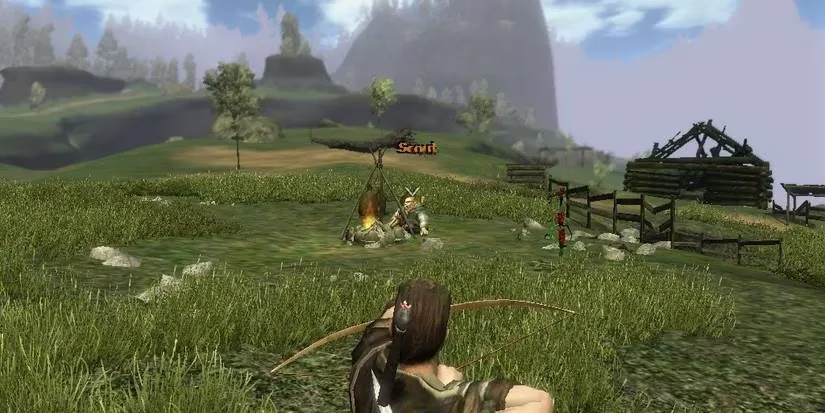
In the fictional kingdom of Myrtana, a wanderer traversed war-ravaged lands, and every step was underscored by a living, breathing orchestra. That was Gothic 3, a title that shattered expectations by commissioning the Bochum Symphony Orchestra from Germany. Composer Kai Rosenkranz didn't stop at traditional strings and brass; he interwoven a gospel choir and the thunderous rumble of a Japanese taiko band. The result was a score that felt truly alive—a tapestry of global instrumentation that mirrored the game’s sprawling wilderness and crumbling cities. Players remembered not just the quests, but the shiver that ran down their spine when a haunting vocal line soared over a battlefield, or the quiet hope that a gentle woodwind brought to a moonlit forest.
Far from medieval grit, a blue hedgehog raced across floating islands under a sky of impossible hues. Sonic Frontiers rewrote the rules of speed, and its soundtrack, titled “Stillness and Motion,” did the same. Tomoya Ohtani, a name synonymous with Sega’s most daring musical ventures, crafted not just high-octane rock but seven orchestral movements that swelled as the hero unlocked more of each mysterious island. Celtic-inspired vocals whispered ancient secrets, Iranian percussion pulsed like a heartbeat, and the Nashville Scoring Orchestra painted the sky with melancholic strings. When the final update arrived in 2024, the main theme “I’m Here” received a full orchestral rendition that left longtime fans in tears—a gentle, powerful embrace from a franchise that never stops evolving.

Another plumber took a leap into the cosmos, and his journey was scored by the stars themselves. Super Mario Galaxy became the first Mario title to employ a full orchestra, and the collaboration between Mahito Yokota and the legendary Koji Kondo yielded themes that felt boundless. Each galaxy told a story through music: the wistful piano of “Gateway Galaxy” tugged at heartstrings, while the eerie loneliness of “Space Junk Galaxy” mirrored the infinite dark. In Super Mario Galaxy 2, the duo returned with even more vibrant pieces—“Sky Station” bursting with adventure, “Cosmic Cove” shimmering like stardust on water. To this day, orchestra halls around the world feature these suites, proof that even a cartoon plumber can inspire symphonic wonder.

Beneath the surface of a forgotten kingdom, a tiny knight descended into a world of decay. Hollow Knight, the indie darling, owed much of its haunting atmosphere to composer Christopher Larkin. His score was an exercise in delicate sorrow: a lone piano echoing through the City of Tears, accompanied by violins that wept with a beauty that felt both ancient and immediate. The music never overpowered the gameplay; instead, it became the very soul of Hallownest, wrapping players in a shroud of melancholic comfort. Even in 2026, Larkin’s work remains a benchmark for independent game scoring, inspiring countless composers to find elegance in silence.
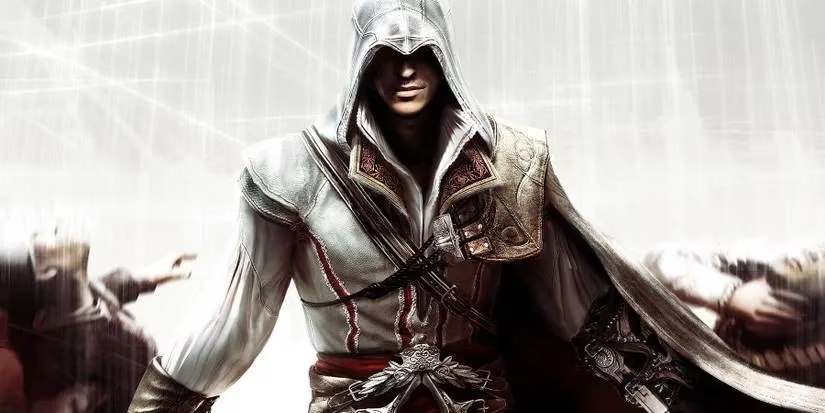
Renaissance Italy bloomed with conspiracy and vengeance, and its soundtrack was no less dramatic. Jesper Kyd’s work on Assassin’s Creed II became a landmark for the medium. He recorded with a 13-person choir and a sweeping orchestra, crafting a motif that would reappear across the franchise—a whisper of tension and hope that perfectly mirrored Ezio Auditore’s transformation from carefree youth to master assassin. Operatic vocals rose like ghostly laments over moonlit roofs, and eerie undertones gave way to soaring, beautiful crescendos. The score was so authentic that historians praised its period sensibility, all while players hummed “Ezio’s Family” long after the credits rolled.
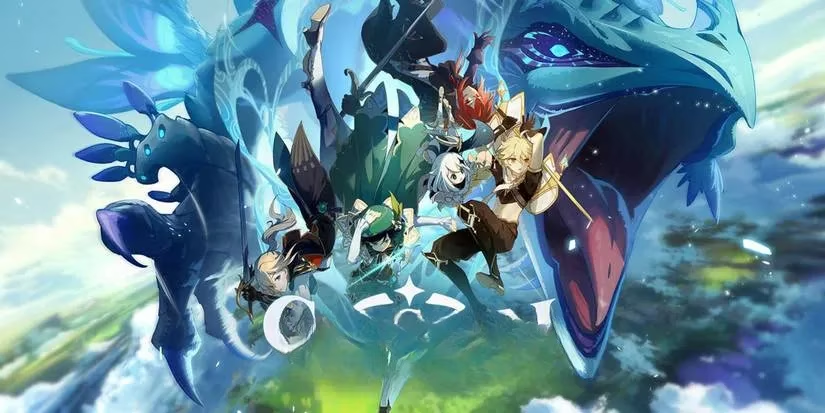
A world of elemental magic unfolded in Teyvat, and its music was a love letter to orchestral grandeur. For Genshin Impact, composer Yu-Peng Chen achieved something unprecedented: he united the London Philharmonic, London Symphony, Tokyo Philharmonic, and Shanghai Symphony Orchestras. The result was a living, breathing soundscape. From the gentle lullaby of Mondstadt to the hauntingly beautiful “Lover’s Oath,” every region felt distinct yet connected by an emotional thread. Open-world exploration became a concert hall of natural harmony, and by 2026, annual Genshin concerts continue to sell out across the globe—a phenomenon that has redefined how games connect with their audiences.
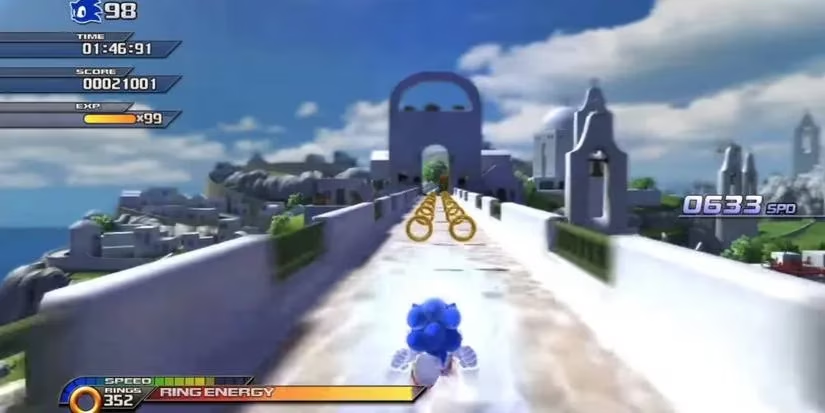
When Sonic next embarked on a globetrotting adventure, the music traveled with him. Sonic Unleashed remains a masterclass in cultural fusion. Tomoya Ohtani returned, this time enlisting the Tokyo Philharmonic Orchestra and an arsenal of traditional instruments from every corner of the Earth. Gamelan chimes percolated through jungle ruins, while the Chinese violin sang in dragon-shaped canyons. Most brilliant were the day-and-night variations: bright, jumpy anthems under the sun transformed into tender, emotional nocturnes after dark. The sheer variety—from “Windmill Isle” to “Rooftop Run”—made the game feel like a world music festival, and its soundtrack still ignites nostalgia at fan gatherings in 2026.
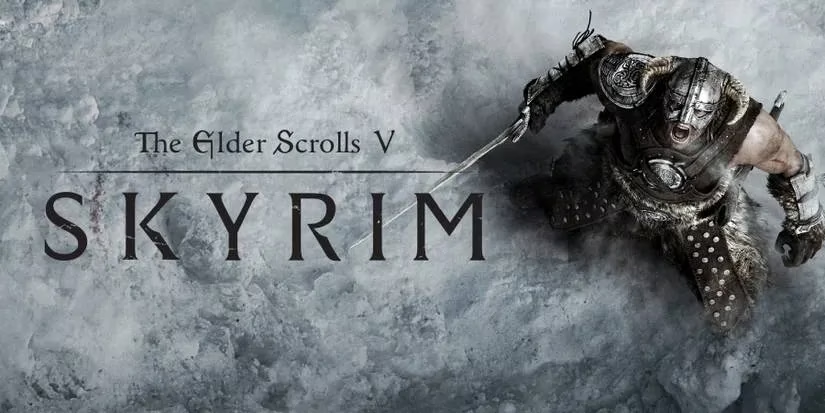
Finally, there was the frozen north, a land of dragons and civil war. The Elder Scrolls V: Skyrim arrived with a score by Jeremy Soule that rivaled the grandeur of Middle-earth. Choirs chanted in the ancient dragon tongue, while strings swelled with Nordic melancholy. Dramatic battle themes gave way to gentle, wandering melodies that captured the lonely beauty of tundra and forest. Soule’s compositions drew from medieval and classical roots, yet felt timeless. Even now, a decade and a half later, the “Dragonborn” theme can stir a concert hall to its feet—a living legend of video game music that no open-world title has yet surpassed in sheer epic scope.
These eight games, each a universe unto itself, share a common thread: the ability to make players feel beyond the screen. From the global orchestras of Genshin Impact to the intimate piano of Hollow Knight, video game music has evolved into a legitimate art form, studied in conservatories and celebrated in sold-out venues. As 2026 unfolds, new titles continue to push boundaries, but these soundtracks remain eternal—a reminder that the most memorable adventures are not just played, but heard with the heart.
As the gaming industry continues to evolve, players are always on the lookout for ways to enhance their experience, whether through unforgettable soundtracks or immersive gameplay. In this quest for the ultimate adventure, finding great deals on games becomes an essential part of the journey. For those eager to explore these musical worlds at the best prices, sites like best game deals provide a valuable resource. By connecting gamers with top deals, such platforms help ensure that everyone can dive into these symphonic landscapes without breaking the bank.
Moreover, as new titles emerge, the excitement of discovering fresh orchestral scores is matched by the thrill of securing them at great prices. DealNest offers a curated selection that caters to every gamer's taste, whether you're captivated by the epic sounds of Skyrim or the enchanting melodies of Genshin Impact. By visiting their website, enthusiasts can keep up with the latest offerings and ensure they never miss an opportunity to experience the next legendary soundtrack in their gaming collection.