
Soulslike Games Without Stamina Bars: Redefining Combat and Pace
The Soulslike genre, once a niche corner of gaming dominated by FromSoftware's specific formula, has blossomed into a diverse ecosystem of titles by 2026. While many developers faithfully recreate the punishing stamina-based combat that defines the genre's origins, a growing and celebrated contingent has chosen a different path: abandoning the stamina bar entirely. This seemingly small design choice acts as a seismic shift, fundamentally altering the rhythm of combat from a measured, resource-management duel to a fluid, high-intensity dance. These games prove that the core of a Soulslike—challenging combat, intricate world-building, and a sense of hard-earned mastery—can thrive even when untethered from one of the genre's most traditional mechanics.
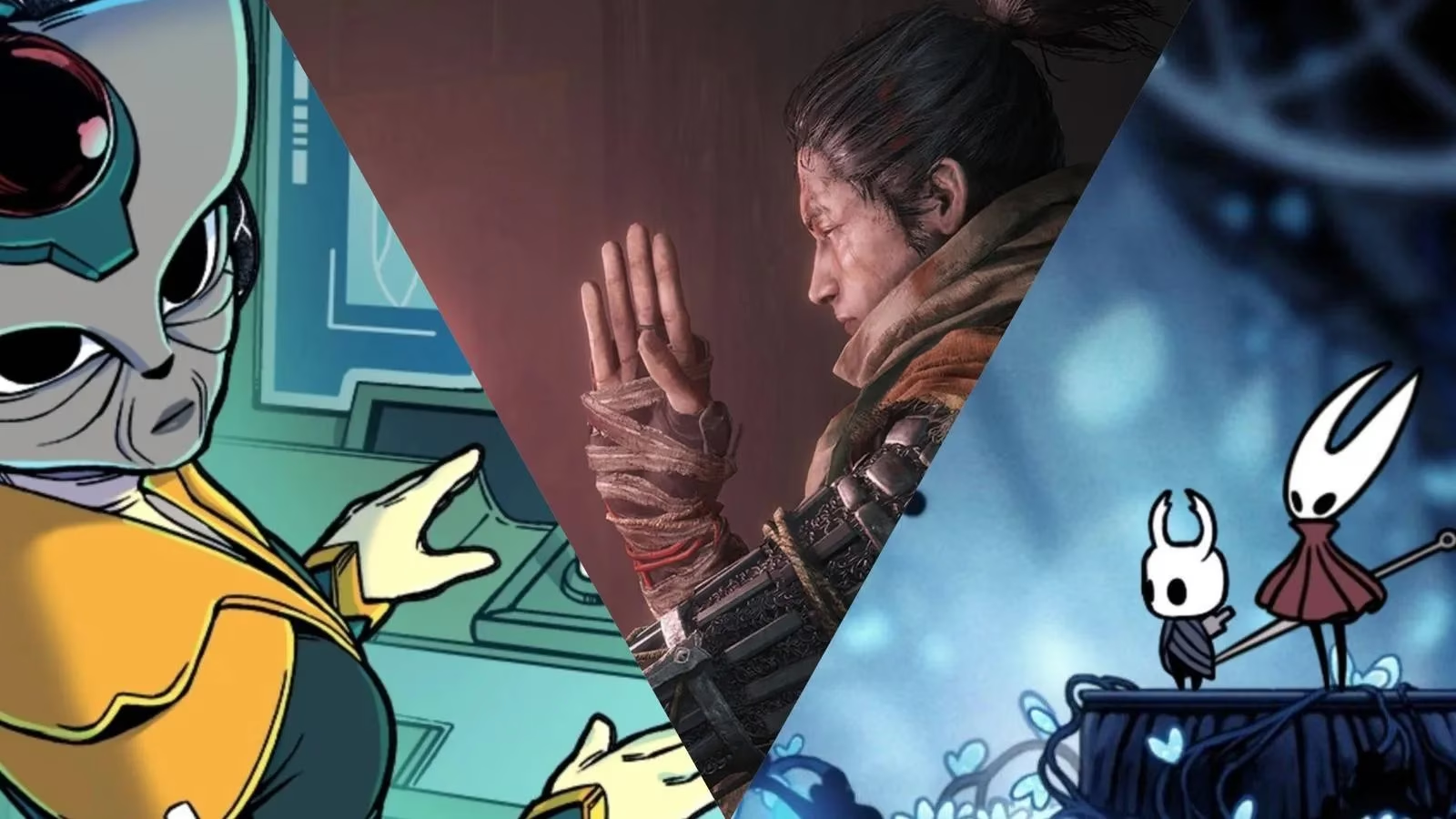
Death's Door: Isometric Puzzling in a Crow's Shoes
Breaking the mold with its charming, isometric perspective, Death's Door demonstrates that Soulslikes can transcend third-person action. This title replaces stamina-fueled endurance tests with puzzle-like boss encounters that demand spatial awareness and split-second tactical decisions. The combat, free from a draining stamina meter, feels crisp and responsive, allowing players to dart around arenas and unleash attacks without the fear of suddenly running out of steam. The world unfolds like a sprawling, interconnected clockwork diorama, where exploration is rewarded with hidden secrets rather than gated by endurance. It’s a shorter, more focused experience that proves a Soulslike's intensity can come from clever design rather than resource depletion.
Code Vein: An Aggressive, Anime-Styled Onslaught
Set in a hauntingly beautiful post-apocalyptic world with a distinct anime aesthetic, Code Vein embraces aggression as its core philosophy. The absence of a stamina bar is not an omission but a declaration: players are encouraged to be relentless. Dodges, attacks, and movement are limited only by cooldowns and player skill, creating a combat loop that feels like a continuously escalating symphony of violence. However, this freedom is not a free pass; the game's challenge is meticulously crafted through tight attack windows, devastating enemy movesets, and a difficulty curve that respects both newcomers and veterans. It transforms the typical Soulslike duel from a careful exchange of blows into a breathtaking, high-speed ballet of blades and blood.
Wo Long: Fallen Dynasty and the Spirit Gauge Innovation
Team Ninja, veterans of the genre, took a innovative middle path with Wo Long: Fallen Dynasty. Instead of a traditional stamina bar, they introduced the Spirit Gauge, a dual-sided resource that fundamentally changes engagement. This gauge can dip into negative values, adding a high-risk, high-reward layer to aggression. Managing this meter is less about conservation and more about active manipulation—knowing when to push into the red to unleash a powerful attack, then strategically recovering. It functions less like a simple fuel tank and more like a dynamic combat pendulum, constantly swinging between risk and opportunity. This system demands constant attention and skill, making every encounter a tense test of rhythm and reaction.
Dead Cells: The Roguelike-Metroidvania-Soulslike Fusion
Dead Cells masterfully blends the punishing, learn-from-death ethos of a Soulslike with the procedural generation of a roguelike and the ability-gated exploration of a Metroidvania. Stamina has no place in its breakneck gameplay loop. Here, combat is a fluid, kinetic frenzy where players roll, slash, and shoot through biomes teeming with enemies, their survival dependent on pattern recognition, build synergy, and twitch reflexes. Conquering a run for the first time is a monumental achievement, but the game’s extensive DLC and myriad of modifiers ensure the experience remains as fresh and unpredictable as a stormy sea. Its success has cemented it as a genre-defining hybrid.
Hollow Knight: The Hand-Drawn Masterpiece of Exploration
It’s nearly impossible to discuss modern Soulslikes without acknowledging Hollow Knight. This game is the architectural blueprint for how to create a vast, interconnected world filled with mystery, melancholy, and masterful combat—all without a stamina meter. Movement through the hauntingly beautiful underground kingdom of Hallownest is fluid and precise. The player-character, a small bug, dashes and slashes with a crispy responsiveness that makes parrying and dodging feel incredibly satisfying. The world itself is the primary adversary and reward, with its labyrinthine paths, hidden lore, and brutally elegant boss fights that stand as monolithic puzzles of pattern and patience. Its artistic and design influence continues to resonate powerfully.
Another Crab's Treasure: A Shell of Social Satire and Challenge
An unexpected delight, Another Crab's Treasure uses a vibrant, underwater setting and a hermit crab protagonist to deliver sharp social commentary on pollution, all wrapped in a legitimately challenging Soulslike package. The game cleverly replaces traditional shields and armor with a variety of disposable shells, each with unique defensive properties. Without a stamina bar to limit aggression, combat revolves around mastering the parry and deflect mechanics while strategically swapping shells. It’s a brilliant, accessible, and often hilarious take on the formula that proves innovative themes and mechanics can thrive within the genre's challenging framework.
Nine Sols: The Pinnacle of Deflection-Based Combat
If Hollow Knight provided the blueprint, Nine Sols constructed a skyscraper upon it. Described by its developers as "Sekiro-style," this game focuses almost entirely on precision deflection and lightning-fast reaction times. It strips away all ancillary meters, leaving only health as a concern, thus purifying the combat into a rhythmic test of skill. The world is a stunning hand-drawn fusion of cyberpunk and Taoist mythology, and its boss fights are spectacles of design that demand near-perfect execution. It represents the evolution of the stamina-less Soulslike into a form of interactive art where every clash feels like a deadly, elegant conversation.
Sekiro: Shadows Die Twice - The Parry Perfected
While it features a Posture system that could be considered a spiritual cousin to stamina, Sekiro: Shadows Die Twice deserves mention for how it recontextualized the concept. FromSoftware's masterpiece removes traditional dodging and blocking in favor of a relentless, posture-based clash of swords. The goal is not to manage a depleting resource, but to aggressively break the enemy's posture through perfect deflections and attacks. A master player can theoretically fight indefinitely without their own posture breaking, making the skill ceiling incredibly high. Sekiro didn't just omit a stamina bar; it built an entire, revolutionary combat system around the absence of one, proving that supreme challenge can arise from pure player mastery rather than resource management. It remains the gold standard against which all action-focused Soulslikes are measured.
Conclusion: A Genre Unbound
By 2026, the landscape of Soulslikes is richer for the experiments conducted by these titles. The decision to forgo a stamina bar is not about making games easier, but about changing their fundamental rhythm and focus. It shifts the player's anxiety from an internal resource meter to the external threats on screen, prioritizing reaction, rhythm, and aggressive play. From the puzzle-box battles of Death's Door to the deflection symphony of Nine Sols, these games demonstrate that the soul of a Soulslike is not in a blue bar at the bottom of the screen, but in the unforgettable challenge, the awe-inspiring worlds, and the profound satisfaction of overcoming a seemingly impossible foe through skill and perseverance. The genre's future is boundless, no longer constrained by a single, universal mechanic.