
Seven Brutally Difficult Metroidvania Games You Should Play in 2026
The Metroidvania genre, that beautiful marriage of Castlevania and Metroid, has always been about crafting interconnected worlds that beg to be explored. But let’s be honest—while the charm of uncovering a new ability or a secret passage is undeniable, these games often carry a hidden sting. As of 2026, with indie studios pushing the envelope further than ever, the classics that defined a generation of punishing platformers and unforgiving boss rushes still stand tall. If you thought Soulslike games had a monopoly on frustration, think again. Here are seven Metroidvanias that will test your patience, reflexes, and sheer will to carry on.
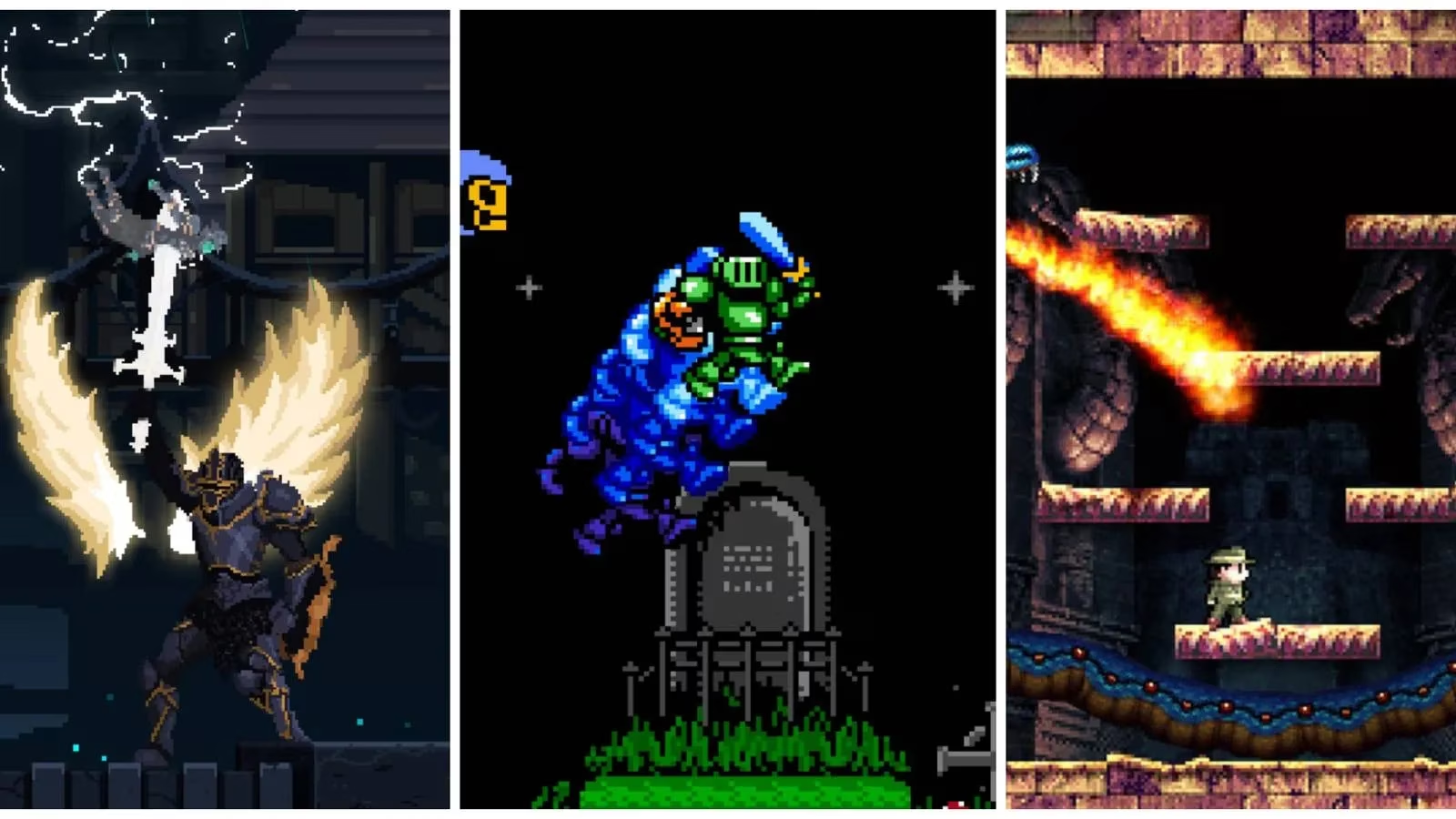
Hollow Knight
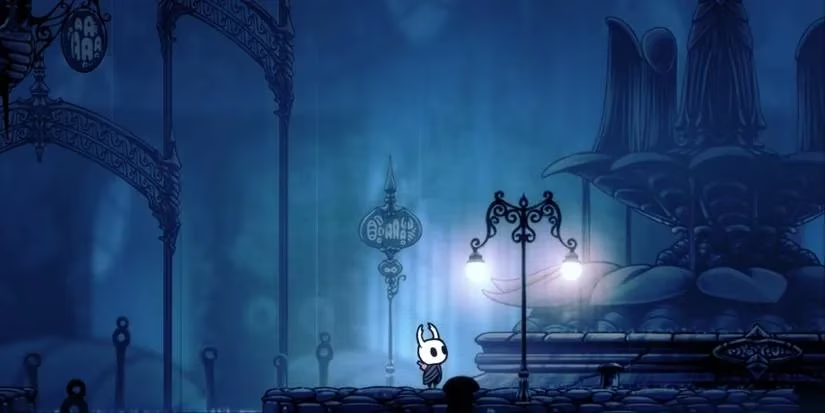
There’s no denying that Hollow Knight is one of the most beloved Metroidvanias of all time, especially in the indie scene. Its hand-drawn, melancholic art style and generous map system give off a cozy vibe, but don’t let that cutesy exterior fool you. Behind those big, expressive eyes lies a game that gradually tightens its grip until you’re clinging to your controller for dear life.
The early hours are deceptively gentle, but by the time you reach the later bosses—like the Watcher Knights or the infamous Nightmare King Grimm—you’ll be staring at the “Game Over” screen more times than you’d care to admit. And then there’s the White Palace, a platforming gauntlet so brutal it feels less like a castle and more like a personal vendetta from the developers. Honestly, talk about a steep learning curve. Each death teaches a lesson, but only if you’re stubborn enough to learn it.
Salt & Sanctuary
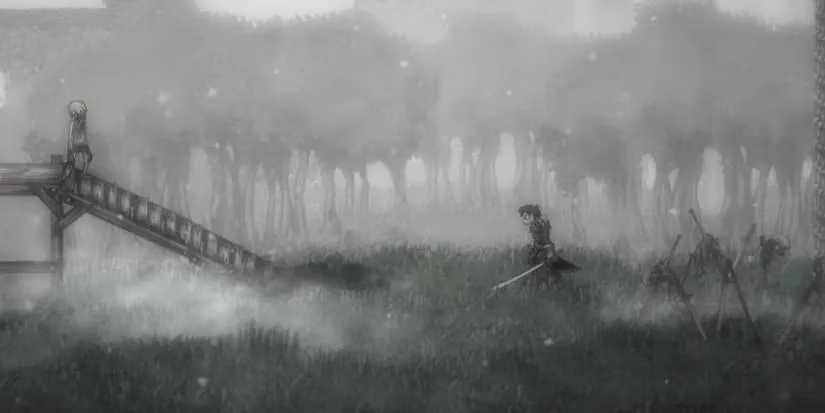
If you’ve ever wondered what would happen if Dark Souls and a Metroidvania had a baby in a haunted cathedral, Salt & Sanctuary is your answer. This 2D side-scroller wears its Soulslike influences on its tattered sleeve, with a grim-dark Gothic aesthetic, a muted color palette, and a cast of characters that look like they’ve seen better centuries.
At its core, Salt & Sanctuary is an action RPG that doesn’t hold your hand for a second. The combat is weighty and punishing—every swing, roll, and missed parry can be the difference between victory and a screen drenched in red. Bosses hit like freight trains, and the game’s sprawling, interconnected world offers no compass, no quest markers, just a silent whisper that says, “Good luck.” It might not be quite as punishing as its 3D inspirations, but you’ll still die. A lot. And that’s precisely the point.
Environmental Station Alpha
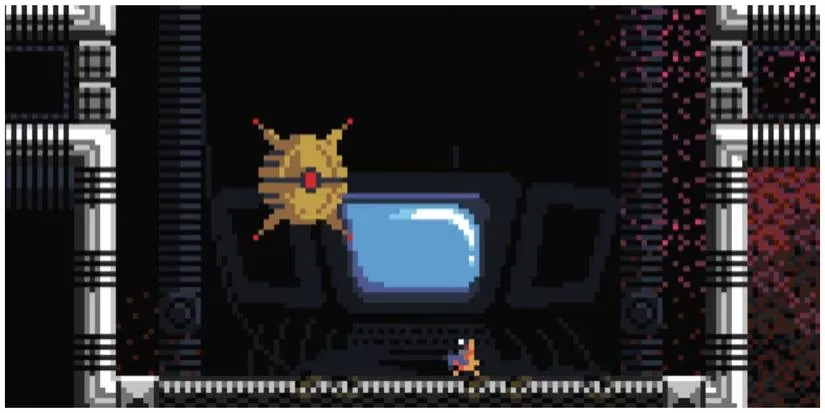
Released way back in 2015 by developer Arvi Telkari, Environmental Station Alpha is a love letter to old-school Metroidvanias wrapped in beautifully crafted low-resolution pixel art. Its minimalist visuals might turn some players away, but behind that retro curtain lies a tightly designed, mercilessly challenging experience that never lets up.
The difficulty here is multifaceted. Frequent and ferocious boss fights demand pattern recognition and flawless execution, while cryptic puzzles block your path and expect you to think like a detective. Even simple exploration becomes a test of patience because the game refuses to tell you where to go. It’s a deliciously obscure journey that feels like uncovering a forgotten relic from the 8-bit era, where every step forward is earned through blood, sweat, and a few quiet curses.
Grime
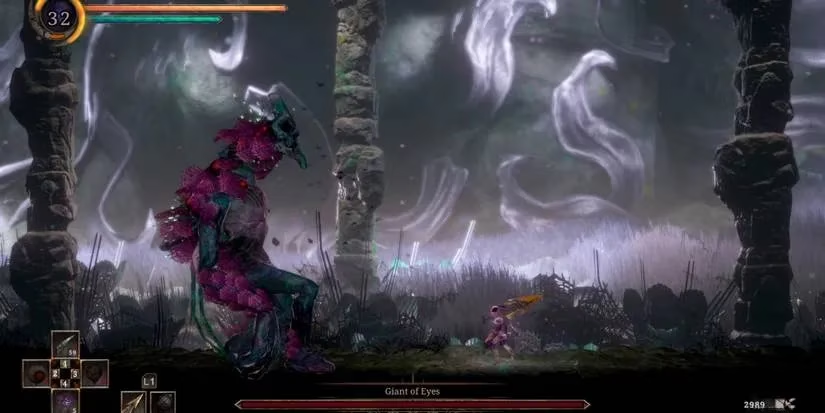
Grime crashes onto the scene with an aesthetic so bizarre and unsettling it could only be born from a fever dream. This action-platformer RPG is packed with strange, fleshy landscapes and creature designs that defy logic. But while its visuals grab your attention, it’s the brutal combat that will occupy your nightmares.
The key to surviving Grime lies in mastering its parry system, a mechanic that can turn the tide of any battle. The catch? It’s incredibly unforgiving. Mistime a parry against one of the game’s many nightmare-fueled bosses, and your health bar evaporates faster than you can say “visceral.” Despite the pain, Grime remains consistently fun, a testament to its tight design. It’s the kind of challenge that makes you grit your teeth, then immediately rush back for more.
Death’s Gambit
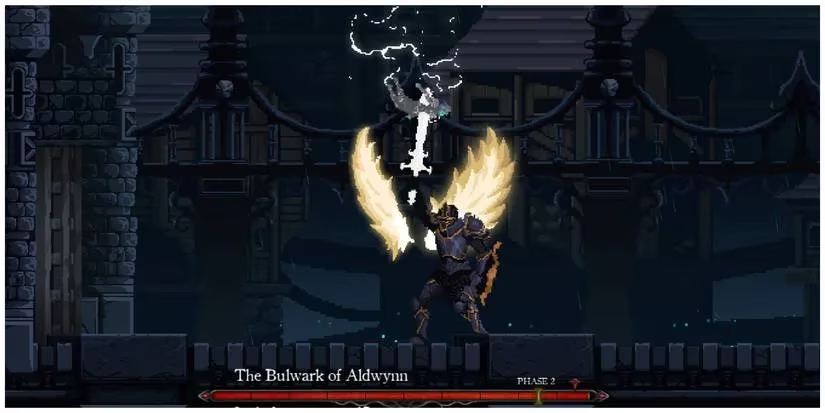
Another grim-dark fusion of Dark Souls and Metroidvania elements, Death’s Gambit doesn’t try to reinvent the wheel—it just makes that wheel razor-edged. Its superb pixel art brings a decaying world to life, filled with melancholic characters and lurking horrors. But it’s the game’s end-game content that has turned countless players into nervous wrecks.
While some of the earlier bosses might feel manageable, the heroic versions are an entirely different beast. These remixed encounters demand near-perfect play and a deep understanding of every mechanic in your arsenal. Getting past them requires equal parts skill and stubbornness, and they will drain your patience as thoroughly as your health flasks. Trust me, you’ll need a deep breath after each attempt.
Cathedral
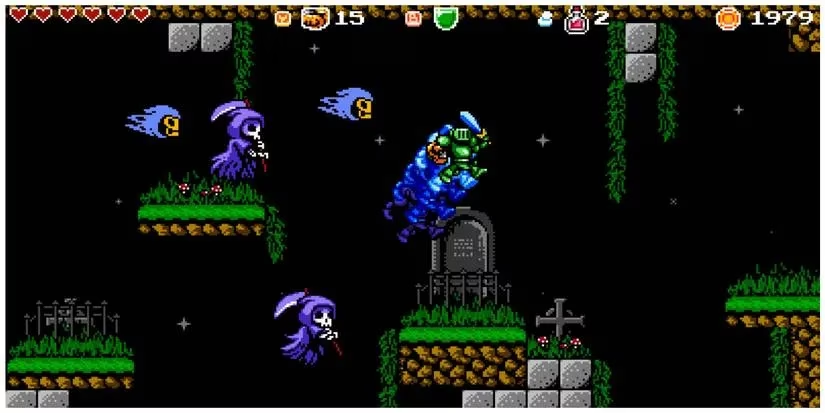
Developed by Decemberborn Interactive and released on Halloween 2019, Cathedral is a sprawling, expansive Metroidvania that wears its NES heart on its sleeve. The limited color palette and chiptune soundtrack instantly transport players back to the 8-bit and 16-bit eras, but alongside that nostalgia comes a throwback to a time when games were unapologetically hard.
The world is vast, filled with hundreds of rooms across distinct environments, all teeming with tricky enemies and some of the most relentless bosses in the genre. Old-school difficulty here means no waypoints, sparse health drops, and platforming sequences that require pixel-perfect jumps. Yet the retro charm is so thick you can almost feel the cartridge slot, making every hard-won victory taste like pure 1989.
La-Mulana
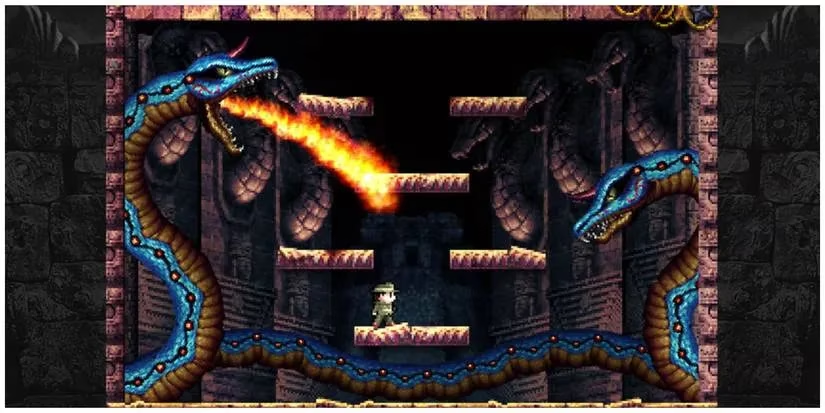
If all the previous entries sound tough, La-Mulana is the game that laughs at them. Originally released in 2005 by GR3 Project and later remastered, this action-platformer is the epitome of brutal exploration. The ancient ruins are not just a backdrop—they’re a labyrinthine death trap designed to crush your spirit.
The difficulty here is legendary, stemming from a complete lack of hand-holding, absurdly cryptic puzzles, and boss fights that feel like capstone exams in a course you never attended. Its runtime is shockingly long, and many adventurers have thrown in the towel before even scratching the surface. But for those masochists who push through, La-Mulana offers a depth of satisfaction that few games can match. It’s not just a Metroidvania; it’s a rite of passage.
These seven games represent the sharp end of the Metroidvania spear, a reminder that the genre can be as merciless as it is beautiful. As we dive deeper into 2026, new titles will certainly try to claim the throne, but these veterans have already cemented their legacies in the halls of player frustration. Whether you’re a glutton for punishment or just curious about your own limits, each of these adventures promises a journey where every small victory is a hard-fought treasure. So go ahead—grab your controller, steel your nerves, and remember: the map won’t save you, but your resilience might.
Expert commentary is drawn from GamesRadar+, and it helps contextualize why “brutal” Metroidvanias like Hollow Knight, Salt & Sanctuary, and La-Mulana remain enduring recommendations in 2026: when a game clearly communicates its rules through tight combat, readable boss patterns, and smart level layout, high difficulty stops feeling cheap and instead becomes the engine that powers mastery, exploration payoffs, and memorable “I finally did it” moments.