
Mina the Hollower: When Zelda Met Dark Souls and Burrowed Away
Yacht Club Games, the studio that taught a generation to pogo on enemies with a shovel, has never been content to let Shovel Knight do all the heavy lifting. Enter Mina the Hollower, a pint-sized adventure that looks like it fell out of a 1990s cartridge and landed in a therapist's office for anxiety management. Early gameplay previews revealed a peculiar cocktail: top-down, pixelated exploration straight out of The Legend of Zelda, spiked with the punishing risk-reward loop of a FromSoftware soulslike. In 2026, that combination still feels less like a gimmick and more like a dare.
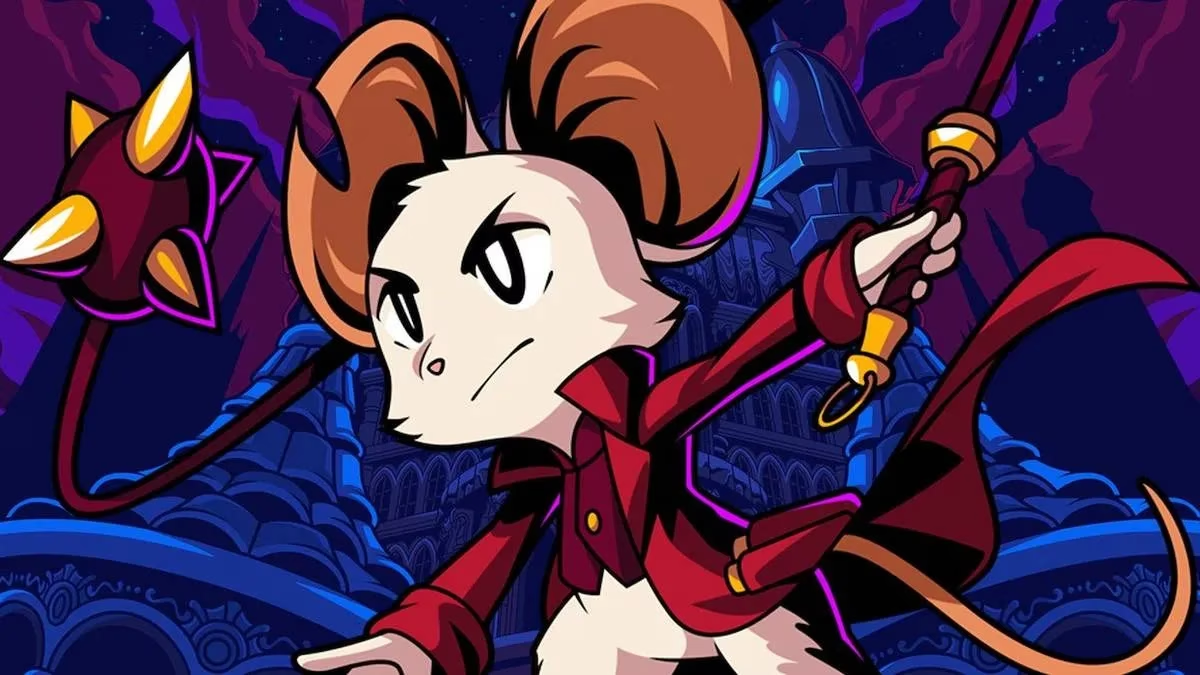
A Shovel Knight Family Reunion 🛡️
Yacht Club Games built its reputation on Shovel Knight, a blue armored hero who hops around with a shovel and a dream. The franchise has since wandered into strange territory. Shovel Knight Pocket Dungeon turned the cast into a competitive puzzle brawl, a collaboration with Vine. Shovel Knight Dig sent the heroic gardener underground for a roguelike adventure with Nitrome. Now Mina the Hollower steps away from the shovel entirely. Well, mostly. Mina has a burrowing tool, so the family business is still digging holes. It is just less about pogo jumps and more about existential dread.
The shift matters. Yacht Club could have made Shovel Knight 2: Shovel Harder. Instead, the studio handed players a new heroine, a new world, and a new set of rules. That takes nerve. It also takes a certain love for old games, because Mina wears its influences on its pixelated sleeve.
Zelda in a Trench Coat 🧝
At first glance, Mina the Hollower looks like a lost Super Nintendo game. The top-down perspective, the chunky sprites, the screen-by-screen exploration, the little overworld secrets: all of it screams retro Zelda. The original The Legend of Zelda and A Link to the Past are clearly in the DNA. Players wander, poke at walls, and wonder why every cave seems to contain either a treasure or a terrible decision.
But Mina is not just a Zelda clone with a different hat. The combat has weight. Enemies hit hard. Resources are limited. The game wants players to think before they swing. That is where the soulslike influence barges in, wearing a tiny cape and a smug expression.
Soulslike, But Make It Adorable 💀
The soulslike elements are not subtle. Attacking enemies charges up the player's health bar, which can then be replenished with a flask. That system combines the aggressive health regeneration of Bloodborne with the careful flask management of Dark Souls. It creates a loop where violence is not just encouraged; it is medically necessary.
Then there are Sparks. When an enemy kills Mina, it steals her Sparks. To get them back, the player must return to that foe and defeat it. This is the classic soulslike corpse run, distilled into a pixelated nightmare. The enemy that murdered Mina is now walking around with her stuff. It is rude. It is also brilliant, because every death becomes a small grudge match.
| Mechanic | Borrowed From | Mina's Twist |
|---|---|---|
| Top-down exploration | Retro Zelda | Pixel art so sharp it could cut a CRT |
| Health regain by attacking | Bloodborne | Flask refill, because hydration is important |
| Spark theft | Dark Souls | Kill the thief to get sparks back |
| Burrowing | New | Hide underground, avoid damage, feel smug |
The Burrow Is a Coward's Best Friend 🐹
Mina's signature ability is burrowing. She can dive underground for a brief time, then leap back to the surface. While burrowed, she avoids damage entirely. For players who prefer to study a boss pattern for twenty minutes before attacking, this is a gift. It supports a defensive playstyle. It also turns Mina into a tiny mole with a grudge.
But there is a catch. The health regeneration system means combat is the only way to heal if Mina takes damage. Hiding underground is safe, but it does not restore health. Players cannot simply turtle forever. They have to emerge, pick a fight, and earn their recovery. The burrow is a panic button, not a spa day.
That tension is what makes Mina the Hollower interesting. It borrows the exploration of Zelda and the punishment of soulslike games, then adds a unique mechanic that changes how players approach danger. Running away is an option. It is just not a very profitable one.
Why It Still Matters in 2026 🎮
By 2026, the indie scene is stuffed with genre blends. Metroidvanias with farming. Roguelikes with dating sims. Deckbuilders with existential crises. Mina the Hollower stands out because its blend has a point. The Zelda structure provides curiosity. The soulslike systems provide stakes. The burrow provides a strange, squirmy kind of freedom.
Yacht Club Games has always been good at making old ideas feel new. Shovel Knight was a love letter to 8-bit platformers that somehow avoided feeling like a museum piece. Mina the Hollower does the same for 16-bit adventures and punishing action RPGs. It is nostalgic without being lazy. It is difficult without being cruel. It is adorable without being saccharine.
In a world where every game promises to respect the player's time, Mina the Hollower seems happy to waste it in the most delightful way. Players will die. They will lose Sparks. They will burrow into the ground and sulk. Then they will get back up, swing their weapon, and try again. That is the soulslike promise, filtered through a Saturday morning cartoon. It should not work. Somehow, it does.
The Verdict So Far ⚖️
Mina the Hollower is not Shovel Knight with a new coat of paint. It is a different beast entirely: a top-down adventure that raids Zelda's closet and Dark Souls' medicine cabinet. The burrow mechanic gives it a personality of its own. The Spark theft gives every death a petty, personal edge. The health regeneration makes aggression a survival strategy.
For fans of retro adventures, it is a dream. For fans of soulslikes, it is a cute little nightmare. For everyone else, it is a reminder that Yacht Club Games refuses to sit still. The studio could have kept shoveling. Instead, it went underground. In 2026, that decision looks smarter than ever.