
Metroidvanias That Only Get Better as You Go Deeper
You know that feeling when a game starts off a bit slow, maybe even a little clunky, and you're wondering if it's worth your time? Well, in the world of Metroidvanias, that's often the whole point. These games are masters of the slow burn, teasing you with the basics before unleashing a tidal wave of creative genius that makes the early-game struggles feel like a distant memory. It's not about getting a shiny new sword five minutes in; it's about earning that moment, hours later, when you're zipping through areas that once felt impassable, juggling abilities you didn't even know existed, and realizing the game you're playing now is a glorious, evolved beast compared to the one you started. It's like a fine wine, but with more wall-jumping and eldritch horrors.
Let's start with a game that whispers before it screams. Ender Lilies doesn't greet you with bombast. It creeps in on tiptoes, wrapped in a blanket of quiet melancholy and delicate piano notes. You're just a little girl in a world drowning in grief, with a single spectral knight to do your fighting. Lonely? You bet. But stick with it. Soon, you're not just swinging a sword; you're conducting an orchestra of fallen spirits, each with their own unique rhythm and purpose. Need to melt a boss's health bar? Summon the right spirit. Swarmed by mobs? Time to switch to your crowd-control specialist. The combat evolves from a simple duet into a complex, beautiful symphony of spectral teamwork.
And the movement? Oh, the movement! It starts as the most basic of platforming. Jump. That's it. But then... the double jump arrives. Then the dash. Then you're climbing walls and, in the late game, teleporting short distances. Traversal transforms from a cautious trek into an elegant, mournful dance through the ruins. The lore, too, isn't shoved in your face. It's a slow drip-feed through item descriptions and optional encounters, inviting you to piece together the tragic puzzle of the Rain of Death. By the finale, you're not just playing a game; you're experiencing a moving elegy.
Then there's The Messenger. Talk about a plot twist! You boot it up thinking it's a charming, 8-bit ninja platformer with some great jokes. The humor is on point, the wall-clinging feels great, and you're having a blast. And then—BAM! The game pulls the rug out from under you. Suddenly, you're in a 16-bit era, and the whole structure explodes into a full-blown, time-traveling Metroidvania. The soundtrack upgrades right along with the graphics, and it's a pure shot of nostalgia-fueled joy. But the real magic is in the backtracking. Thanks to time portals, revisiting an old area isn't a chore; it's a revelation. The entire level design flips between its 8-bit and 16-bit versions, hiding secrets you couldn't possibly have seen before. That chatty shopkeeper with his random stories? Yeah, he's way more important than he lets on. This game doesn't just improve; it undergoes a glorious metamorphosis right before your eyes.
Now, let's talk about a legend who's had enough. In Metroid Dread, Samus Aran isn't messing around anymore. The game opens with her getting utterly owned by a Chozo warrior, setting a tone of relentless tension. This is Samus at her most hardened, her most focused. And her arsenal grows to match. The beginning is a desperate, heart-pounding crawl through zones stalked by the terrifying E.M.M.I. robots. By the end? You're a goddess of destruction, weaving a ballet of missiles, beam blasts, and brutal melee counters. Every new ability sharpens the combat to a razor's edge. The Shinespark maneuver returns and is more satisfying than ever, especially when used to solve devious environmental puzzles. And the final boss, Raven Beak? He doesn't just test your skills; he demands you master every single tool in your kit. The pacing is impeccable. When you finally loop back through the early zones with all your glorious gear, the entire planet of ZDR feels like your personal, deadly playground.
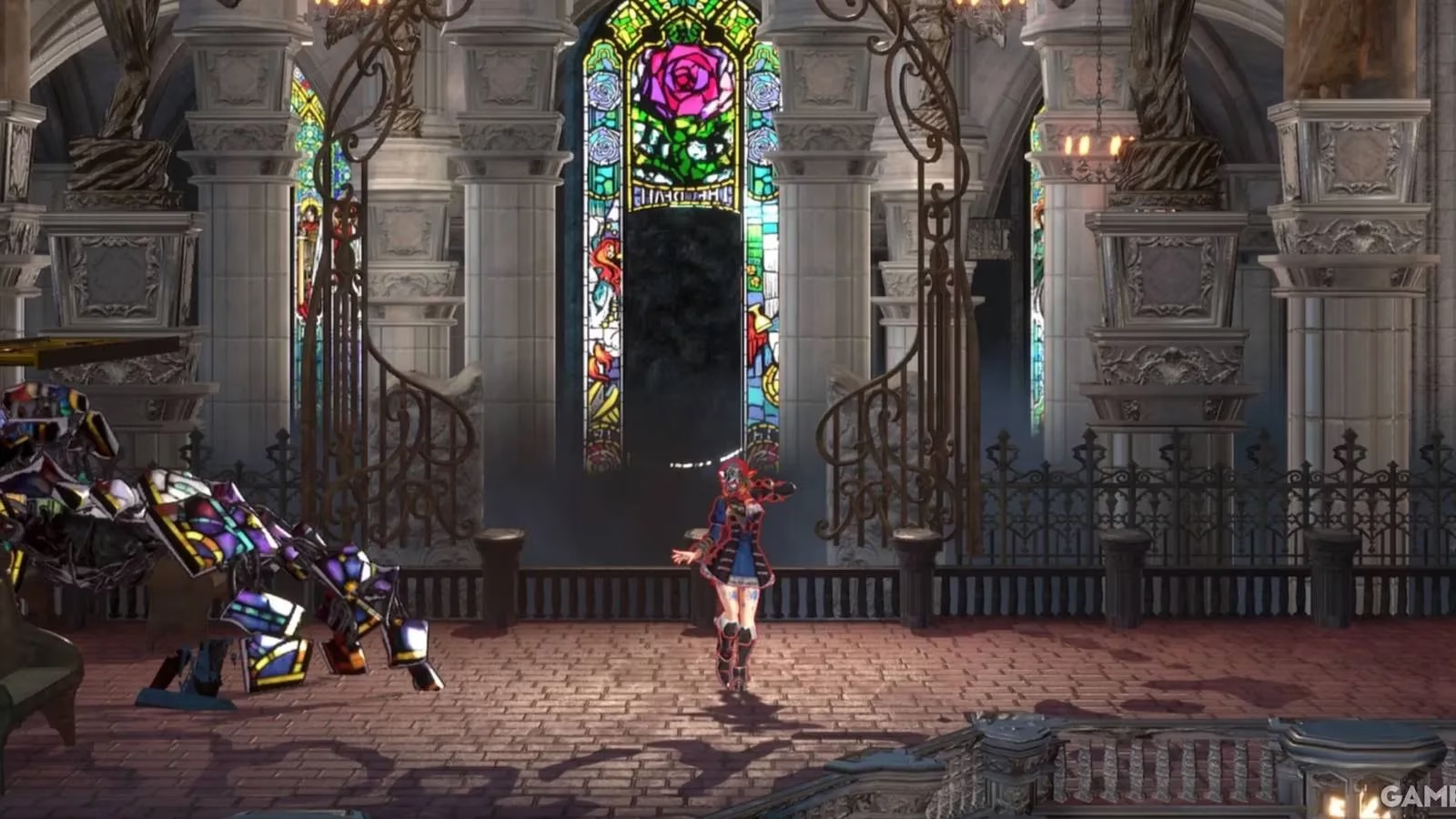
Koji Igarashi's Bloodstained: Ritual of the Night is a love letter to Symphony of the Night, and it shows. Miriam's adventure starts familiarly: big castle, lots of demons. But the deeper you go, the more wonderfully absurd it gets. The ability list becomes a chaotic masterpiece. You're not just finding new moves; you're stealing powers (shards) from every enemy you defeat. We're talking about everything from simple elemental attacks to summoning familiars, conjuring flying armchairs, and firing literal lasers. The crafting system opens up a whole other world of depth, letting you cook stat-boosting meals or forge wildly different weapons. Movement starts off a bit slow and floaty, but give it time. Soon you're air-dashing, double-jumping, and even inverting gravity to walk on ceilings. There's a moment where you have to launch yourself through a giant stained-glass window. That's the spirit of Bloodstained: embracing the ridiculous, over-the-top fun and running with it all the way to the bank.
Axiom Verge plays a fascinating trick. At first glance, it looks and feels like a classic Metroid homage. Alien world? Check. Retro pixels? Check. But solo developer Tom Happ has something stranger in mind. This is a game that gets deliberately glitchier, weirder, and more meta as you progress. The early upgrades are standard fare. Then you get the Address Disruptor. This isn't just a new gun; it's a reality-altering tool. You can corrupt enemies and environments, making platforms reassemble, hidden rooms phase in and out, and enemies mutate into new forms. It feels like hacking the game's code itself. And just when you think you've seen the whole map, a second, alternate version of the world opens up with its own bizarre rules. Axiom Verge doesn't guide you; it hands you the tools to break its world apart in the most fascinating ways, rewarding sheer, unadulterated curiosity.
Ori and the Will of the Wisps is that rare sequel that looks at its amazing predecessor and says, "Hold my nectar." The art is still breathtaking—every screen is a living painting. But beneath that beauty lies a combat system that received a massive, satisfying overhaul. Spirit Shards let you tweak your build on the fly, and the new melee attacks feel incredibly tactile. However, the true magic is in the movement. Once Ori unlocks abilities like Bash (which lets you launch off enemies and projectiles), Grapple, Burrow, and Launch, platforming becomes a fluid, aerial symphony. There's a late-game sand area where you chain dashes and use momentum in ways that make you feel like a virtuoso pianist. The emotional story crescendos perfectly alongside your mechanical mastery, making the finale an experience that will leave you quietly reflecting long after the credits roll.
And then, there's the big one. Hollow Knight. It begins deceptively simple. Hallownest feels vast... and empty. Your Knight has a nail to swing and a button to jump. It's quiet. Almost too quiet. But then, the layers start to peel back. The map unfurls in dense, intricate detail. Shortcuts connect previously distant areas. New, breathtaking regions open up in directions you never noticed. Your moveset, once so basic, blossoms: wall jump, dash, double jump, and eventually the sublime Shade Cloak that lets you phase through threats. The boss fights escalate from battling oversized bugs to dueling screen-filling nightmares of precision and pattern recognition.
But here's the genius part: Hollow Knight hides its best content. The brutal, beautiful platforming of the White Palace? Optional. The soul-crushing (and optional) Path of Pain? Also optional. The game doesn't force you to prove your mastery. It simply places these incredible challenges deep within its world, waiting for those who have fallen in love with its rhythms to seek them out. And we always do. Because after 20, 30, or 50 hours in Hallownest, you're not looking for a way out. You're digging for every last secret, every hidden boss, every reason to stay just a little bit longer in this haunting, masterful world. That's the true sign of a Metroidvania that only gets better: when the end goal becomes an afterthought to the joy of the journey itself. 😊
So, if you ever find yourself starting one of these games and feeling a bit underwhelmed, just remember: the best is yet to come. Patience, young explorer, is the ultimate key.