
Metroidvania Masterpieces That Reward Patience and Perseverance
In the world of video games, the promise of a rewarding experience after a slow start is a familiar one, yet few genres embody this concept as perfectly as the Metroidvania. While the genre's core loop of gaining abilities to unlock new areas suggests a natural progression towards improvement, the reality is more nuanced. Some of the most celebrated entries in the genre demand an investment of time and patience from the player, revealing their true brilliance only after the initial hours. These are not games that falter, but rather ones that carefully build their foundations, saving their most spectacular moments for those willing to delve deeper into their meticulously crafted worlds. The journey from initial uncertainty to mastery and discovery forms the heart of these unforgettable adventures.
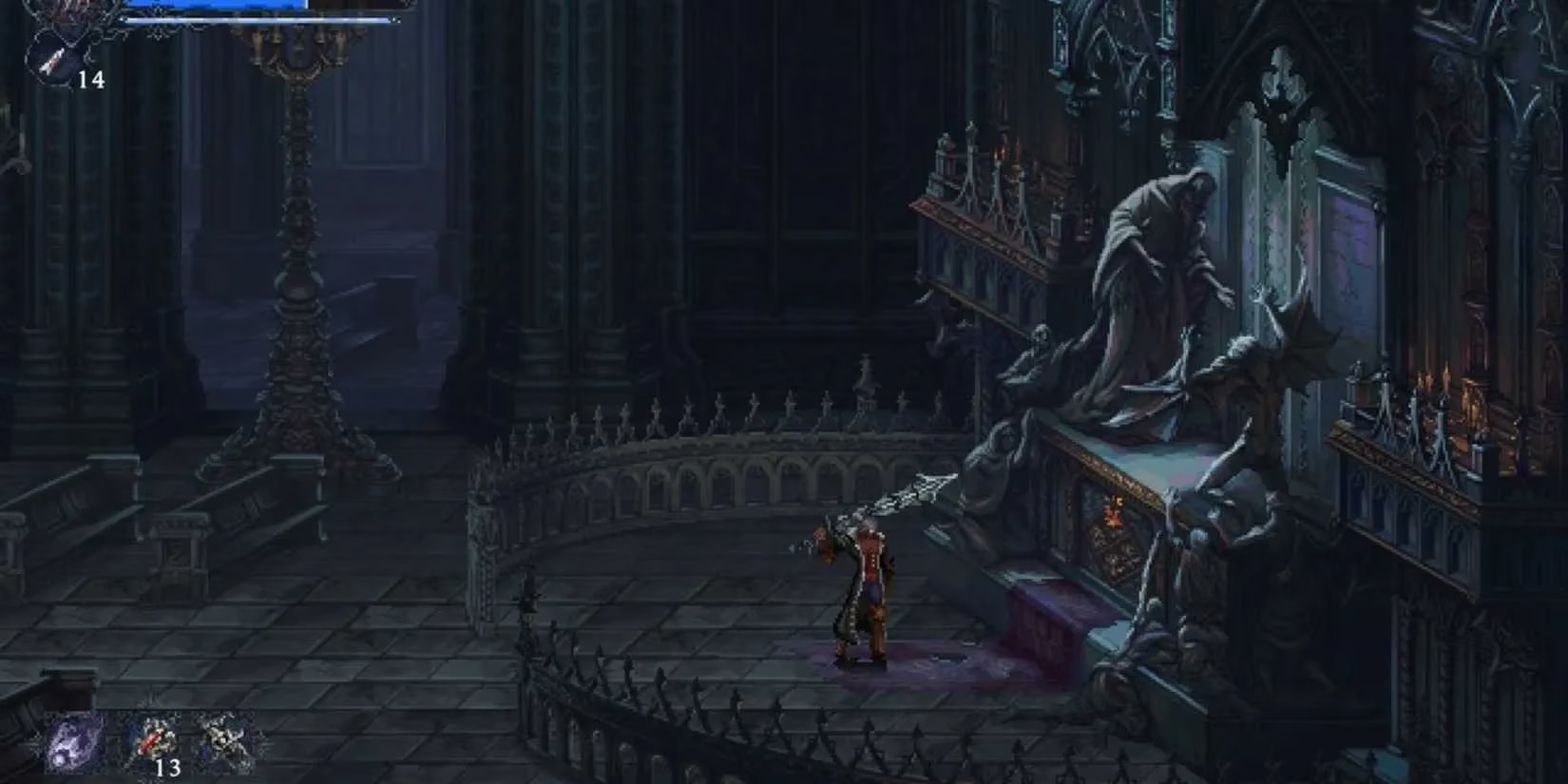
🌟 The Last Faith stands as a prime example of a game that saves its best for last. It marries a gorgeously gritty gothic art style with tight Castlevania-inspired platforming and dynamic, Bloodborne-esque combat. However, the opening acts can feel surprisingly straightforward and lifeless. It's not until players confront Edwyn, The Starscourge Horror, that the game truly ignites. The second half bursts with challenging, diverse bosses and intricate biomes, complemented by a wealth of satisfying power-ups that transform exploration and combat. The initial slog is a calculated setup for a payoff that redefines the entire experience.
🧠 The enigmatic world of Animal Well presents a different kind of slow burn. This pixel-perfect indie gem is a true 'Metroidbrainia,' where knowledge is the ultimate power-up. The opening hours are deliberately designed to evoke feelings of being lost, confused, and overwhelmed. The game forces players to explore, experiment, and solve intricate environmental puzzles. Each 'A-ha' moment unlocks new possibilities, slowly peeling back the layers of a world with a surprisingly dark underbelly. Its power-ups cleverly reinvent classic abilities, making every discovery feel monumental and earned.

For years, Ender Lilies: Quietus of the Knights was the go-to recommendation for fans would give to those asking for games like Hollow Knight. It shares the Souls-like DNA of tough combat, a grim and depressing world, and a navigation system that offers no quarter. Its progression is a deliberate slow burn, refusing to pull punches and demanding that players adapt to its rhythm. The game's true quality—its stellar boss design, haunting atmosphere, and satisfying spirit-companion system—only reveals itself to those who grant it the time to breathe and unfold its somber tale.
The emotional journey of Ori and the Blind Forest might seem like an odd inclusion given its relatively short runtime, yet its slow-burn nature is twofold. Initially, players are incredibly vulnerable and underpowered, with a barren skill tree, which can lead to early frustration. More importantly, the game relies on building an emotional connection through its storytelling and atmospheric moments. This pacing requires patience, as the narrative weaves a thoughtful and charged tale that can feel slow until the next breathtaking sequence of tension and platforming arises. The reward is one of the most heartfelt and visually stunning franchises in the genre.
🌿 Ultros represents the experimental fringe of the genre. Its opening is a surreal, cryptic, and repetitive loop that can bewilder players. This psychedelic Roguevania demands that players decipher its unique fauna-based ecosystem and death-loop mechanics. Once the intricate systems click into place—understanding how to cultivate the environment and break the cycle—the game transforms. It strikes a perfect balance between exploration, combat, and meta-progression, revealing why this trippy, colorful tale left such a strong impression on the indie scene.
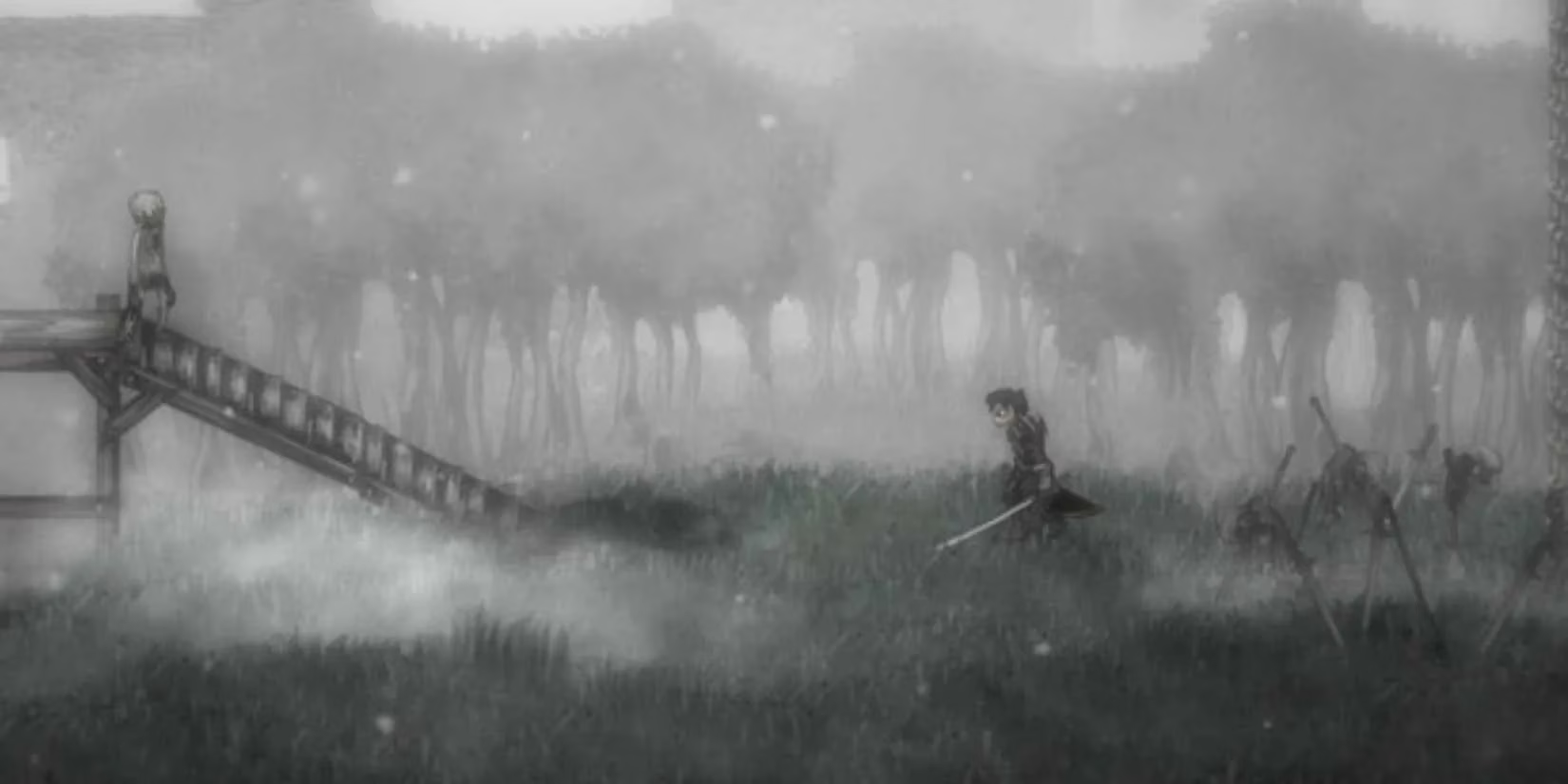
The Soulslike genre is synonymous with slow-burn experiences, and Salt and Sanctuary is a quintessential 2D interpretation. Designed to mirror the feel of Dark Souls, it sets players up for initial failure in a hostile, enigmatic world. The opening hours are a brutal process of hitting one's head against the wall, learning patterns, and slowly finding a build that works. Persistence is key; as players get their bearings and grow in power, the game reveals itself to be every bit as deep, rewarding, and thrilling as the FromSoftware titles that inspired it.
🦌 Pseudoregalia takes a novel approach by making the player's movement capabilities the core of its slow-burn progression. This 3D Metroidvania starts players with a basic moveset. The joy comes from gradually unlocking acrobatic parkour skills like wall jumps, backflips, and gainers. Mastering the chaining of these moves to reach new heights and navigate the dreamlike world requires practice. Nailing a complex platforming sequence delivers an immense sense of accomplishment. Combined with its Dark Souls-adjacent combat and unique 3D perspective, it creates a novel and underrated gem for platforming enthusiasts.
🎌 Nine Sols presents one of the steepest learning curves in the modern Metroidvania landscape. Its cozy, hand-drawn aesthetic belies its intense difficulty. The game is built on precise parrying mechanics, and the opening hours are a punishing slog where players must cherish small victories. However, as one becomes adept at the rhythmic dance of deflection and gathers resources to empower the protagonist, the game's quality shines through. It evolves into one of the finest 2D Soulslikes in recent memory, a masterpiece of combat design that demands—and rewards—mastery.

The phrase 'It gets good, I promise' is practically synonymous with Hollow Knight. From the outset, its presentation is masterful—hand-drawn visuals, detailed backdrops, and Christopher Larkin's phenomenal score create a palpable atmosphere. Yet, the opening can be a barrier. The Forgotten Crossroads feels bland, the lack of hand-holding makes navigation frustrating, and the early bosses are underwhelming. But from Greenpath onward, the game is a relentless parade of excellence: memorable boss battles, awe-inspiring areas to explore, and Souls-like challenges that test skill and determination. It's a game famously easy to bounce off of, but those who return and push through the initial hurdle are rewarded with one of the genre's undisputed masterpieces.
| Game | Why It's a Slow Burn | The Payoff |
|---|---|---|
| The Last Faith | Initial areas and bosses are relatively easy and straightforward. | The second half explodes with challenging, diverse bosses and biomes, plus fun power-ups. |
| Animal Well | Knowledge is power; the opening is deliberately confusing and overwhelming. | Each puzzle solved and secret uncovered opens new, mind-bending possibilities. |
| Ender Lilies | Tough navigation, slow progression, and a grim world demand adaptation. | A stellar Souls-like experience with haunting atmosphere and satisfying combat emerges. |
| Ori and the Blind Forest | Underpowered start and an emotionally-driven narrative that requires time to breathe. | One of the most heartfelt, visually stunning, and masterfully designed adventures in the genre. |
| Ultros | A surreal, cryptic, and repetitive opening loop. | The unique fauna-based systems click, creating a balanced and trippy Roguevania. |
| Salt and Sanctuary | A brutal, Dark Souls-like opening designed for player failure. | Finding your build and mastering the world reveals a deep and thrilling Souls-like in 2D. |
| Pseudoregalia | Movement starts basic; complex parkour is unlocked gradually. | The incredible satisfaction of chaining moves to perform amazing acrobatic feats. |
| Nine Sols | A punishing opening that demands mastery of precise parrying mechanics. | Evolves into one of the finest and most rewarding 2D Soulslikes available. |
| Hollow Knight | Bland starting area, frustrating navigation, and underwhelming early bosses. | From Greenpath onward, it's a non-stop masterpiece of world-building, challenge, and beauty. |
In conclusion, the common thread among these Metroidvania masterpieces is the transformative power of patience. They ask for an initial investment of time and perseverance, trusting that the player will meet them halfway. The reward for this commitment is not merely a good game, but often a transcendent one. The journey from confusion to clarity, from weakness to power, and from frustration to elation is what makes these slow-burn adventures so profoundly memorable. They prove that in the world of Metroidvanias, the greatest treasures are often buried the deepest, waiting for the dedicated explorer to uncover them.