
How Ultros Electrified the Indie Metroidvania Scene with Its Psychedelic Soul
I still vividly remember the first time I saw the reveal trailer for Ultros back in 2023. It was during a PlayStation Showcase that many were criticizing for lacking blockbuster first-party titles, but a few indie gems managed to shine through the noise. Ultros was the one that instantly grabbed me by the eyes. A cascade of neon pinks, electric greens, and deep purples danced across the screen in a side-scrolling format that felt both familiar and wildly alien. Even now in 2026, long after its release, the game’s hypnotic visuals haven’t aged a day—they’ve become a benchmark for how art direction can elevate a genre.
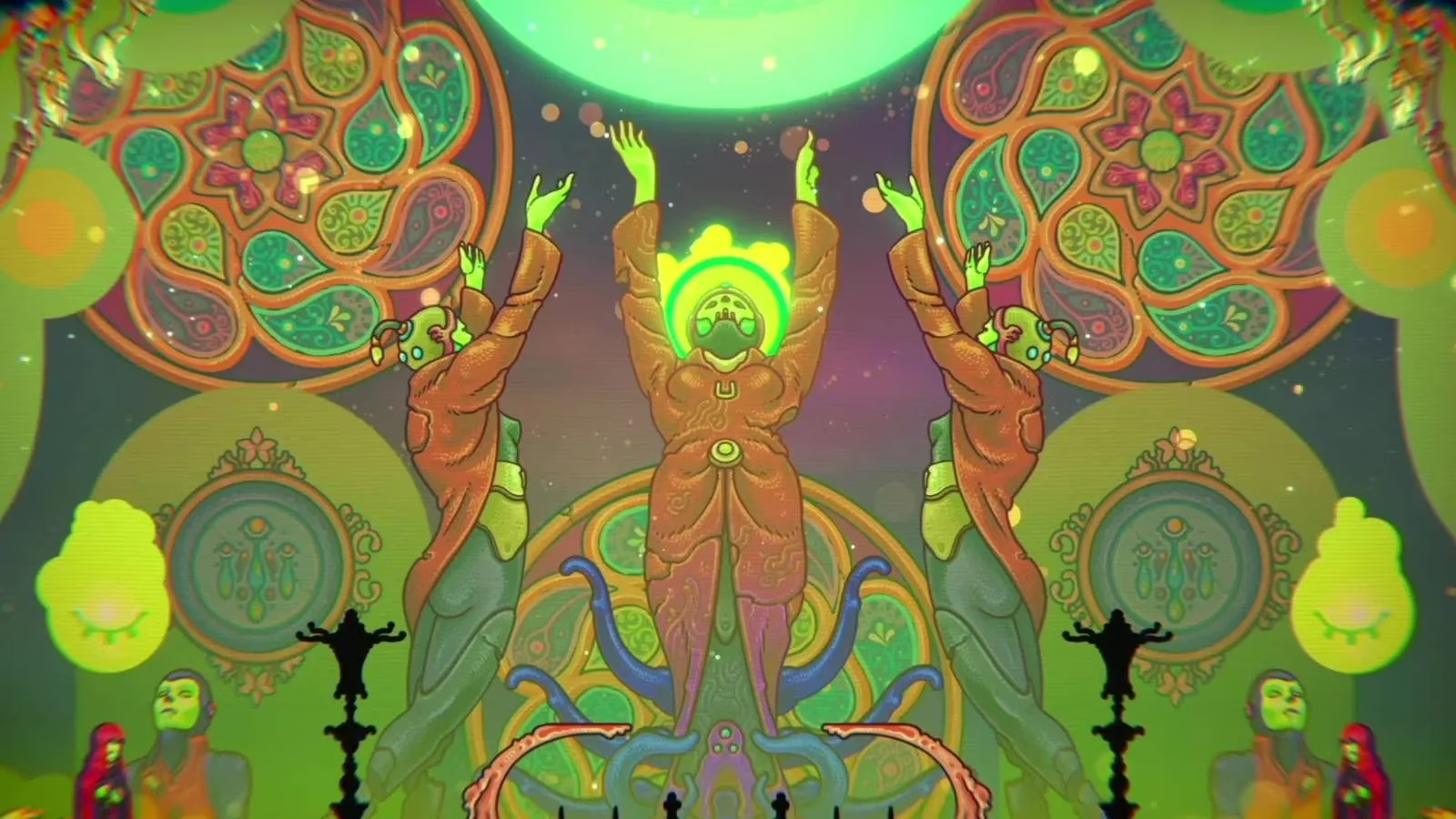
Ultros comes from the Swedish studio Hadoque, and it wears its influences on its sleeve without ever feeling derivative. It’s a 2D Metroidvania at its core, but it intertwines roguelike loops and a deeply introspective narrative in a way that feels like playing through a lucid dream. I’ve completed the game three times now, and each run uncovered new layers—both in gameplay and in the cryptic story. The setting is a gargantuan floating sarcophagus drifting through space, a biomechanical ecosystem teeming with bizarre lifeforms and ancient secrets. The player wakes up with no memory, trapped in a time loop that resets upon death. That’s the sci-fi hook, reminiscent of titles like Deathloop and Returnal, but Ultros makes the mechanic intimately personal by tying it to gardening, meditation, and the cyclical nature of consciousness.
Gameplay-wise, Ultros doesn’t hold your hand. The map is sprawling and initially disorienting, full of locked doors, breakable walls, and vertical shafts that demand mastery of the fluid movement system. Combat is deliberate and rhythmic; you parry, slash, and dodge, but true strength comes from consuming the colorful flora scattered around the sarcophagus. Each plant you eat grants temporary or permanent abilities, encouraging experimentation. Some seeds can be planted in designated spots to grow platforms or health-restoring fruits, and managing these organic gardens becomes crucial for surviving subsequent loops. This blender of action, exploration, and cultivation gave me a constant sense of progression even when the loop reset.
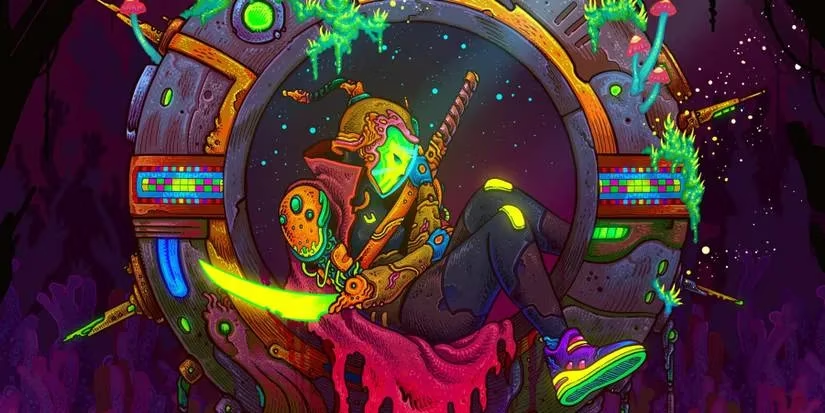
What truly sets Ultros apart, however, is its artistic vision. The entire audiovisual experience is shaped by El Huervo, the legendary artist behind Hotline Miami’s iconic aesthetic. His signature style is unmistakable here: hand-drawn lines pulse with a chaotic energy, saturated palettes clash and harmonize, and dynamic camera angles swoop in to emphasize scale. I’ve never seen a game use color so aggressively to convey a character’s mental state. Calm moments wash the screen in soft teals and lavender, while tense encounters explode into hot magentas and acidic yellows. The effect is truly hypnotic—some late-game sequences felt almost overwhelming in their visual intensity, yet I couldn’t look away. This approach is a direct rebellion against the washed-out realism that dominated gaming for a decade.
In the early 2000s, the push toward photo-realism drained many titles of personality, smothering them in browns and grays. Over the last few years, indie developers have deliberately swung the pendulum back, and Ultros stands as perhaps the most unapologetic example of that shift. It proves that a game doesn’t need a photorealistic ray-traced engine to captivate; it just needs a clear visual identity. The mix of hand-crafted animation, responsive sprite work, and a dissonant yet beautiful soundtrack creates a seamless atmosphere. I’ve lost hours simply wandering around, not fighting, just watching alien creatures crawl along cavern walls as the music swells.
The Metroidvania genre is more crowded than ever in 2026. We’ve been blessed with masterpieces like Hollow Knight and its long-awaited follow-up Silksong, the punishing elegance of Blasphemous 2, and dozens of smaller titles that bring fresh twists. Amid this crowd, Ultros could have easily been lost. Instead, its commitment to a wild, psychedelic identity made it unforgettable. A comparison table puts its uniqueness in perspective:
| Game Title | Visual Style | Unique Mechanic | Sci-Fi Loop |
|---|---|---|---|
| Hollow Knight | Hand-drawn, gothic | Charm system | No |
| Dead Cells | Pixel art, vibrant | Roguelike mutations | No |
| Ultros (2024) | Psychedelic hand-drawn | Gardening & consumption | Yes (in-story) |
I remember first reading about the game on a blog post where the design director emphasized the importance of the hypnotic art style to the narrative itself. The loop isn’t just a gameplay convenience—it’s a thematic reflection on rebirth and entropy, mirrored by the ever-changing, organic environment. By 2026, the community has fleshed out theories about the sarcophagus being a metaphor for trauma or a dying mind, and multiple endings have been discovered that hinge on how much of the alien ecosystem you preserve or destroy. That depth has kept the discussion alive far beyond the initial release window.
What I cherish most is how Ultros respects my intelligence. It doesn’t pause to explain every story beat; instead, it trusts the player to interpret visual clues and environmental storytelling. A mural glimpsed in the background might foreshadow a hidden area, and a fleeting melody could hint at a tragic backstory. This ambiguity pairs perfectly with the roguelike structure—every death feels like a chance to piece together another fragment of the puzzle, not a punishment. 🧩
If you haven’t played Ultros yet in 2026, I urge you to dive in with an open mind. It’s available on PC, PS4, and PS5, and it even received a free next-gen update that pushes the surreal visuals to even smoother frame rates. Whether you’re a Metroidvania veteran or someone seeking an artistic experience that challenges conventions, Ultros delivers something you won’t find anywhere else. It’s a testament to how a small team with a bold vision can stand shoulder to shoulder with giants. 🌌✨
In the end, Ultros didn’t just borrow ideas from the genre greats—it mutated them into something gloriously new. And in a medium that sometimes feels afraid to take risks, that’s a rebellion I’m grateful to celebrate again and again, loop after loop.