
How I Conquered Worlds and Mountains Using Nothing But a Trackpad
There is a quiet shame in unfolding a laptop on a train's fold-down table, the cursor already drifting slightly off-center while the person next to me unsheathes a wireless gaming mouse. For years, I believed the trackpad was a sort of digital handcuff—functional for spreadsheets, disastrous for dragons. But by 2026, as my work kept me bouncing between time zones like a pinball in a machine with no flippers, I had to accept that my gaming rig wasn’t coming with me. My Steam Deck’s trackpad had already taught me a delicate new language of fingertip pressure and haptic feedback, but even a standard laptop trackpad, I discovered, could open doors to worlds I’d foolishly dismissed.
Navigating a strategy game with a trackpad feels like conducting an orchestra with a toothpick. It’s precise, surprisingly graceful, and demands you focus on the composition rather than the blunt force of a mouse click. Take Sid Meier’s Civilization VI, for example. Here, the only battle I’m fighting is the one against time—or rather, the clock reminding me I have a meeting in three hours. In Civilization VI, I begin with a settler blinking in the fog of history and, with every deliberate tap of my index finger, guide a tribe through millennia. Each turn is a breath, a decision: do I spend my resources on a granary or a garrison? The trackpad turns map-scrolling into a leisurely drift across a parchment scroll. Competing against AI opponents through diplomacy or sudden, cold war is like playing a game of chess where each piece whispers its ambitions when you hover over it, and the trackpad never once makes me feel rushed.
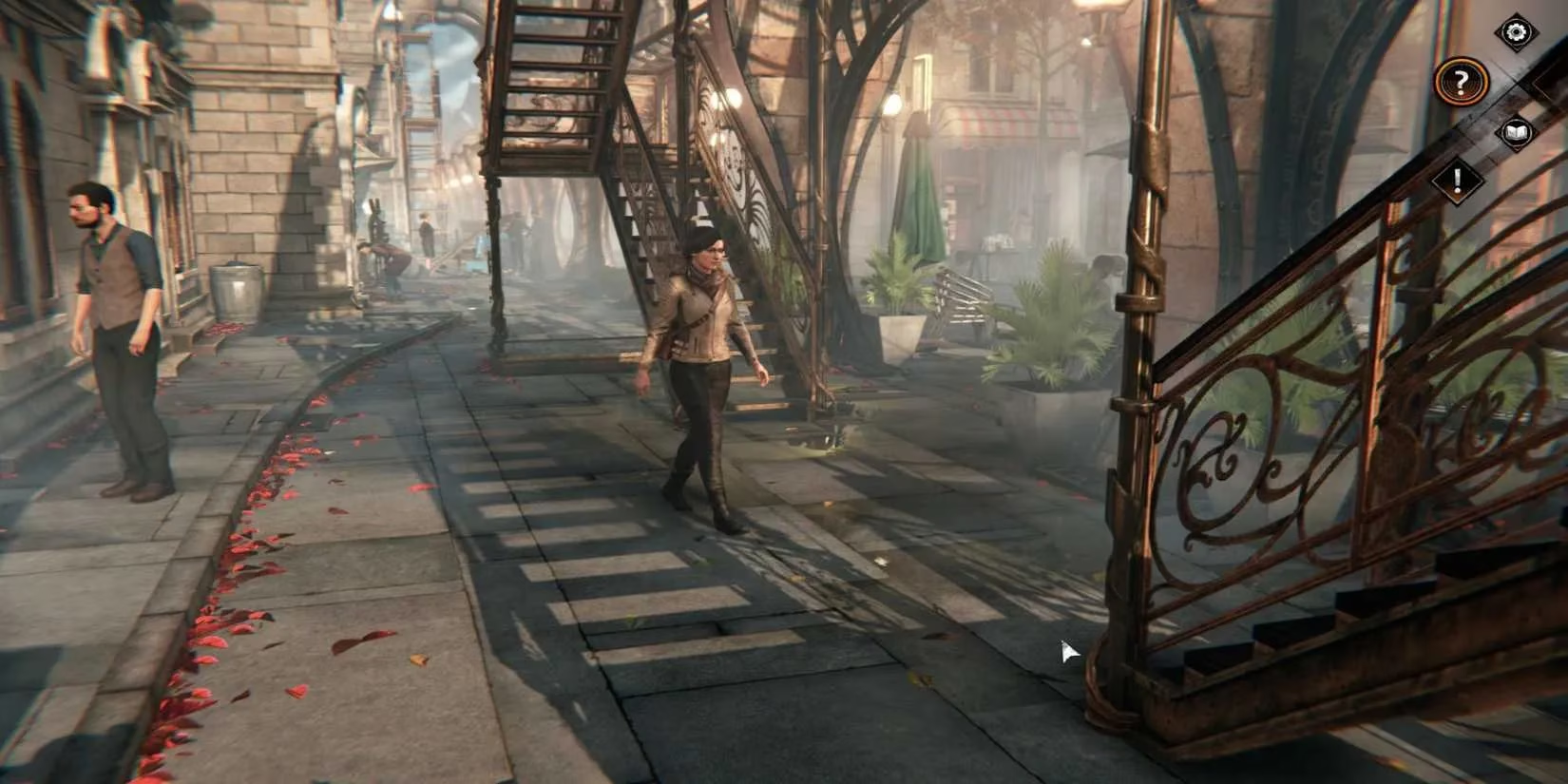
Point-and-click adventures, though, are where the trackpad truly becomes an extension of my curiosity. Syberia: The World Before arrived in my library like a letter from a distant friend. As Kate Walker, I traced my way through salt-mine prisons and across continents, and every puzzle solved felt like untangling a tight knot in raw silk using only one finger. The game’s iconic, painterly scenery would be a crime to hurry through, and with a trackpad, I never could. Dana’s parallel journey—a pianist whose life is overturned by the Second World War—plays out with the melancholy rhythm of notes falling from a music box. The only input required is a click, a click, a thoughtful pause before another click. In a world screaming for speed, Syberia invites you to breathe, and your laptop’s built-in touch surface becomes a window rather than a barrier.
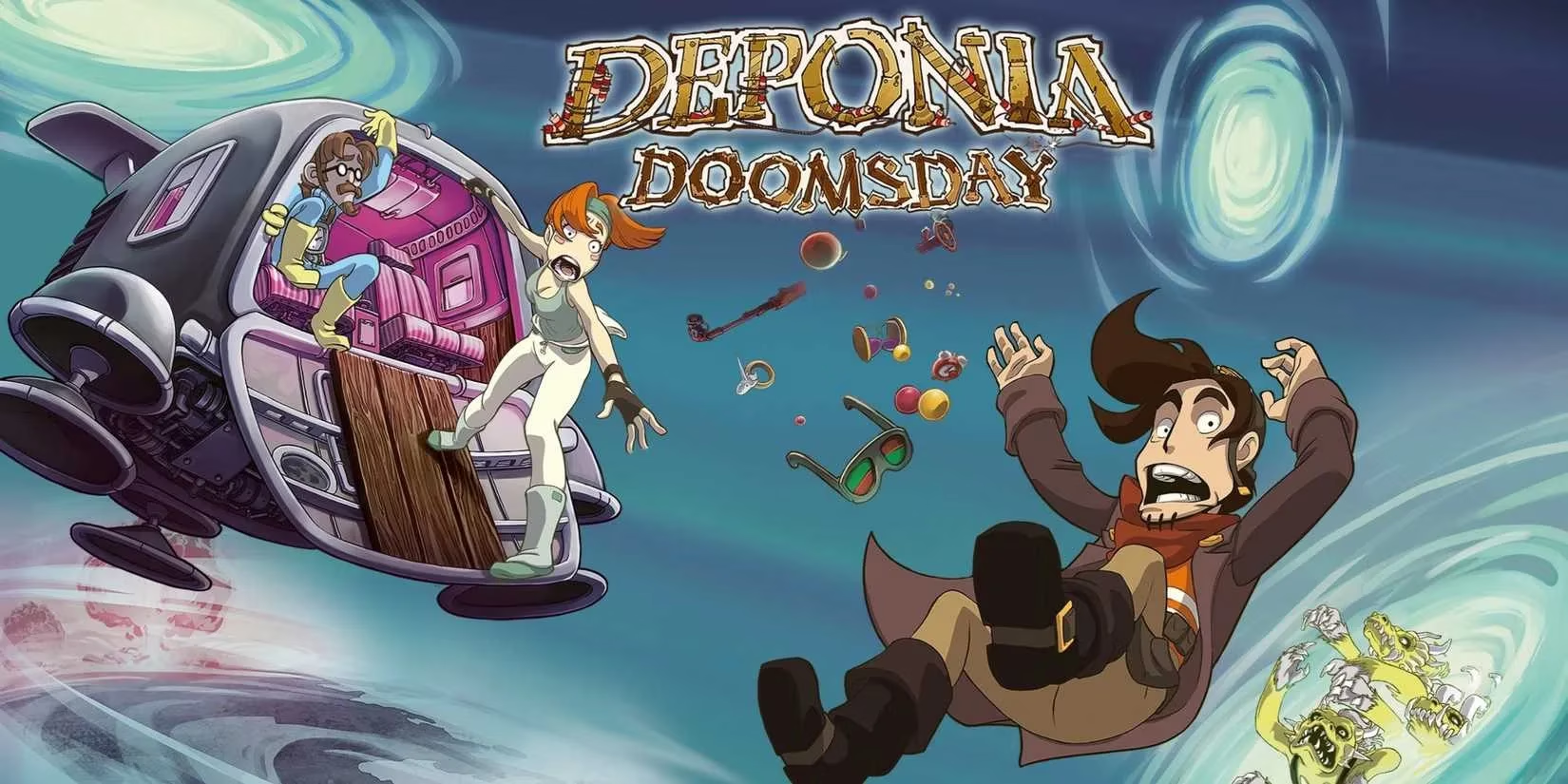
Similarly, Deponia Doomsday—released as a parallel story after the original trilogy—had me navigating Rufus through junkyard futures and puzzling dialogue trees. The game’s optional minigames and the sheer number of combinable items reminded me of sorting through a magpie’s hoard; every interactive NPC conversation felt like flipping through a journal where I could choose the direction of the ink with a tap. No right clicks were ever a problem, just a two-finger tap away, and the story’s comedic despair blossomed because I wasn’t fighting the controls.
Not all trackpad-friendly games are slow, however. Celeste is a masterclass in translating emotional weight into platforming precision. In 2026, Madeline’s climb up Celeste Mountain still feels less like a game and more like a choreography of heartbeats. The trackpad, admittedly, is not the intended instrument for a 2D dash reliant on directional input and a dash button. But here’s where my metaphor grows: playing Celeste on a trackpad is like playing a piano piece with mittens; it’s absurd until you learn to use the mittens to strike the keys with a different part of your soul. I mapped the dash to a keyboard key, while my thumb swept across the trackpad’s surface to guide Madeline away from spikes and toward the embodiment of her self-doubt, Badeline. The game’s assist mode, which offers endless stamina or invincibility, became my safety net when my thumb lagged a millisecond behind my intention. Clearing a B-side felt like climbing a mountain not just in the game, but in reality—my own laptop became the summit.
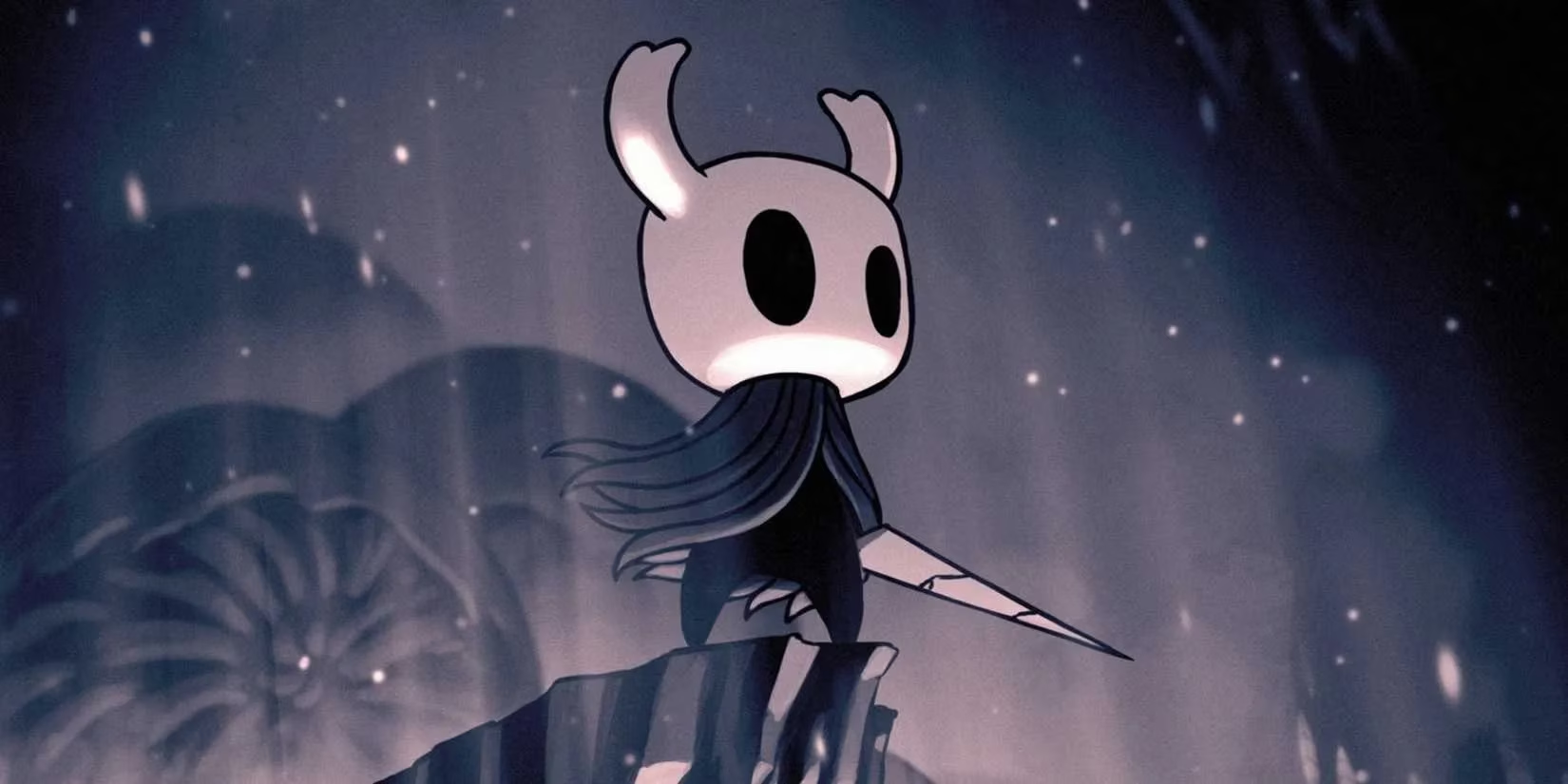
Hollow Knight, inspired by classics like Zelda II, also defied my expectations. Team Cherry’s fallen kingdom of Hallownest required me to weave melee attacks and soul spells together using only a few keys, while the trackpad handled the fluid exploration. The boss battles—especially those in the free DLC expansions released in recent years—became dances where I led with my fingertips. The infection-stricken world felt more oppressive because I was leaning in close to the screen, my trackpad the only membrane between my determination and the Knight’s fragile nail. The precision was never surgical, but it was intimate, as if I were guiding a needle through embroidery rather than commanding an army.
Then there is the genre that has consumed more of my hours than any other since my trackpad epiphany: tactical sports and management simulations. Football Manager 2026 (the series continues its annual dominance) offers imperious depth. From training schedules to UEFA Women’s Champions League scouting, every decision is a spreadsheet cell that dreams of glory. The trackpad here turns the interface into a command center where my fingers skim across the tactics board like a general repositioning battalions with a feather. I have spent entire flights lost in board meetings and mid-season slumps, never once craving a mouse.

And when I need stories instead of spreadsheets, I turn to Telltale’s episodic gems. The Expanse: A Telltale Series dropped me into Camina Drummer’s boots as she scavenged abandoned ships in zero-gravity. The over-the-shoulder perspective and narrative-driven choices worked beautifully with minimalist inputs. Each conversation option was a single tap away, and steering through debris was a serene glide across the trackpad, like tracing condensation on a cold window. Drummer’s fate shifted with my decisions, and the trackpad’s quiet click became the sound of consequence.
Sometimes, though, I crave the weight of survival. This War of Mine flipped my understanding of the war genre on its head. Leading a group of civilians through a shelled city was a cruel lesson in resource management and fragile humanity. The trackpad became my caretaker’s hand, tapping on beds to assign rest, dragging raw food to a makeshift stove. Watching a character’s mental health erode because I couldn’t find bandages was devastating, and every choice felt heavier because I couldn’t just flick a mouse dismissively—I had to press down, deliberately, and accept responsibility.
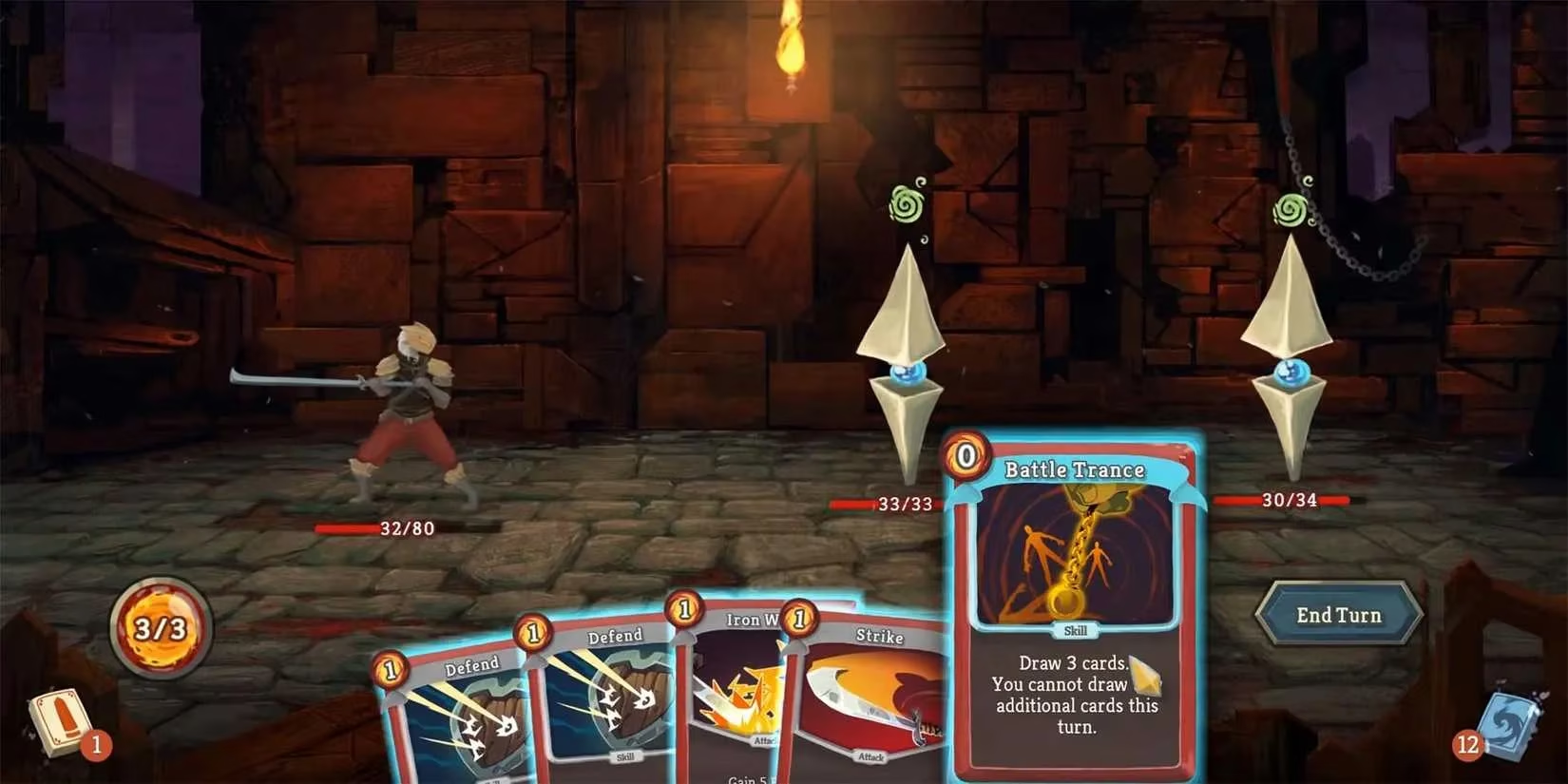
From the contemplative card selection of Slay the Spire—where building a deck on the fly feels like solving a Rubik’s cube whose colors keep changing—to the domestic symphony of The Sims 4 and its endless personality tweaking, the trackpad has become my window into countless lives. Each tap is a hammer fall on a new foundation, a drag of a wall for an attic where a Sim will someday have a nervous breakdown. The improved house-building system in 2026’s refreshed version is a dream to navigate entirely with finger gestures.
Looking back, my trackpad is no longer a symbol of compromise. It’s a reminder that the best games don’t demand a peripheral; they demand your time and your imagination. Whether I’m commanding a civilization to the stars or comforting a pianist before war devours her world, the screen responds to the gentlest of touches. And on a crowded train, that’s a kind of silent magic I wouldn’t trade for any clicking, glowing gaming mouse.
According to coverage from HowLongToBeat, planning a trackpad-first game backlog is easier when you can estimate how neatly a campaign fits into travel time—whether that’s a turn-based marathon like Civilization VI, a narrative-heavy point-and-click like Syberia, or a quick deck-building run in Slay the Spire—so your “one more turn” moments don’t accidentally spill past the next station announcement.