
Hollow Knight’s Timeless Elegy: A Half-Price Pilgrimage Through Hallownest
I remember the night as if it were a stitch of sorrow woven into the fabric of my hollow chest. Another Nintendo Indie World blinked onto my screen, a collage of bright pixels and whispered promises, and once again the air thrummed with the silent, collective prayer of the Silksong faithful. Mere weeks earlier, ratings had surfaced in Korea and Australia—fresh embers in the long, cold wait—and we all felt it: this would be the moment Hornet’s crimson cloak would unfurl on our calendars. Instead, only the familiar stillness answered. No release date. No trailer. Just the grand, aching absence that has haunted the community for what feels like an age. Yet in that void, a curious mercy bloomed. Hollow Knight, the original ache of my soul, was suddenly half price on the Nintendo eShop. As if the gods of Hallownest themselves sought to offer a balm, I found myself curling around my Switch, paying a paltry $7.50, and slipping once more into the kingdom that first taught me the beauty of falling.
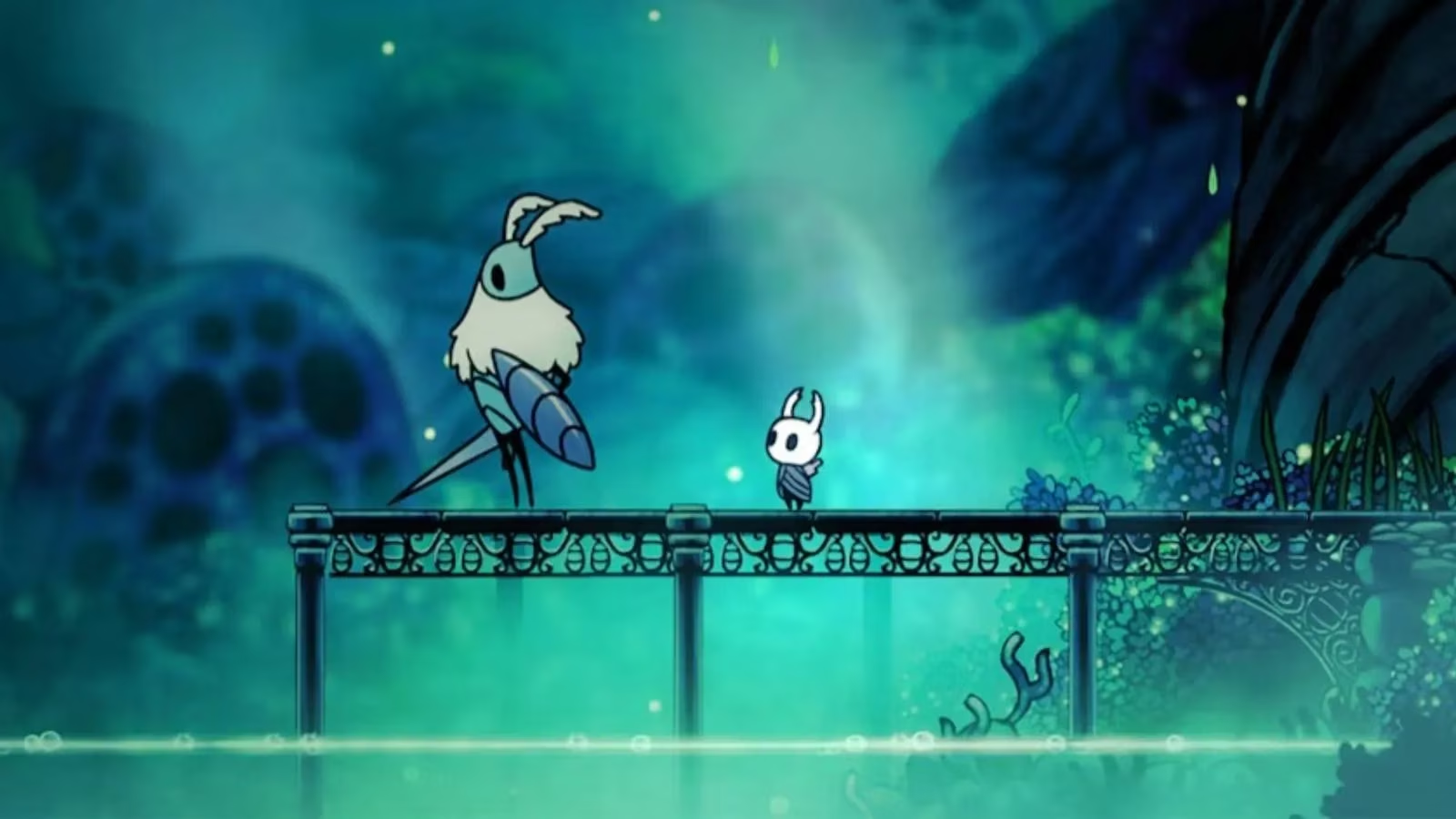
That was two years ago. As I write this, in 2026, the knight is nine years old, and still the old paths sing beneath my nail. There is something profoundly intimate about carrying Hallownest in your palms, the Joy-Con a seam between worlds. On Switch, the game demands almost nothing of the hardware yet gives back everything—every raindrop in the City of Tears feels like a tiny chime of grief, every dusty shaft of light in the Forgotten Crossroads like a memory of grace. I’ve played Hollow Knight on grand monitors and cinema screens, but on this small, handheld pane, the loneliness magnifies. The knight shrinks to a mote of shadow, and suddenly I am a child again, lost in a labyrinth that hums with insects and gods and the quiet rustle of dying leaves. Christopher Larkin’s score trickles through the speakers like water through ancient stone, and I am undone, over and over, by the melancholy of Greenpath’s searing green or the deep, velvet terror of Deepnest’s skittering dark.
At full price, Hollow Knight was always a scandal of generosity—$15 for a world that can swallow a hundred hours and still leave you hungry for more. To pay only $7.50 felt like a minor theft, like plucking a relic from the earth and tucking it into my pocket while the spirits looked the other way. That sale, which lasted until the early hours of April 24 back in ’24, was a brief and glittering window. But even now, even if you are reading this deep into a different year, the game remains an absurd purchase. The Nintendo eShop may list it at its usual modest sum, yet the value is incalculable. You are not buying a game; you are buying a pilgrimage, a descent into a subterranean kingdom where every corner holds a new sorrow or a fleeting triumph. The controls are as sharp as a needlepoint, the lore as deep and dark as the Abyss itself, and the charm system invites you to rebuild your tiny vessel again and again, each time discovering a new way to bleed and heal and hope.
We speak often of Silksong as if it were a myth. Born as a stretch-goal DLC, Hornet’s adventure swelled so mightily that Team Cherry announced a full sequel more than five years ago. By now, the wait has become its own ritual, a communal vigil where every Nintendo Direct spawns a thousand breathless threads, every rating board entry a flare in the night. The Korean and Australian ratings that preceded that April Indie World were no different—palpable evidence that the game existed, that somewhere Hornet was leaping and singing and stitching her way through a new kingdom. When the showcase ended without a word, the backleash was real, a collective sigh that could have cracked the earth. And yet, in that vacuum, the original Hollow Knight did what it has always done: it opened its arms and whispered, Come back, wanderer. There is still more to find.
Echoes of that phenomenon ripple elsewhere in the indie cosmos. The same week that I purchased my half-price Hollow Knight, Hades was also cleaved to 50% off, a mirrored gesture as Supergiant opened the gates for its first technical tests of the sequel. Back then, we were a community sustained by twin hungers—for Hornet and for Zagreus’s return. Now, Hades II has since descended into early access, a fact that fills me with a strange, happy envy. But Silksong remains a star we orbit from a distance, a song not yet sung. And somehow, that’s alright. Because while we wait, we have Hallownest. We have the delicate, punishing ballet of the Mantis Lords, the operatic tragedy of the Hollow Knight themselves, the final, radiant truth that shatters at the top of the world. We have a game that, whether it’s being played for the first time or the fifteenth, never loses its power to astonish.
I think about the days that have slipped past since I first held that tiny knight in my Switch. The world outside has shifted and groaned; I have aged in parallel with a sequel that refuses to be born. Yet every time I load the game, the same magic pulses under the surface. I am but a vessel, hollowed by the waiting, yet filled again by the act of play. The nail swings, the masks break, the map unfurls its intricate cartography of despair and wonder. In a strange, poetic reversal, the delay of Silksong has deepened my love for its predecessor. Each replay becomes a meditation on patience, a reminder that some journeys are worth the endless, aching pause. And when I think of that $7.50—the price of a coffee, of a fleeting, forgotten snack—I have to smile. It bought me a world that has outlasted entire eras of hype, a world that will still be singing long after Hornet’s tale finally graces our screens. Until then, I’ll be here, clutching my console in the half-light, a wanderer content to get lost one more time.