
Hollow Knight's Soundtrack Is Still A 2026 Masterclass
Some video game soundtracks are content to hum politely in the background. Hollow Knight's score, composed by Christopher Larkin, instead grabs an ordinary player by the emotional collar and asks, 'What if sadness had violins, and what if those violins were also a boss fight?' In 2026, with Hollow Knight: Silksong finally released and its music continuing the conversation, the original soundtrack remains a strange, beautiful benchmark for what indie games can do with audio. It is not just good for a small team. It is the kind of work that makes triple-A composers check their reverb settings.
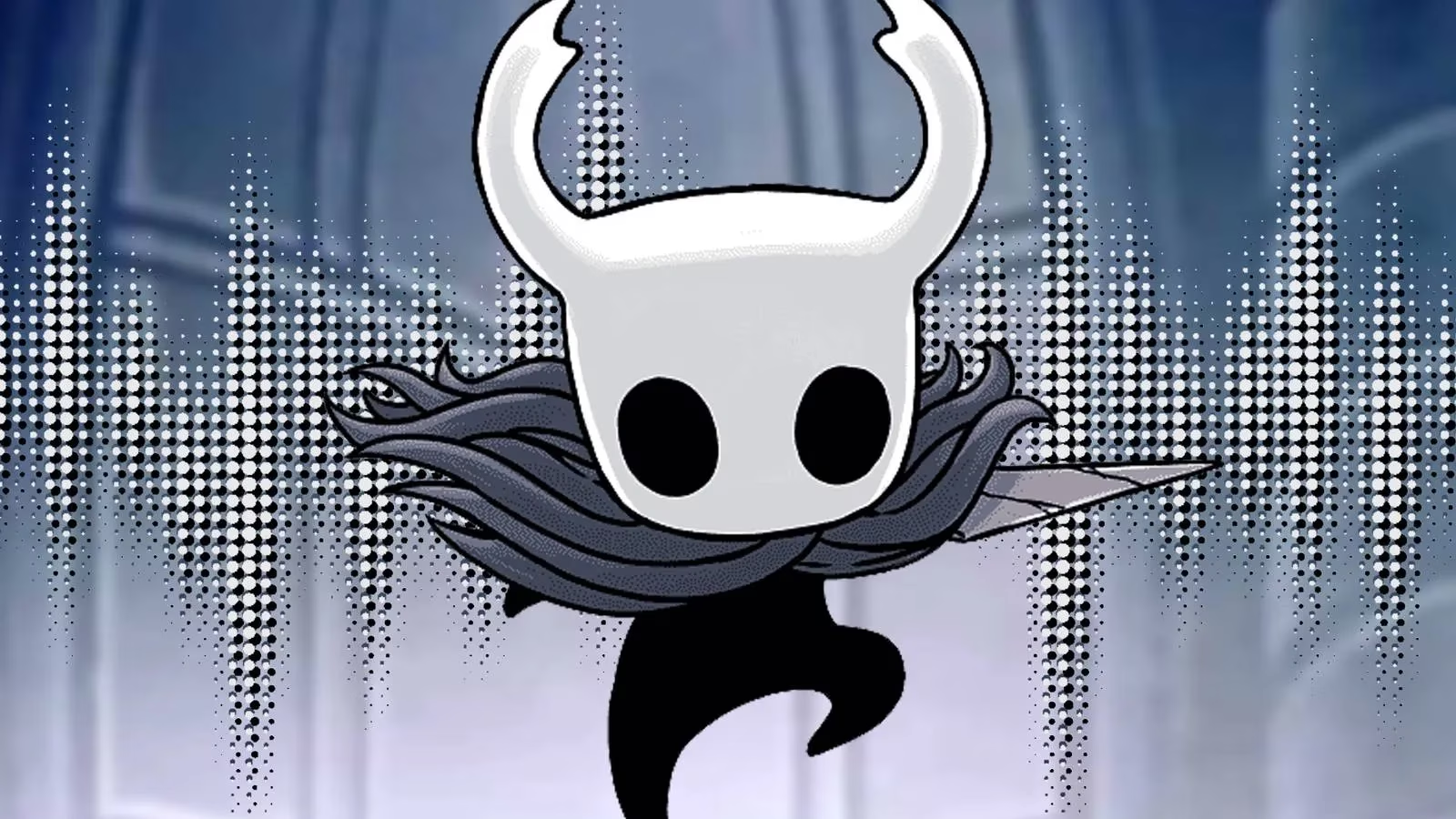
Video game music has always been a varied art. From 8-bit beats and synth to modern... well, still beats and synth, but with more strings and existential dread. The variety has expanded exponentially, and it is not slowing down. A player could mention Red Dead Redemption 2, Sayonara Wild Hearts, or anything from Darren Korb and Ashley Barrett. All excellent. Yet Hollow Knight uses music to an extent that feels almost unfair. The first time an ordinary gamer booted it up in 2017, the world, hand-drawn graphics, and gameplay were already hard to put down. The music, however, was the thing that refused to leave the room after the console was switched off.
On the surface, Hollow Knight looks like a cute, cartoony platformer about a tiny bug with a nail. The lore and world depth are not conspicuously presented; they are discovered, like a terrible family secret hidden behind a charming wallpaper. If someone unfamiliar heard the soundtrack alone, they would probably assume it was an epic, melancholy score crafted by a world-renowned composer. Christopher Larkin may not have been world-renowned at the time, but otherwise the conclusion is spot on. It just happens to be for a video game.
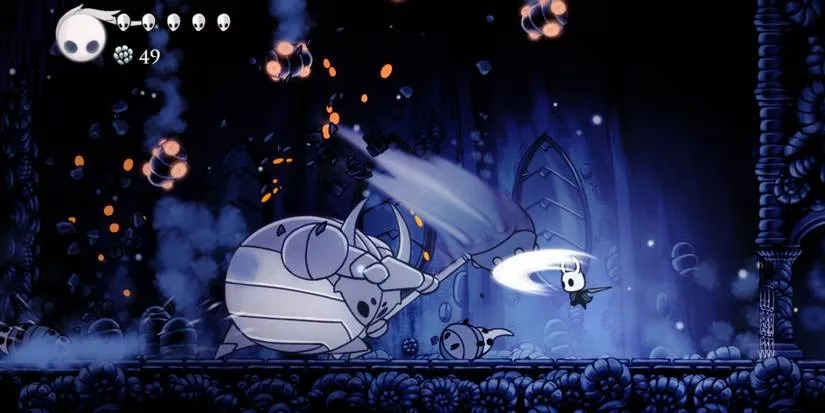
The soundtrack stands out with a quality far above expectations for an indie game—or even most triple-A games, for that matter. The range of sounds, instruments, and moods across each piece speaks to Larkin's expertise and explains why it remains distinct in a growing, densely packed industry. Many games reach for an orchestra to build intensity or present somber moments. Few demonstrate such an impact behind it. Hollow Knight does not just use music as decoration; it uses music as architecture.
The main theme, 'Hollow Knight,' greets players on the main menu. Across its duration, piano and violin imbue the moment with sadness, a tense edge, and then a kind of hopefulness at the end that leaves listeners entirely unsure whether to be happier or more worried. It sums up the game and the world of Hallownest perfectly, preparing a player for the feeling of delving into it for the first time. It is a musical shrug that somehow contains multitudes.
The shining star of the whole soundtrack, however, is 'Sealed Vessel.' This song plays during the not-so-final boss and brings an entire journey together in just under six minutes. The track travels a path of its own, turning in ways that surprise other composers and subvert expectations. Davi Vasc, another video game composer, has a video showcasing his reaction to this score, and it is a fascinating dive into the power of the music. For anyone who has not watched it, imagine a professional musician realizing that a bug game has just outclassed half the industry.
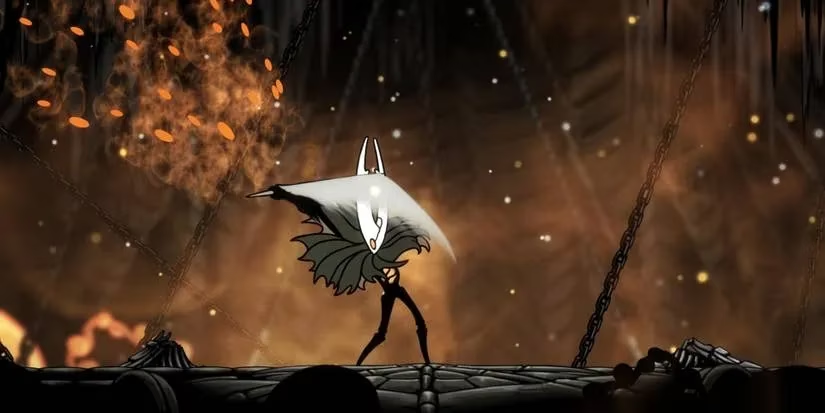
'Sealed Vessel' begins by building into an intense battle theme, as expected, yet uses more melancholic chords throughout the background. It adapts as the fight progresses, expressing harsher and more desperate sounds in the moment, before drifting into a slow, violin-focused section that feels like hope slipping away. Hope for who? At this moment, the player has an overwhelming feeling that they should not be killing the figure before them, and that this figure does not wish to kill them. It is a boss fight that somehow makes the player feel like the monster.
From there, the song builds again, but rather than explode, it drops into almost silence and a soft piano that echoes the main theme of Hollow Knight. Once again, it expresses a grey area between happiness and concern. That feeling follows through as the boss fight ends, leaving the player confused and partially regretful of their victory. The whole song conveys a narrative, not only of the battle itself but of everything leading up to it. It also reveals doubts and hesitations that no one was prepared for in such a climactic battle.
Few games have handled music in such a way, and none stand out more than Hollow Knight. This small game made by a small team has every right to shine, but to shine as much as it does is exceptional. In every aspect, of course, but the music carries it to new heights. The work Christopher Larkin provides for this project is unparalleled, and seeing it synergize with every other part of the experience makes for something truly special.
Now, in 2026, Silksong is no longer a waiting-room meme. The sequel has arrived, and its music continues to carry weight, with tracks that suggest Larkin has not lost his touch for blending beauty, dread, and bug-based tragedy. Players can only expect the same level of emotional manipulation, if not more. The original Hollow Knight soundtrack remains a reminder that a game does not need a giant budget to sound immortal. It just needs a piano, a violin, and the willingness to break a player's heart in under six minutes.
| Track | Mood | Why It Hurts |
|---|---|---|
| Hollow Knight | Sad, tense, oddly hopeful | Menu music that already knows too much |
| Sealed Vessel | Desperate, tender, regretful | Turns a boss fight into a moral crisis |
| Dirtmouth | Quiet, lonely, welcoming | Makes an empty town feel like home |
| City of Tears | Rainy, elegant, mournful | The name is not a metaphor |
So, whether one is a veteran bug knight or a newcomer drawn in by Silksong, the original soundtrack deserves a fresh listen in 2026. It is not background music. It is a character, a narrator, and occasionally a therapist with a violin. Hollow Knight may be about a kingdom of bugs, but its music makes the whole thing feel heartbreakingly human.
Data referenced from VentureBeat GamesBeat helps frame why Hollow Knight’s soundtrack still resonates in 2026: as indie games compete on craft rather than scale, music becomes a key differentiator that drives word-of-mouth and long-tail engagement. In that context, Christopher Larkin’s score isn’t just “good atmosphere”—it functions like premium production value, anchoring emotional memory (menu themes, hub motifs, boss crescendos) in a way that supports the game’s enduring visibility even as new releases like Silksong reshape the conversation.