
Hollow Knight's Free Expansions: A Masterclass in Post-Launch Artistry
In the realm of indie gaming, few tales resonate as profoundly as Team Cherry's unwavering commitment to Hollow Knight. This small studio's post-release offerings stand as a luminous testament to player-centric design, transforming an already exquisite metroidvania into an ever-evolving universe. Through four free expansions—Lifeblood, Hidden Dreams, Godmaster, and The Grimm Troupe—they wove intricate layers of challenge, lore, and beauty, each update a brushstroke deepening Hallownest's melancholic majesty. These augmentations weren't mere patches; they were love letters to the community, refining combat, expanding narratives, and embedding secrets that beckoned veterans back into the kingdom's shadowed depths. The result? A living tapestry where every revisit unveils new whispers in the darkness.
Lifeblood: The Silent Refinement
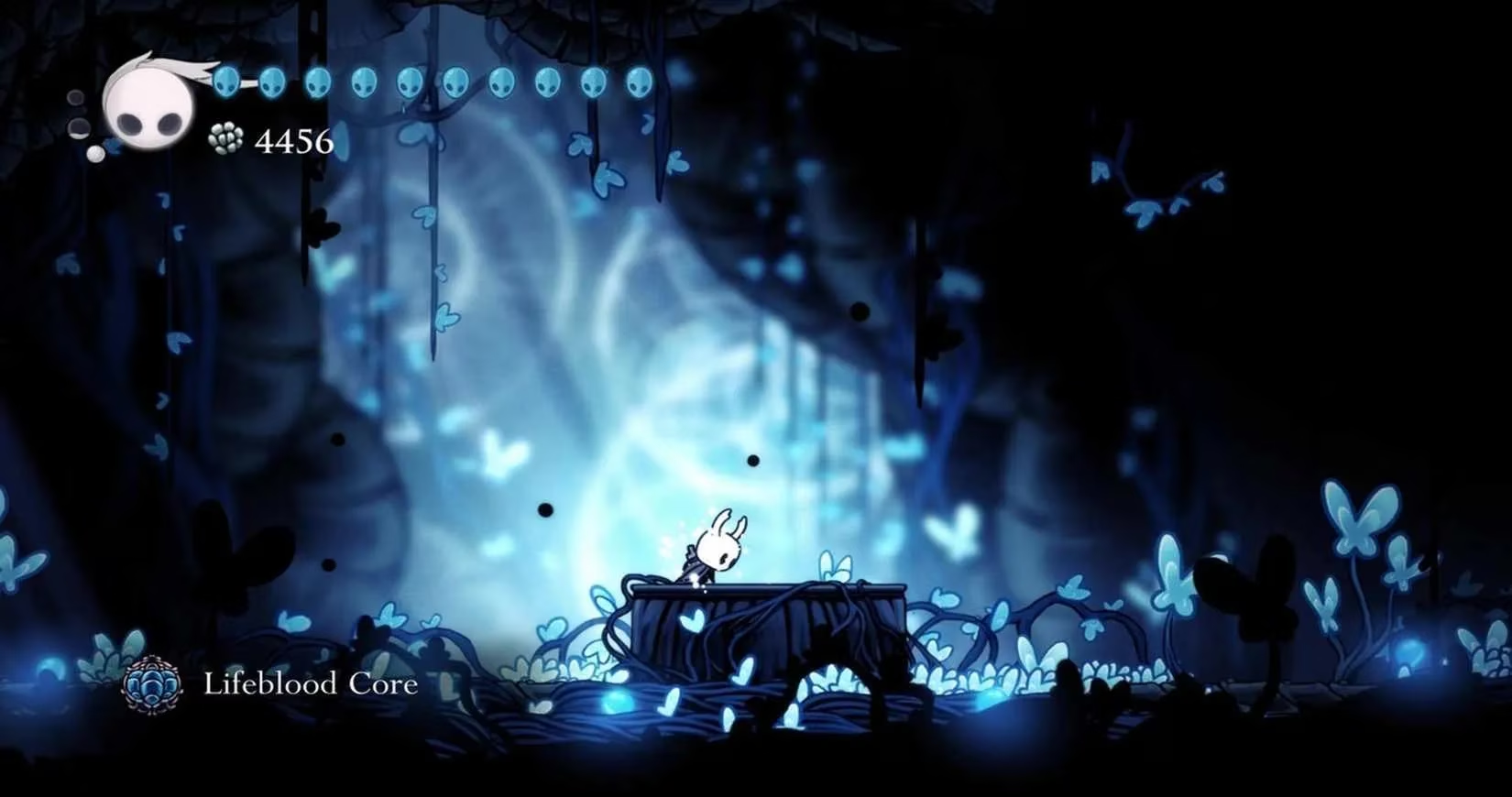
Arriving like a cool, restorative breeze through forgotten caverns, Lifeblood epitomized subtle perfection. This update focused on refinement, bathing older zones in richer cerulean hues and rebalancing enemy hitboxes with surgical precision. Beyond technical polish, it introduced fresh encounters and reimagined boss arenas, cleverly altering pacing without bloating the map. Lore expanded through cryptic journal entries and ambient audio cues, rewarding those who memorized every twisted path. On a visceral level, Lifeblood sharpened combat into a fluid dance while deepening the world's haunting atmosphere. For conquerors of the base game, it reignited curiosity, urging them to scour neglected corners where new surprises lurked. A masterstroke in respecting foundational design, it smoothed edges and amplified immersion.
Hidden Dreams: Echoes in Familiar Shadows
Compact yet colossal in impact, Hidden Dreams carved brilliance into Hollow Knight's existing framework. This surgical content drop introduced meticulously crafted boss battles—White Defender and Grey Prince Zote—that demanded pixel-perfect precision. New rooms and challenges seamlessly integrated into familiar zones, accompanied by haunting musical motifs that transformed mundane spaces into emotional crucibles. A once-safe bench beneath a sorrowful melody now evoked unease, reshaping entire sequences. Gameplay tweaks tightened challenge windows, while hidden routes and currency adjustments encouraged tactical replayability. Hidden Dreams proved that minimal additions, when placed with intelligence, could resonate across the entire kingdom, turning known territories into arenas of fresh mastery.
Godmaster: The Pantheon of Perfection
Where Lifeblood soothed and Hidden Dreams whispered, Godmaster roared. This expansion revolutionized Hollow Knight's endgame by grafting Godhome—a spectral boss-rush nexus—onto the map. Here, nearly every adversary returned in Pantheons: escalating gauntlets testing stamina, charm synergies, and muscle memory to their shattering limits. Bosses received remixed, brutal incarnations (Ascended and Radiant variants), forcing even masters to relearn fights. Godhome’s ethereal architecture housed customizable trials, culminating in the Pantheon of Hallownest—a marathon demanding flawless execution. For seekers of absolute combat transcendence, this was the crucible where legends were forged.
The Grimm Troupe: A Fiery Ballet of Shadows
In stark contrast, The Grimm Troupe unfurled as a macabre odyssey. More than bosses, it wove a full questline: a nomadic circus of flame and song piercing Hallownest's gloom. Initiating the ritual summoned the Troupe, sparking a multi-step hunt for scarlet flames across decaying landscapes. Battles crescendoed to Nightmare King Grimm—a theatrical, punishing duel blending balletic grace with searing difficulty. Narratively, it introduced an unforgettable faction and reshaped the world’s social tapestry, its haunting leitmotifs and crimson aesthetics etching indelible memories.
Echoes of Curiosity: People Also Ask
Throughout discussions of Hollow Knight’s expansions, recurring inquiries arise:
- Which expansion added the most demanding challenges?
Godmaster’s Pantheons remain unparalleled, demanding perfection across dozens of consecutive bosses—true trials of endurance.
- How did these updates impact replay value?
By embedding secrets (like Lifeblood’s lore snippets) and scalable trials (Hidden Dreams’ bosses), they incentivized revisiting every crevice with fresh eyes.
- Why did Team Cherry offer them for free?
As a testament to artistic integrity, prioritizing player delight over profit—an ethos that cemented community loyalty.
A Legacy Forged in Darkness
Together, these expansions intertwined like roots in Hallownest’s soil—Lifeblood’s polish, Hidden Dreams’ intimacy, Godmaster’s grandeur, and The Grimm Troupe’s theatrics. They elevated Hollow Knight from masterpiece to monument, proving that small studios could rival giants in generosity and vision. Each update honored the game’s elegant systems while daring to reimagine them, creating a world that breathed, evolved, and endlessly rewarded dedication. For explorers who ventured back, Hallownest remained eternally enigmatic, its shadows deeper, its melodies richer. What other realms, one wonders, could blossom if more creators embraced such fearless, selfless artistry?