
Gaming's Gothic Playground: Video Games Inspired by Tim Burton's Vision
As we look ahead to 2026, the unique aesthetic pioneered by Tim Burton continues to cast a long, beautifully twisted shadow over the world of video games. His signature blend of the whimsical and the macabre, a stylistic concoction as distinctive as a perfectly crafted, bittersweet cocktail, has proven to be a fertile ground for game developers seeking to build worlds that are both enchanting and unsettling. From indie darlings to cult classics, the gaming landscape is populated with titles that feel like they were plucked straight from Burton's sketchbook, offering players a chance to step into gothic fairy tales and explore the afterlife with a sense of dark humor. These games don't just borrow visuals; they capture the very soul of Burton's storytelling—the celebration of the outsider, the beauty in decay, and the strange magic that lurks in the shadows.
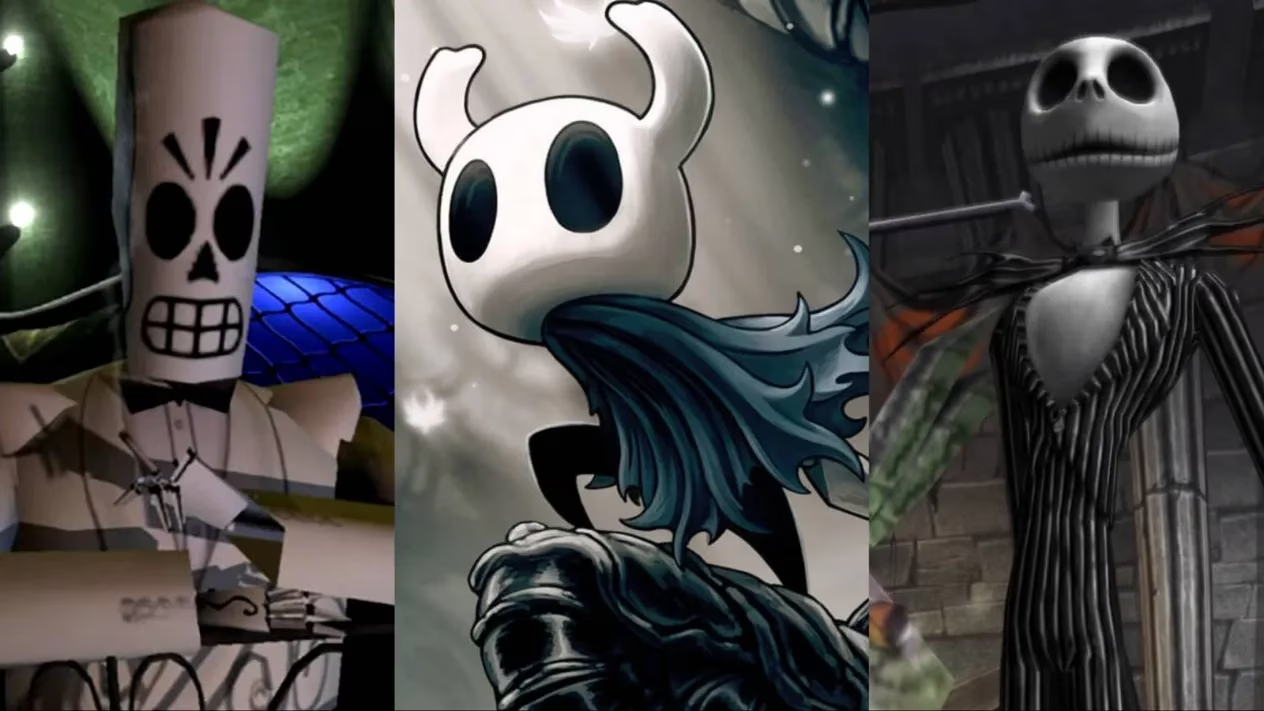
🎮 A Gallery of Gothic Adventures
Here are some of the most notable games that channel the spirit of Tim Burton, creating experiences that resonate with fans of his peculiar brand of storytelling.
| Game Title | Core Burtonesque Elements | Genre & Key Notes |
|---|---|---|
| Hollow Knight | Monochromatic visuals, Gothic atmosphere, melancholic beauty. | Metroidvania - A modern classic known for its difficult but satisfying exploration. |
| Lost In Random | Stop-motion-like art style, dark fairy tale world, quirky characters. | 3D Adventure - Feels like a love letter to Burton's animated works. |
| Pumpkin Jack | Direct inspiration from The Nightmare Before Christmas, Halloween aesthetics. | 3D Platformer - Nostalgic, cartoony action with spooky charm. |
| Batman: Arkham Asylum | Gloomy, Gothic atmosphere, claustrophobic terror, noir sensibilities. | Action-Adventure - Changed superhero games forever with its dark tone. |
| Fran Bow | Psychological horror, eerie storybook art, exploration of mental illness. | Point-and-Click Adventure - A disturbing, adult-oriented fairy tale. |
| Alice: Madness Returns | Dark, quasi-horror take on Wonderland, twisted universe. | Action-Adventure - A cult classic with a bloody, psychological edge. |
| Grim Fandango | Macabre yet quirky afterlife world-building, noir comedy. | Point-and-Click - A pinnacle of the genre with a timeless story. |
| The Nightmare Before Christmas: Oogie's Revenge | Direct sequel to the film, stop-motion visuals, musical segments. | Hack-and-Slash/Platformer - A rare good movie-based game. |
🔍 Deep Dives into the Darkness
Hollow Knight stands as a prime example. Its world of Hallownest is a decaying kingdom, a sprawling, intricate tomb humming with forgotten lore and melancholic beauty. The game's difficulty is not just a challenge but a narrative device, making every hard-won victory feel like uncovering a piece of a shattered, stained-glass window. Its success paved the way for the long-awaited sequel, Silksong, proving the enduring appeal of this somber style.
Then there's Grim Fandango, a masterpiece that feels like it was co-written by Burton and a classic film noir director. Its depiction of the Land of the Dead, where souls embark on a four-year journey via underworld travel agency, is a concept so brilliantly bizarre it could only exist in a realm where the bizarre is normal. The story of Manny Calavera is a rich tapestry of crime, corruption, and redemption that remains, over two decades later, a story begging for adaptation.
Fran Bow and Alice: Madness Returns take the familiar framework of a young girl's adventure and plunge it into psychological depths. Fran Bow's journey is a haunting exploration of trauma, where the line between supernatural horror and mental breakdown is as thin and fragile as a cobweb. Similarly, Alice's return to a corrupted Wonderland is a visceral, often violent trip that feels more authentic to the darker roots of the original tales than many sanitized versions. These games understand that the most terrifying monsters are often the ones we carry inside, a theme Burton frequently explores.
✨ The Lasting Legacy
What makes these games more than simple imitations is how they internalize the Burton ethos. MediEvil turns a skeleton's quest into a hilarious, charming adventure, finding humor in the horrific. Don't Starve wraps its punishing survival gameplay in a 2D storybook art style that's equal parts charming and dread-inducing, its world feeling like a pop-up book designed by a mischievous, slightly mad artist. And Oogie's Revenge succeeded by not just copying the film's look but embracing its musical heart, integrating rhythm gameplay that makes you feel part of the production.
As a fan navigating these digital realms, I see them as interactive extensions of Burton's universe. They are playgrounds for the gothic imagination, proving that his influence is not confined to the silver screen. In 2026, this legacy is stronger than ever, inviting players to lose themselves in worlds where the pumpkins have grins, the heroes are skeletons, and the adventure is always beautifully, wonderfully strange. The next time you boot up a game with a peculiar art style and a melancholic tune, you might just be stepping into a world Tim Burton helped dream into existence.