
Games That Make You Work for the Story: My Journey Through Mysterious Worlds
In this era of instant gratification and bite-sized entertainment, where attention spans are shorter than ever, I find myself craving something more substantial. 🧠 I'm tired of games that treat me like a child, spoon-feeding every plot point and explaining every nuance as if I can't think for myself. It's 2026, and I demand more from my interactive experiences! I want to be challenged, to feel the thrill of discovery, to piece together fragments of a grand narrative like an archaeologist unearthing ancient ruins. Thankfully, there are visionary developers out there who understand this hunger, who craft worlds that don't just tell a story—they make you live it, deduce it, and ultimately, own it. These are the games that don't just entertain; they transform you into a detective, a historian, and a philosopher, all from behind the controller. Let me take you on a tour of the digital landscapes that rewarded my curiosity and punished my complacency.
🔄 Outer Wilds: A Universe of My Own Making
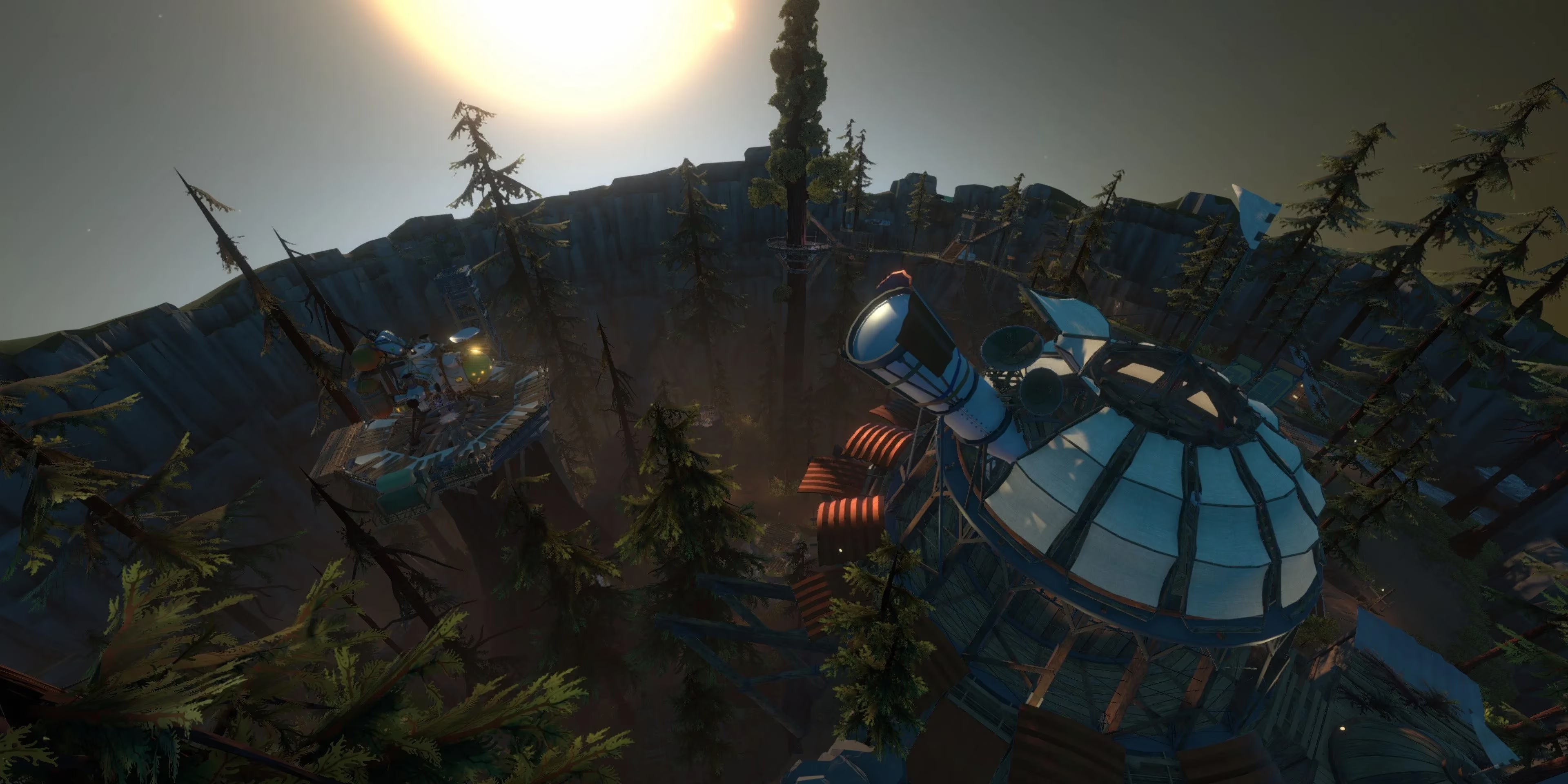
My journey began among the stars with Outer Wilds. This wasn't just a game; it was a temporal labyrinth wrapped in a cosmic mystery. At its core, it presented a simple, terrifying premise: the sun explodes every 22 minutes, resetting the universe. But beneath this celestial clockwork lay the enigmatic tale of the Nomai, a lost civilization whose technological marvels dotted each surreal planet. The game's genius was its absolute refusal to guide me. No quest markers, no objective list, not even a hint of where to go next. My progression was fueled solely by an insatiable, almost primal hunger for knowledge. Each loop, each death, taught me something new. I learned the language of cyclones on Giant's Deep, the brittle fragility of Brittle Hollow's crust, and the haunting quiet of the Ember Twin's caves. The only thing I retained between resets was the information in my ship's log—my personal constellation of clues. Piecing together the fate of the Nomai and the purpose of their Ash Twin Project felt less like playing a game and more like conducting a grand, interstellar investigation. The "aha!" moment when it all clicked was a cerebral euphoria I've rarely felt since.
⚓ Return of the Obra Dinn: Captain of Deduction
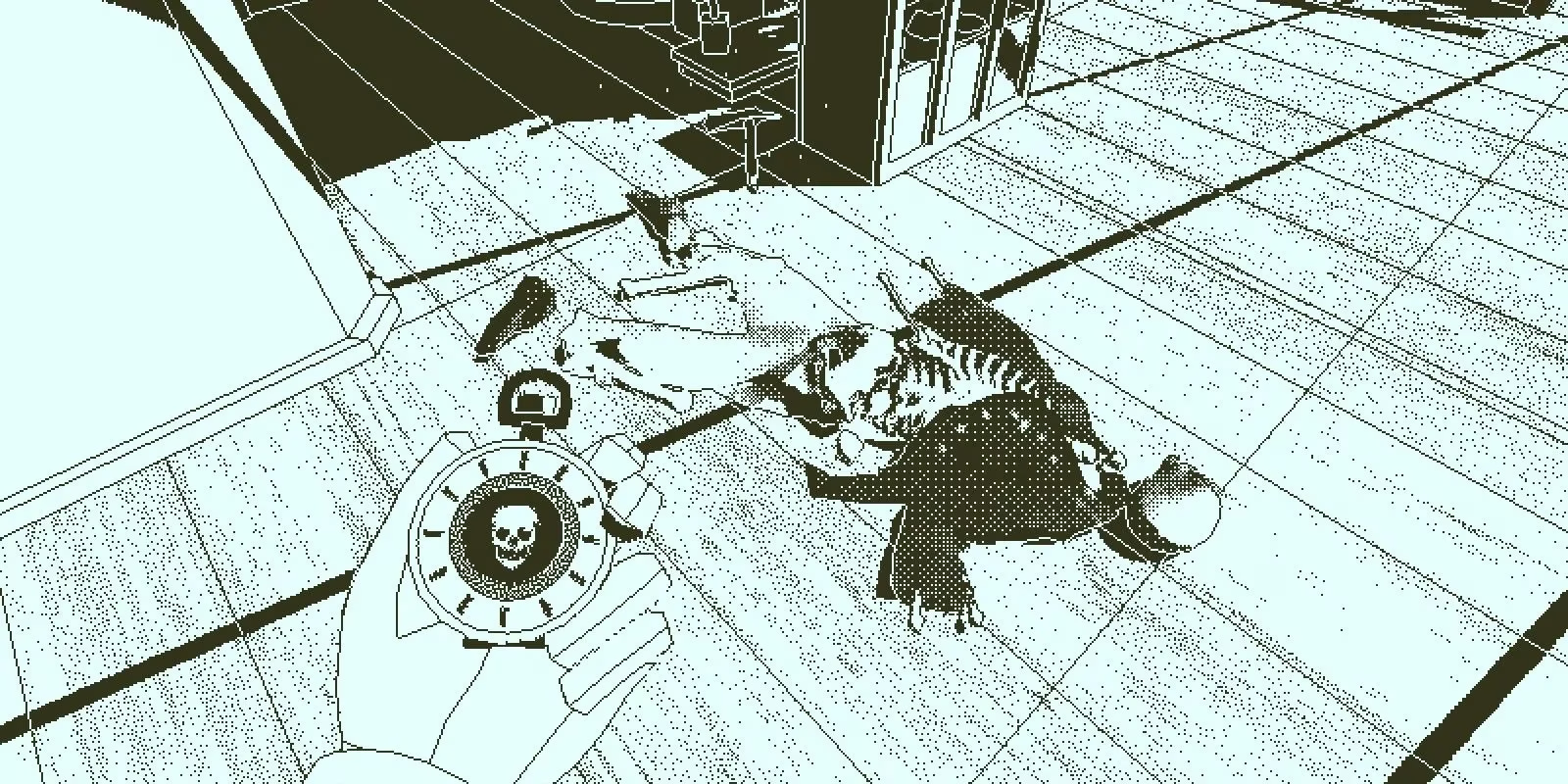
From the vastness of space, I was plunged into the claustrophobic, 1-bit world of a doomed ship. Return of the Obra Dinn handed me a magical pocket watch and a mandate: determine the fate of every soul aboard. This game was a masterclass in environmental storytelling and deductive reasoning. I could have taken the easy route, identifying a few obvious deaths and filing a half-baked report. But Lucas Pope's creation demanded more. It demanded that I become a human database, cross-referencing accents, uniforms, roles, and locations. I scrutinized frozen tableaus of violence and supernatural horror, listening to the final moments of sailors, piecing together relationships and hierarchies. The moment I correctly identified a cook based on his hat and his position near the galley, or deduced a man's name from a ledger entry and a passing comment in a memory, was pure, unadulterated intellectual triumph. The game's supernatural undercurrent—involving a monstrous kraken and other sea-borne horrors—slowly unveiled itself not through exposition, but through the chilling gaps in my logic. It made me the author of its horror.
🕳️ INSIDE & Hollow Knight: Descent into Silent Narratives
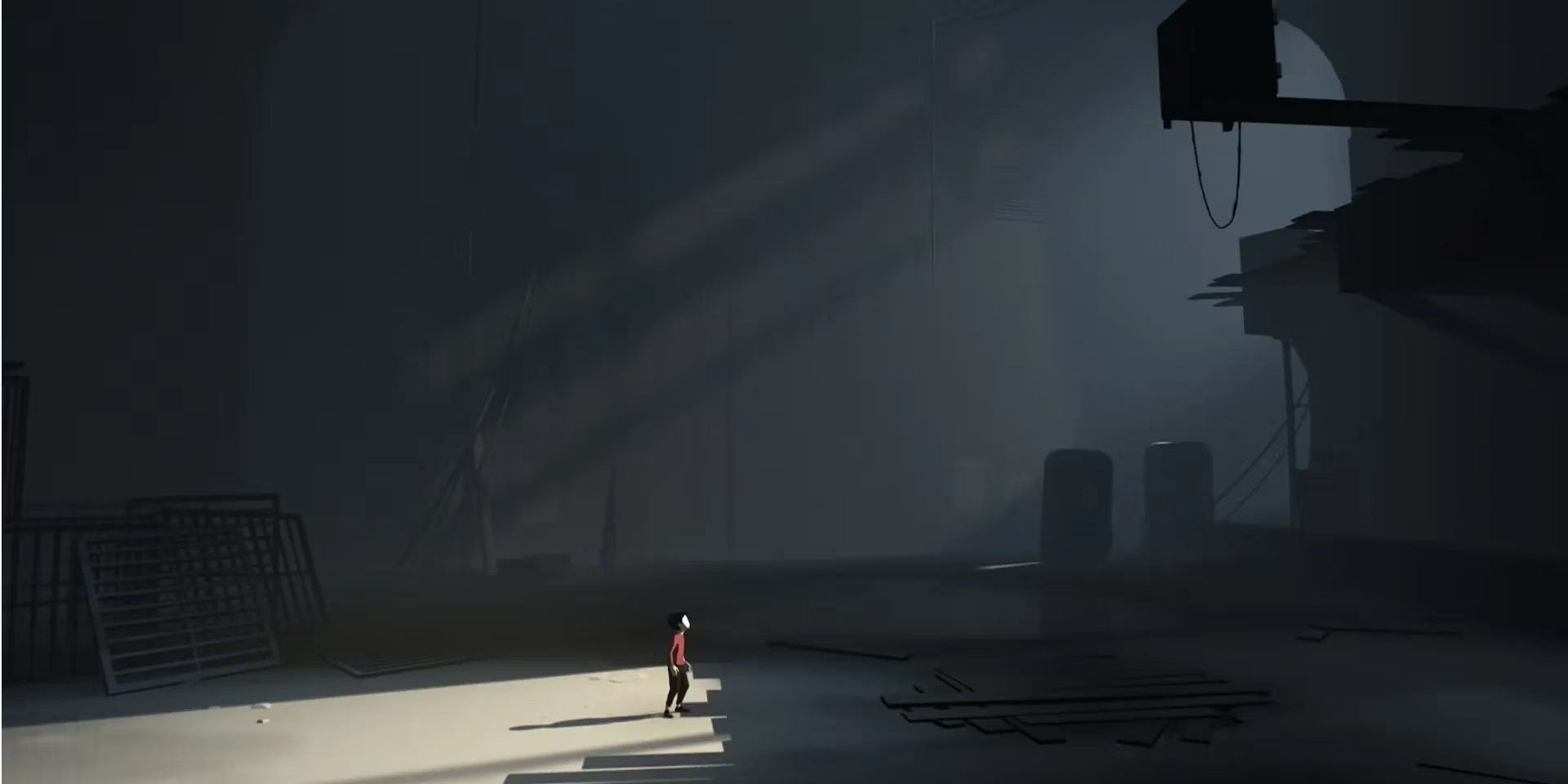
INSIDE was a descent into a wordless nightmare. In this oppressive, dystopian side-scroller, there were no NPCs to explain the rules, no cutscenes to clarify the stakes. The story was etched into the rusted walls, the behavior of the mind-controlled husks, and the grotesque biological experiments I witnessed. My understanding of the boy's rebellion against a faceless, controlling entity was built entirely from inference and environmental dread. It was storytelling through visceral sensation.
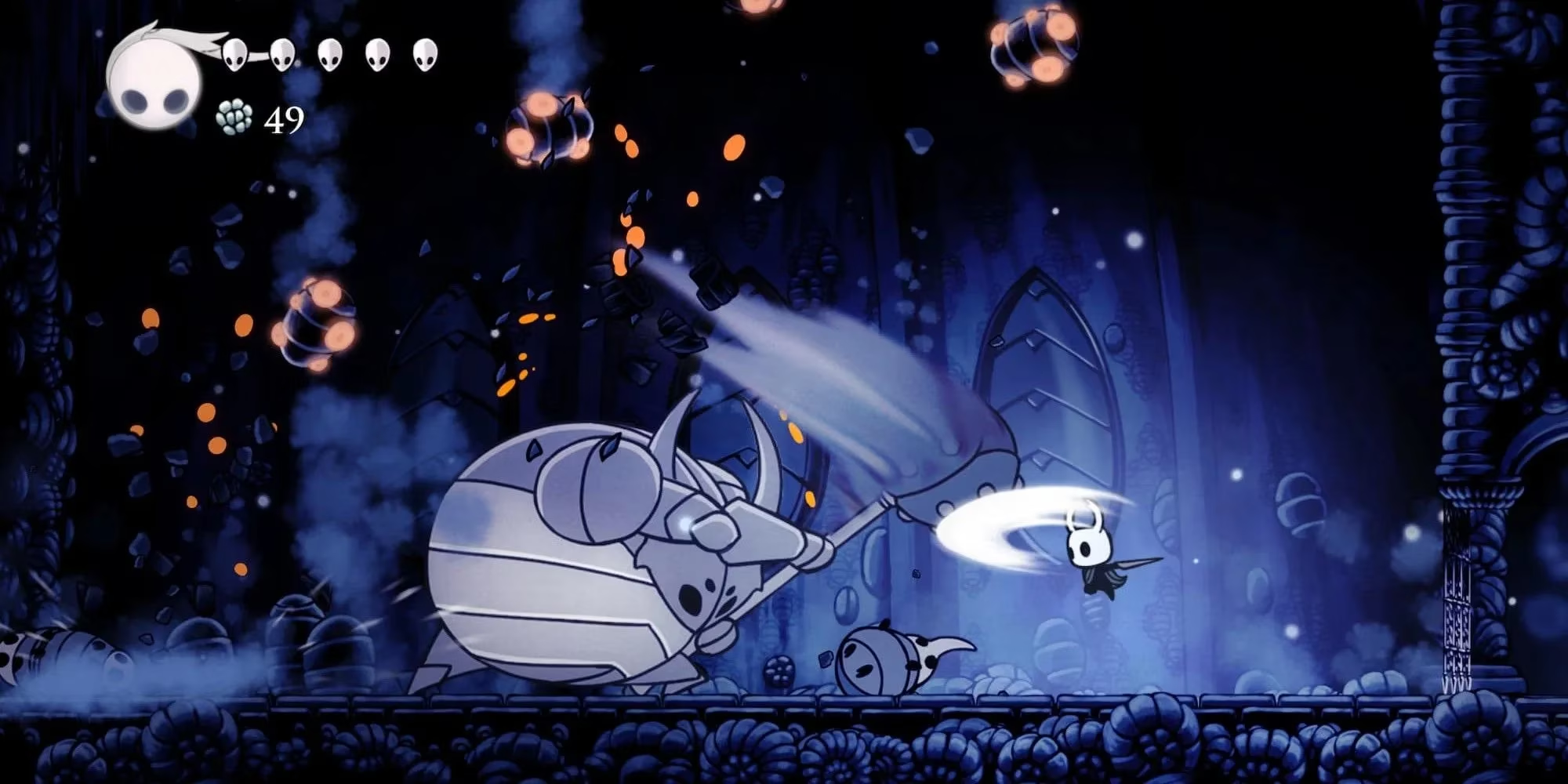
Similarly, Hollow Knight offered a path of least resistance—defeat bosses, reach an ending. But to do only that was to commit a grave disservice to the melancholy kingdom of Hallownest. Its lore was a fragile, fragmented thing, scattered across dream nail dialogues, environmental details, and the cryptic musings of broken bugs. To understand the tragedy of the Pale King, the Radiance's infection, and the knight's own origin, I had to conquer brutal optional challenges like the White Palace and the Pantheons of Godhome. This game taught me that true depth is often hidden, waiting for those willing to scour every crumbling corridor and converse with every lonely inhabitant. The different endings weren't just outcomes; they were revelations of understanding, tiered by how much effort I'd invested in learning the kingdom's secrets.
🏰 The Soulsborne Blueprint & Control's Dual Reality
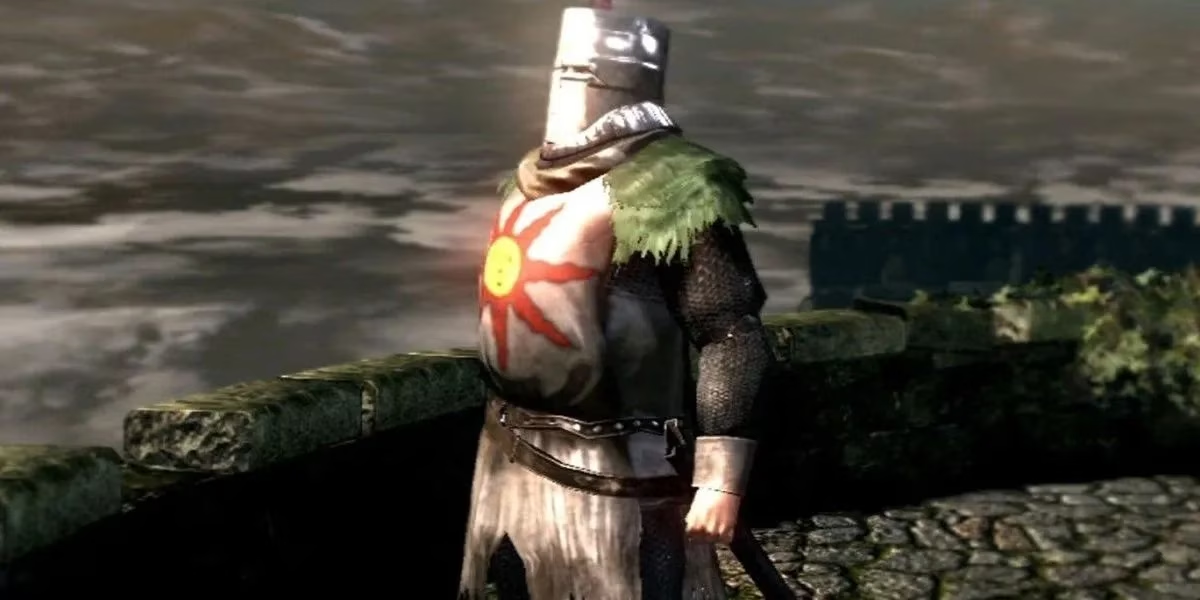
The Dark Souls series (and its spiritual successors) codified a modern approach to cryptic storytelling. These games presented a ruined, magnificent world and dared me to care about why it was ruined. Key lore wasn't in lengthy dialogues; it was in item descriptions. A sword's flavor text could hint at a fallen kingdom's pride, a ring could tell a tale of tragic love, and a set of armor could outline an entire failed military campaign. NPCs spoke in riddles and prophecies, their stories unfolding in fragments across the world. Piecing together the tale of Gwyn, the First Flame, and the Undead Curse was an optional, deeply rewarding meta-game. It created a community of lore hunters, all collaborating to build a coherent history from FromSoftware's deliberate obfuscation.
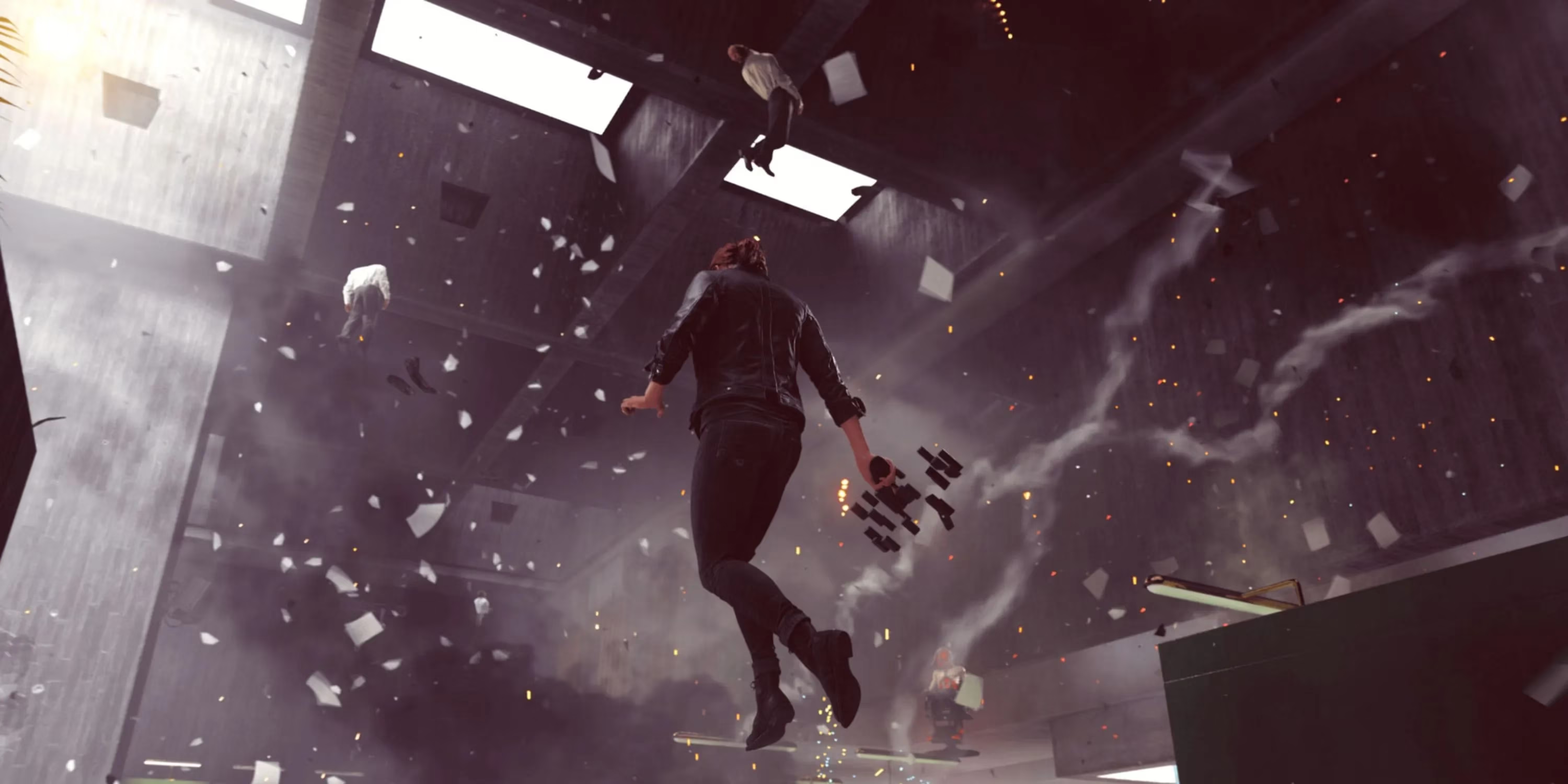
Control brilliantly offered a choice. I could blast through the Oldest House as Director Jesse Faden, enjoying a thrilling telekinetic power fantasy and a surface-level "weird tale." Or, I could become an archivist of the bizarre. The Federal Bureau of Control was a treasure trove of world-building: case files, research reports, altered item descriptions, and eerie live-action videos. Reading about the fridge that must never be left unobserved, or watching a talk show host be slowly consumed by a Threshold, enriched the experience exponentially. The game respected me enough to let me choose my level of engagement, but it also made it clear: if I ignored the documents, the true, terrifying scale of the paranormal world would remain a mystery.
🌌 NORCO, Gone Home, & Shadow of the Colossus: The Power of Ambiguity
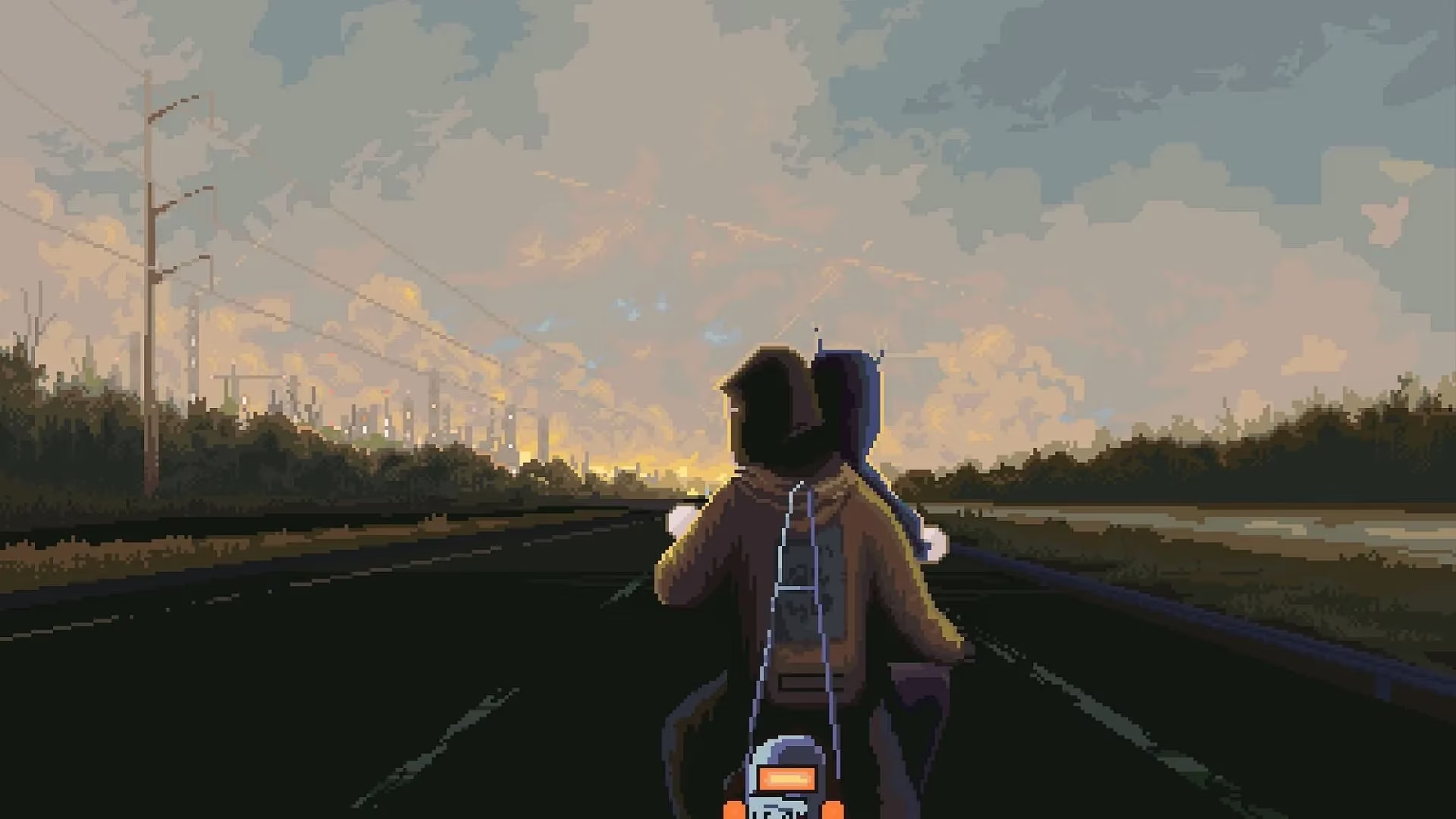
NORCO was a psychedelic, Southern Gothic trip that started with a missing brother and spiraled into a confrontation with AI gods, tech cults, and capitalist decay. It never held my hand as reality, symbolism, and digital fantasy blurred into one. My interpretation of its ending—was it a transcendence, a defeat, or a synthesis?—felt deeply personal, a conclusion I'd authored from the game's abstract cues.
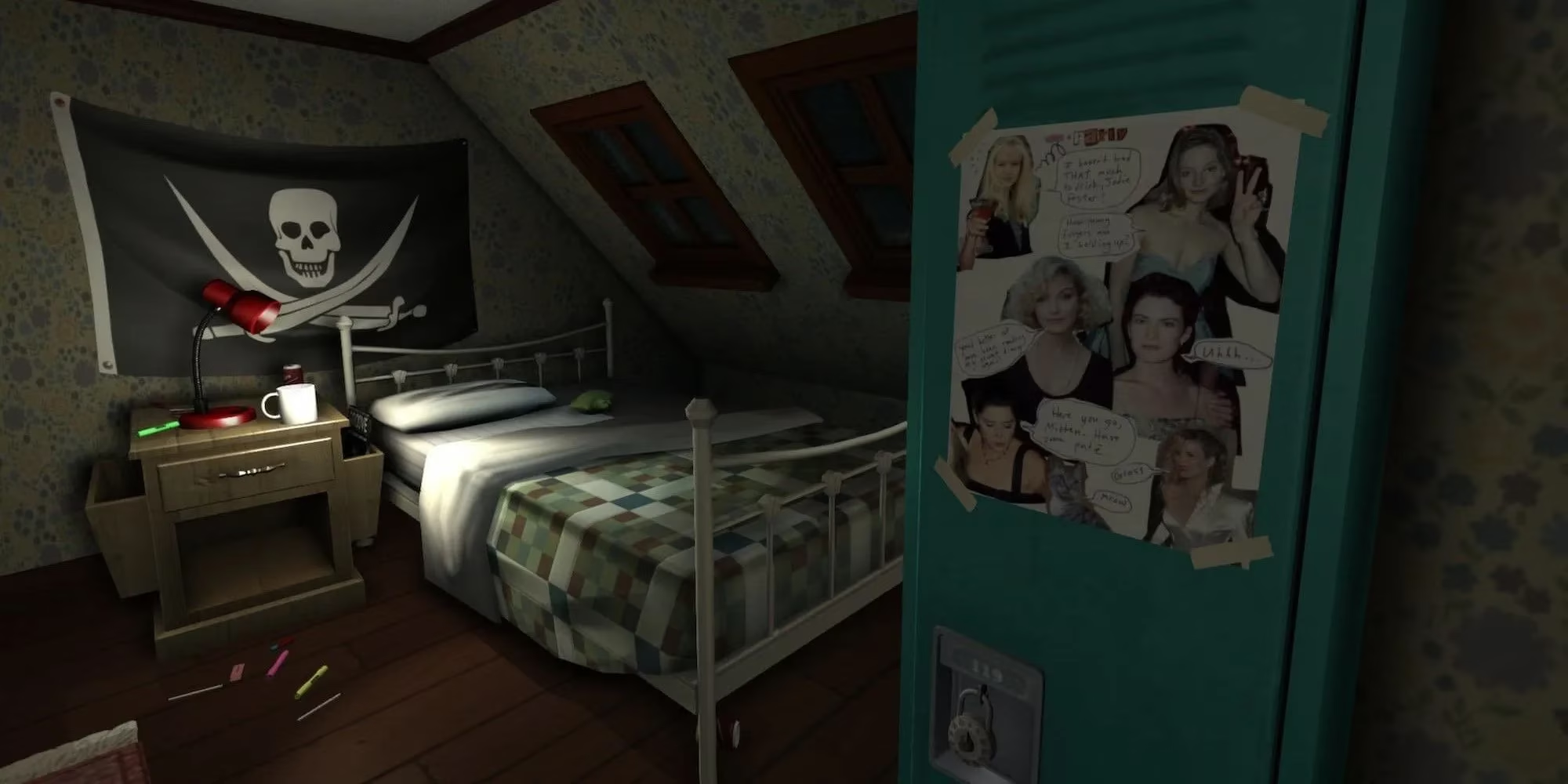
Gone Home was a masterclass in micro-narrative. Returning to an empty house, I had to reconstruct my family's recent life from the artifacts they'd left behind: a crumpled note, a hidden diary, a mixtape, a poster. The central story of my sister Sam was poignant, but the true depth came from uncovering my parents' quiet struggles—the father's failed writing career, the mother's hinted-at affair. The game respected my intelligence, presenting a space and trusting me to be a curious, empathetic archaeologist of the mundane.
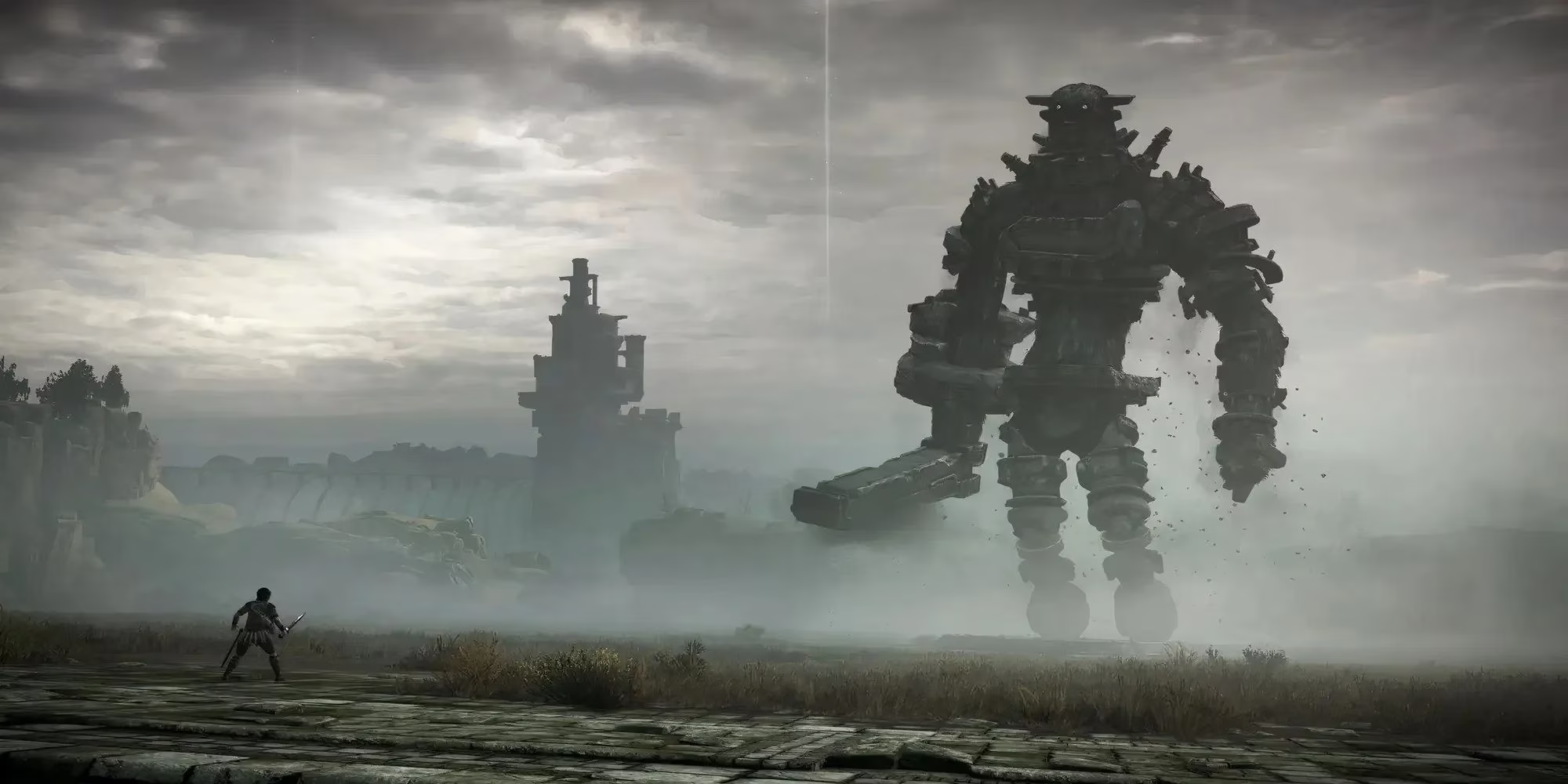
Shadow of the Colossus used narrative absence as its most powerful tool. With only a vague goal—kill colossi to revive a girl—I was left alone with my thoughts and the hauntingly beautiful Forbidden Lands. The lack of explicit justification forced me to question my own actions. Each colossus felt less like a monster and more like a noble, ancient guardian. My unease grew with each victory, making the final, devastating revelation not just a plot twist, but a profound moral reckoning I'd been silently preparing for the entire journey.
✨ Clair Obscur: Expedition 33 - The Pinnacle of Restraint
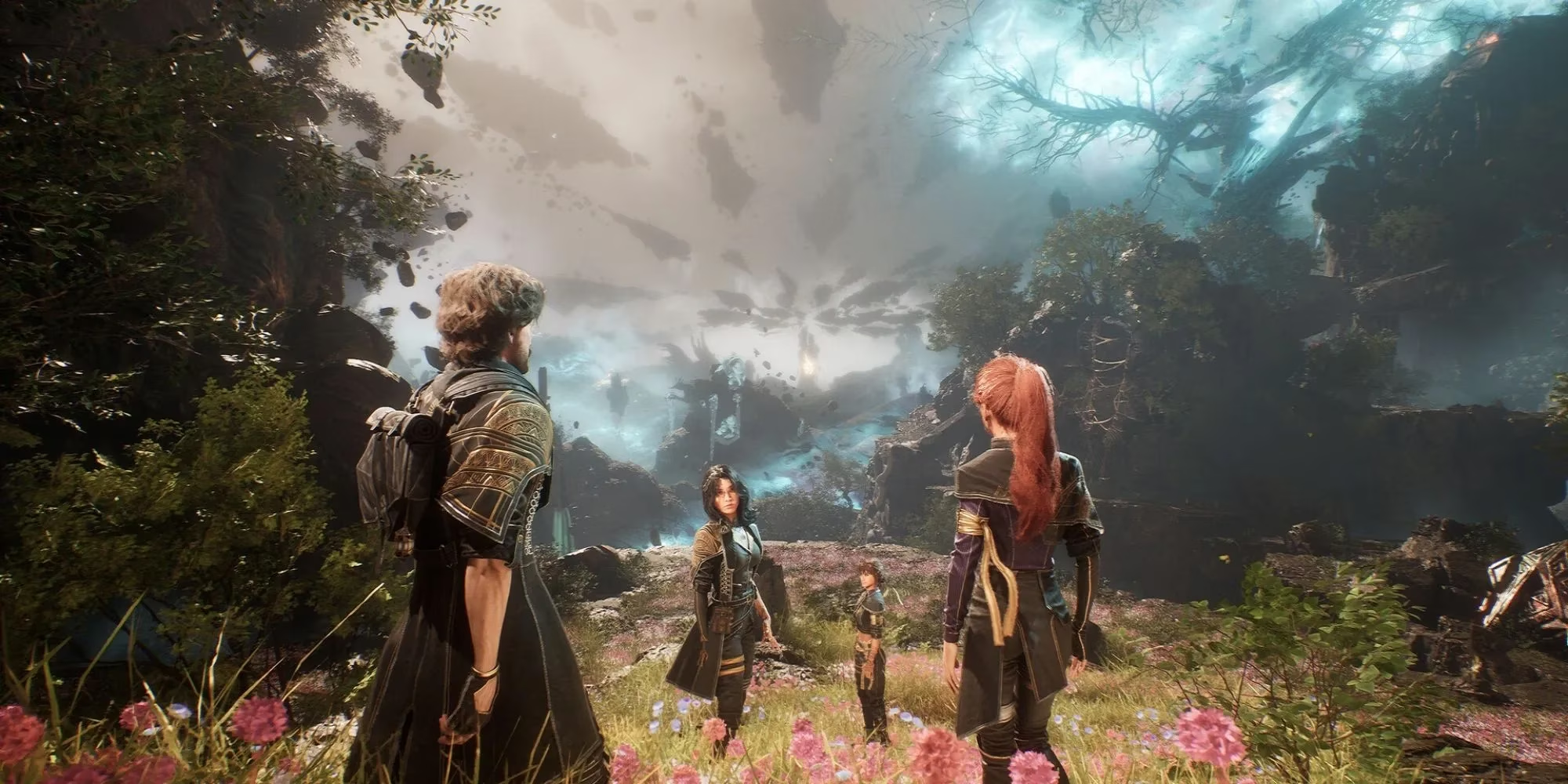
This 2026 JRPG masterpiece, Clair Obscur: Expedition 33, represents the evolution of this design philosophy. It is the ultimate "show, don't tell" experience. The game presents a fractured, beautiful continent and a party of deeply complex characters, but it withholds easy answers. A conversation might resolve one minor mystery while simultaneously unveiling three larger, more perplexing ones. The motivations of my companions, the true nature of the Obscur, the history of the war-torn lands—all of it is conveyed through flawless environmental design, subtle character animations, optional dialogues, and lore fragments found off the beaten path. The game trusts its worldbuilding and its players implicitly. It created in me a frantic, page-turning compulsion to learn more, to explore one more corner, to talk to one more NPC. This narrative restraint wasn't a lack of story; it was the highest form of respect, treating the story as a reward for engagement, not a prerequisite.
🏆 Why This Matters: A Player's Manifesto
| Traditional Storytelling | Environmental/Deductive Storytelling |
|---|---|
| Tells you the story | Lets you discover the story |
| Player is a spectator | Player is an active participant & detective |
| Meaning is delivered | Meaning is constructed |
| Risk of feeling patronizing | Risk of feeling lost (but rewarded!) |
| Uniform experience | Deeply personalized experience |
These games have fundamentally changed what I seek in interactive media. They prove that mystery is not a barrier to engagement, but its very engine. They understand that the human mind craves patterns and solutions, and that the joy of solving a puzzle you didn't even know was a puzzle is unparalleled. In 2026, as games become more cinematic and accessible, I cling to these experiences as vital counterpoints. They are reminders that games are a unique art form, capable of making us think and feel in ways no other medium can—not by telling us a tale, but by letting us write it ourselves, one discovered clue, one inferred connection, one hard-earned revelation at a time. 🧩🚀