
A Pilgrimage Through Cursed Kingdoms: Unearthing the Soul of Soulslikes
In the quiet glow of a 2026 evening, a veteran player named Elias sat before his screen like a cartographer surveying uncharted territories, each game icon a portal to a world that would demand everything from him. He had walked the crumbling halls of Lordran countless times, yet the hunger for that peculiar blend of dread and triumph never faded. The soulslikes of today were not mere copies; they were stained-glass windows into the same cathedral of punishment, each refracting a different hue of despair.
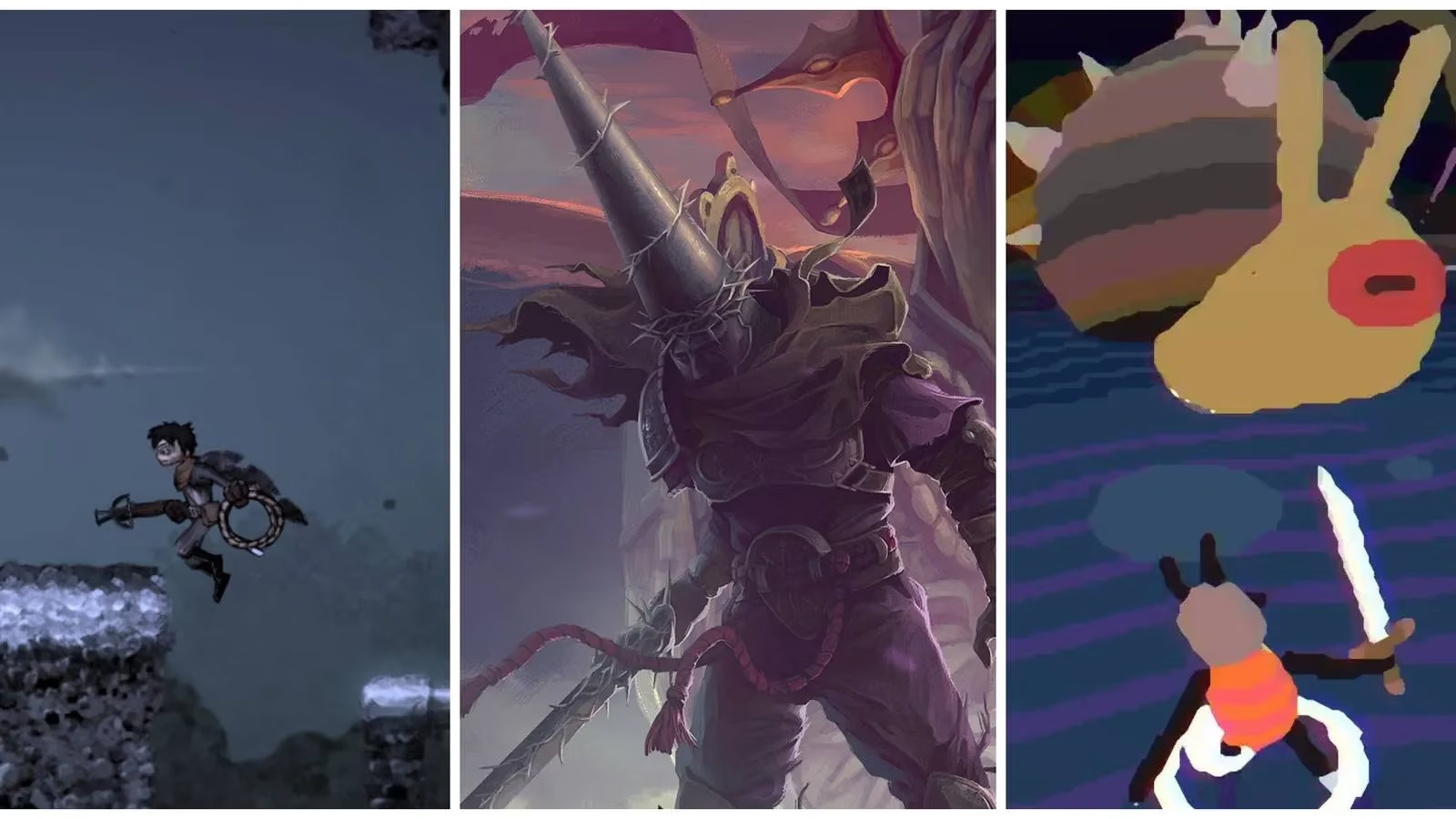
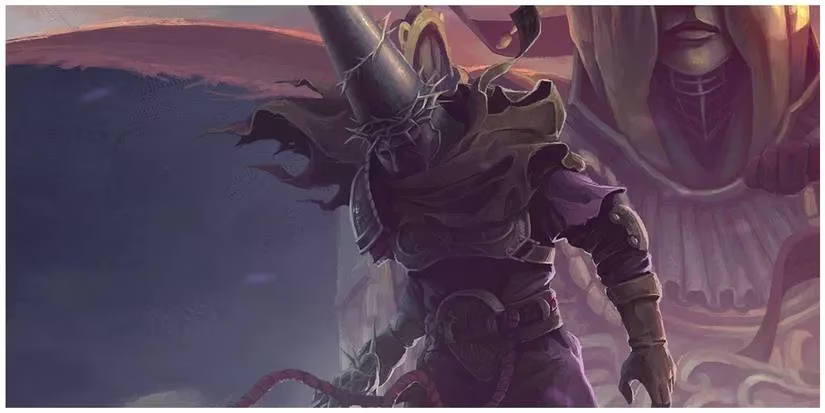
His pilgrimage began in Cvstodia, the land of Blasphemous. The moment he stepped into that side-scrolling nightmare, he felt as if he were a penitent leaf falling through an endless autumn of gothic horror. The pixel art was so dense it seemed woven from cathedral grime and dried blood. Combat was a litany of precise slashes and desperate dodges, each enemy a stanza in a poem of suffering. The bosses loomed like living reliquaries, their attacks telegraphed in the trembling air of their sprite animations. Elias found himself backtracking through the desecrated chapels, but the atmosphere clung to him like incense smoke, making every small discovery a whispered prayer. He thought of the game as a flayed rose, its beauty inseparable from its thorns.
From that crimson-soaked abyss, Elias soared into the gentle pastels of White Lavender. It was like swapping a rusted chainmail for a quilt embroidered with kiddie dragons. The developers at Sokpop Collective had built a miniature world that wobbled as if seen through a heat shimmer, its 3D figures adorably lumpy. Yet beneath the whimsy hummed a core of iron: the combat was tight, the boss fights inventively punishing. A giant cricket with a tiny crown nearly broke his spirit, and the balancing quirks made some encounters feel like dueling with a cloud that forgot it was supposed to be soft. Elias realized this game was a soufflé of the genre—light, brief, but baked with serious craft. For those who needed a respite from the abyss without abandoning the dance of death, White Lavender was a sunlit glade where the shadows still bit.

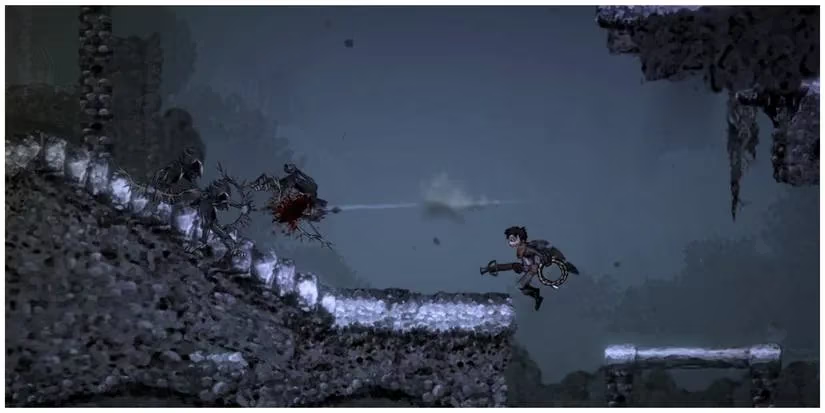
The journey then dragged him into the salt-crusted shipwreck of Salt & Sanctuary. Here, the Dark Souls lineage was naked and unashamed. The monochrome grimness felt like a charcoal sketch left out in the rain. Elias could almost taste the brine on his lips as he guided his chosen wretch through a skill tree as gnarled as driftwood. The game’s greatest gift was its obsession with builds—each weapon class a new dialect of violence, every stat point a slow brushstroke on a portrait of resilience. He replayed sections just to test a greatsword that swung like a pendulum of doom, or a whip that cracked with the petulance of a starving cat. This was the genre’s marrow, stripped of glamour, a rusted anchor that held fast in the depths.
A brief, feverish interlude came with Thymesia. Elias donned the plague doctor’s beak and marveled at how health became a fluid half-truth—dealing "wound" damage that could be healed unless clawed away with a raven’s precision. Ripping plague weapons from enemies felt like harvesting nightmares directly from their minds, each stolen ability a fleeting raven feather. The kingdom crumbled in a sickly haze, and though exploration was sparse, the mood was a narcotic.
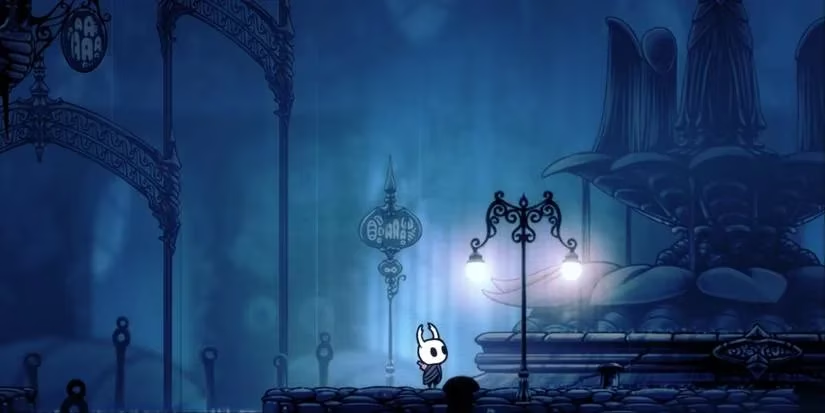
Then his spirit was crushed and rebuilt in the microscopic empire of Hallownest. Hollow Knight was the crown jewel of this pilgrimage. The insectoid world was not just a game; it was a cathedral of sorrow built inside a dewdrop. Every chamber breathed with the melancholy of a dying age, its NPCs murmuring lines that echoed long after they fell silent. Elias navigated the labyrinth not with a map, but with an ache in his chest. The combat was deceptively simple—a nail, a leap, a dash—yet the rhythm demanded perfection. Unlocking a shortcut felt like unearthing a fossil of hope. He understood then that Hollow Knight was the genre’s echo chamber, where every clang of a nail struck the same wounded bell that Dark Souls had first rung across the world.
In the end, Elias leaned back, his hands still tingling. These games were not about difficulty; they were about attention. They demanded that players listen to the spaces between attacks, find meaning in emptiness, and treat every death as a footnote rather than a full stop. The soulslikes he had traversed were a spectrum of pain and beauty, and he knew, with a pilgrim’s certainty, that the journey would never truly end.